↔️ Why We’re Polarized
🛒 Why We’re Polarized. As an Amazon Associate I earn from qualifying purchases.
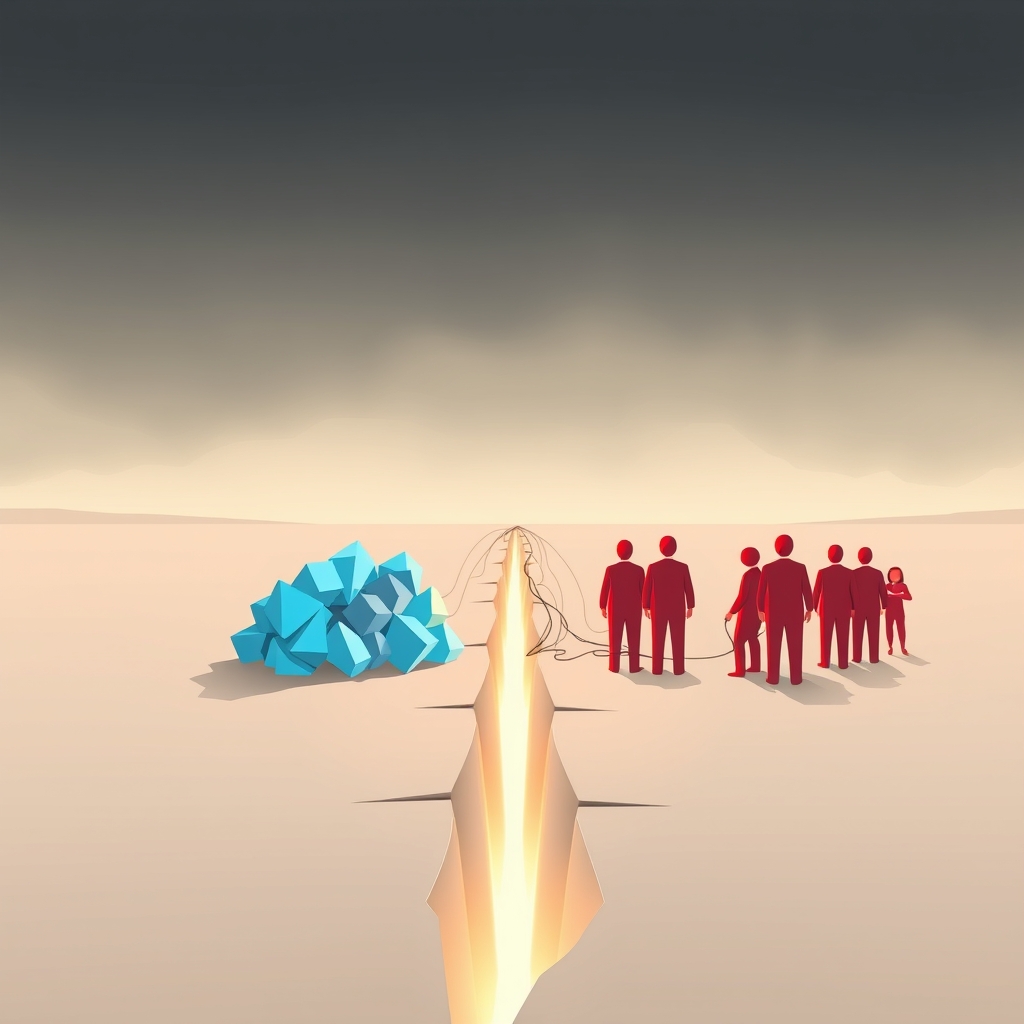
👯 Identity politics and sorting mechanisms explain America’s deepening partisan divide, driven by group-based animosity rather than ideological disagreement.
🤖 AI Summary
💡 Core Argument: Affective Polarization
- 📖 Definition: Not just disagreement on policy, but antipathy and distrust toward opposing partisans. Fueled by group identity.
- 🔄 Mechanism: Sorting: Voters increasingly sort into parties based on race, religion, geography, and ideology, creating homogenous, hostile camps.
- 📺 Media & Politics: Media environment amplifies this, offering personalized streams reinforcing existing biases. Politicians respond to sorted electorates, adopting more extreme stances.
- 🤝 Role of Identity: Political identity becomes a mega-identity, encompassing and superseding other social identities. Loyalty to one’s political group trumps other considerations.
🌪️ Causes of Polarization
- 🧩 Homogeneity: Parties grow internally consistent, ideologically and demographically.
- 😠 Negative Partisanship: Voting against the other side, rather than for one’s own.
- 🧱 Information Silos: Digital age enables easy avoidance of dissenting views.
- 🏛️ Institutional Failures: Primary system rewards extremism; gerrymandering creates safe, homogenous districts.
🛠️ Actionable Insights
- 🧠 Acknowledge Bias: Recognize inherent human tendency towards in-group/out-group thinking.
- 🌎 Diversify Information: Actively seek out varied news sources and perspectives.
- 🤝 Cross-Partisan Contact: Foster real-world interactions with those holding different political views.
- ⚙️ Institutional Reform: Advocate for changes that reduce incentives for extremism (e.g., open primaries, ranked-choice voting).
⚖️ Evaluation
- 💖 The concept of affective polarization is widely accepted in political science, emphasizing emotional animosity over policy differences.
- 📊 Klein’s focus on sorting as a primary driver is supported by research showing increasing alignment of social identities with political parties.
- 📉 Critiques sometimes point to a potential underemphasis on economic inequality and structural power dynamics as independent drivers of political division, beyond identity.
- 🔍 Some scholars suggest that while Klein effectively diagnoses the problem, the proposed solutions often feel less robust or actionable compared to the depth of the analysis of causes.
- 🌍 The argument that identity politics is a ubiquitous feature of human social organization rather than a recent phenomenon has gained traction in understanding long-term political trends.
🔍 Topics for Further Understanding
- 📱 The impact of social media algorithms on the formation and reinforcement of political echo chambers.
- 🧠 The psychological underpinnings of tribalism and in-group/out-group bias in political contexts.
- 🌐 Global trends in democratic backsliding and polarization beyond the American context.
- 💰 The role of economic anxiety and automation in exacerbating identity-based political divisions.
- 📜 Historical precedents for periods of extreme polarization and how they were overcome.
❓ Frequently Asked Questions (FAQ)
💡 Q: What is Ezra Klein’s main argument in Why We’re Polarized?
✅ A: In Why We’re Polarized, Ezra Klein argues that American politics is increasingly driven by affective polarization, where animosity and distrust towards the opposing political party, rather than policy disagreement, have become the primary motivators for voters. He attributes this to the sorting of Americans into politically homogenous, identity-based parties.
💡 Q: How does Why We’re Polarized explain the rise of identity politics?
✅ A: Why We’re Polarized explains that identity politics has intensified because political parties have sorted along demographic and ideological lines. This means that an individual’s political identity increasingly overlaps with their racial, religious, geographic, and cultural identities, creating a powerful mega-identity that fosters strong in-group loyalty and out-group hostility.
💡 Q: What solutions does Why We’re Polarized propose for reducing polarization?
✅ A: While primarily diagnostic, Why We’re Polarized suggests solutions such as understanding the psychological roots of tribalism, actively seeking diverse information sources, fostering cross-partisan interactions, and considering institutional reforms like ranked-choice voting or open primaries to reduce incentives for extreme partisanship.
💡 Q: Is Why We’re Polarized a biased book?
✅ A: Why We’re Polarized is written from Ezra Klein’s perspective as a political journalist and analyst. While it aims for an objective analysis of political science research, its framing and emphasis naturally reflect the author’s viewpoint. Readers should engage critically with its arguments and consider diverse scholarly perspectives on polarization.
💡 Q: What is affective polarization as described in Why We’re Polarized?
✅ A: As described in Why We’re Polarized, affective polarization refers to the tendency of people to dislike, distrust, and feel negatively about members of the opposing political party, more so than they disagree with their policies. It’s a measure of emotional distance and animosity between partisan groups.
📖 Book Recommendations
↔️ Similar
- 😇🧠 The Righteous Mind by Jonathan Haidt
- 🫥🇺🇸😡💔 Strangers in Their Own Land: Anger and Mourning on the American Right by Arlie Russell Hochschild
- 🌐 The Divided Brain and the Making of the Western World by Iain McGilchrist
⚖️ Contrasting
- 🤝📈🇺🇸🔁 The Upswing: How America Came Together a Century Ago and How We Can Do It Again by Robert D. Putnam and Shaylyn Romney Garrett
- 📉 Coming Apart by Charles Murray
- 🚫 Against Empathy by Paul Bloom
🔗 Related
- 🤔🐇🐢 Thinking, Fast and Slow by Daniel Kahneman
- 👉🤏 Nudge by Richard H. Thaler and Cass R. Sunstein
- 🎳🏘️📉📈 Bowling Alone by Robert D. Putnam
🫵 What Do You Think?
🤔 What aspects of Why We’re Polarized resonated most with you, and which of its arguments do you find most challenging or incomplete in explaining today’s political landscape?