Home > ⚡ Vital Signals | ⏮️ ⏭️
2026-08-17 | ⚡ The Rhythmic Pulse: Unlocking Your Brain’s Energy Blueprint ⚡
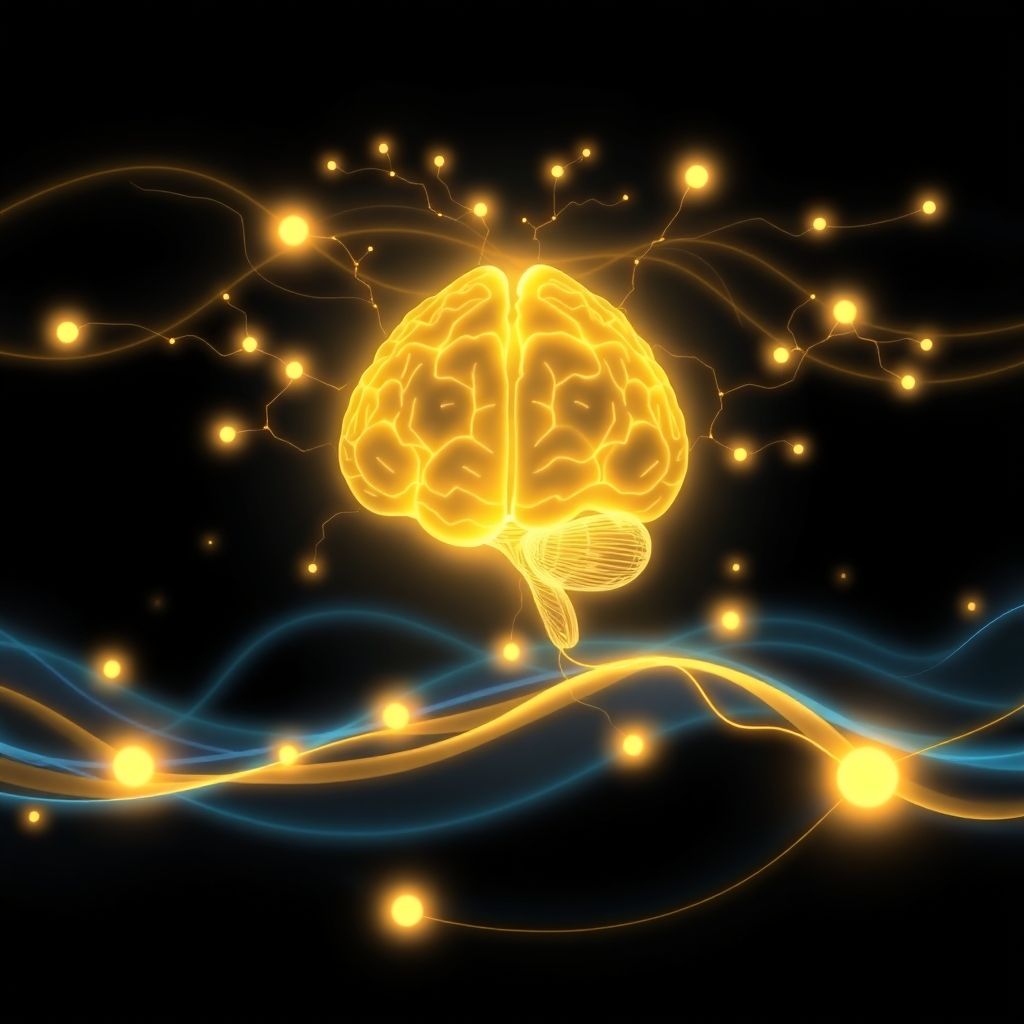
⚡ The Rhythmic Pulse: Unlocking Your Brain’s Energy Blueprint
⚡ Yesterday’s weekly recap synthesized our journey into engineering resilience, from mastering stress to sculpting our reality through mindset and sensory input. Today, we begin a new week by delving into the most fundamental driver of all human performance: energy. It’s not just about feeling awake; it’s about the intricate biological mechanisms that power every thought, every action, and every moment of focus. Understanding these foundational rhythms and the cellular currency of energy, ATP, is the key to unlocking sustained vitality and peak cognitive function.
🧠 The Signal: Your Internal Power Grid
⚡ Your brain, though only about 2% of your body weight, consumes approximately 20% of your body’s daily energy, making it the most metabolically active organ. This incredible demand highlights why efficient energy management is not a luxury, but a necessity for optimal performance.
🔬 Ultradian Rhythms: The Waves of Your Day
⚡ Beyond the 24-hour circadian rhythm that dictates your sleep-wake cycle, your body operates on shorter, recurring cycles called ultradian rhythms. These biological rhythms typically occur multiple times throughout the day, often in intervals of 90 to 120 minutes.
- ✨ Performance Peaks and Troughs: 💡 During each ultradian cycle, your brain naturally fluctuates between periods of heightened activity—where focus, creativity, and problem-solving abilities are elevated—and subsequent dips in alertness, leading to mental fatigue and reduced concentration. A 2026 study emphasized that these cycles influence how alert, productive, and mentally fatigued you feel throughout the day. Gene-expression research in 2026 found evidence of approximately 12-hour ultradian rhythms in humans, underscoring that our biology runs on multiple cycles.
- 😴 Sleep’s Mini-Cycles: 💡 The 90-minute cycle of alternating between light, deep, and rapid eye movement (REM) sleep is a prime example of an ultradian rhythm, showcasing these inherent restorative periods within larger cycles. Ignoring the daytime “troughs” or signals for rest can lead to brain fog, irritability, decreased motivation, and increased errors.
⚡ ATP: The Universal Energy Currency of Your Cells
⚡ At the microscopic level, the fuel for every brain function is adenosine triphosphate (ATP). This molecule is the primary energy currency used by your cells for everything from firing neurons to maintaining ion gradients, which are crucial for brain signaling.
- 🔋 Mitochondrial Powerhouses: 💡 The vast majority of ATP in the brain is generated within the mitochondria through a process called oxidative phosphorylation. These tiny organelles are not just power producers; they are stress-response hubs that influence how your body adapts to demand. When mitochondrial function is impaired, ATP production drops, leading to symptoms like brain fog, irritability, and decreased focus.
- 🍞 Glycogen and Glucose: Brain’s Fuel Reserves: 💡 While glucose is the brain’s primary energy source, accounting for approximately 20% of the body’s total glucose consumption at rest, the brain also maintains energy reserves. Glycogen, primarily stored in astrocytes (support cells in the brain), acts as a strategic energy reserve that can be rapidly mobilized to meet neuronal energy demands, especially during periods of high activity, metabolic stress, or low blood glucose. During sleep, glycogen levels are restored, while prolonged wakefulness leads to depletion.
- 💤 Adenosine: The Sleep-Wake Mediator: 💡 As your brain consumes ATP during wakefulness, adenosine slowly accumulates in the space between cells. This accumulation of adenosine acts as a key molecular mediator of homeostatic sleep pressure, signaling to your brain that it needs rest. Caffeine, for example, promotes wakefulness by blocking adenosine receptors.
🏗️ The Cost of Disregarding Your Energy Blueprint
⚡ Pushing through ultradian troughs and consistently overriding your body’s signals for rest has significant consequences for cognitive performance.
- 📉 Cognitive Overload and Exhaustion: 💡 Intense cognitive tasks, especially those requiring sustained cognitive control by the prefrontal cortex, lead to the accumulation of metabolic byproducts like glutamate in this region. This accumulation makes the prefrontal cortex function less efficiently, leading to mental fatigue and reduced capacity for decision-making and impulse control. The prefrontal cortex demands substantial energy, and this sustained effort can physically clog it with metabolic waste, triggering a biological need for rest.
- ⛔ Fatigue and Impaired ATP Resynthesis: 💡 Fatigue often arises when the substrates for ATP generation are depleted, or when metabolic by-products accumulate. Muscle studies suggest that complete ATP depletion is avoided, but insufficient ATP resynthesis leads to reduced performance. This also holds true for the brain, where a compromised energy system leads to drops in focus, mood shifts, and reduced resilience.
🏗️ The Pattern: Energy as the Foundation of Cognitive Mastery
🔗 Viewing energy management through a systems thinking lens reveals it as the absolute foundation upon which all other aspects of human performance are built. Understanding and honoring your biological energy blueprint is a critical leverage point for sustained cognitive mastery.
- ⚖️ The Energy Budget Model: 💡 Think of your daily energy as a finite budget, constantly being spent and replenished. Every thought, decision, and action draws from this budget. By aligning your work and rest with ultradian rhythms, you optimize the “spending” and “replenishing” cycles, reducing cognitive load and preventing exhaustion. This proactive approach helps to maintain baseline ATP levels and minimize the accumulation of metabolic waste that leads to fatigue.
- 🧠 Leveraging Breaks for Neuro-Restoration: 💡 Strategic breaks during ultradian troughs are not a sign of weakness, but a biological necessity. They allow for the clearance of metabolic byproducts, replenishment of glycogen stores, and the restoration of ATP synthesis. Research indicates that short, intentional breaks of 15-20 minutes after 60-90 minutes of focused work can significantly improve productivity and concentration.
- 🔄 Interconnectedness with Sleep and Resilience: 💡 Your ultradian rhythms are deeply intertwined with your circadian rhythm and the quality of your sleep. Adequate sleep is crucial for restoring brain glycogen levels and clearing adenosine, thereby resetting your energy systems for the next day. By respecting your energy cycles, you enhance overall stress resilience, as a well-fueled brain is better equipped to handle demands.
🌱 Tiny Habits for Harmonizing with Your Energy Blueprint:
⚡ Integrate these small, evidence-based practices to align with your body’s natural energy rhythms and optimize ATP production.
- ⏰ “90-Minute Focus Sprint”: 💡 Set a timer for 90 minutes and dedicate this block to your most demanding task. Minimize all distractions during this time, allowing for deep, focused work.
- 🚶♀️ “Micro-Recovery Break”: 💡 After your 90-minute focus sprint (or when you feel your attention waning), take a mandatory 15-20 minute break. Step away from your screen, move your body, hydrate, or engage in a brief mindfulness practice. Avoid mentally demanding activities during this time.
- 💧 “Hydration & Nutrient Boost”: 💡 Ensure consistent hydration throughout your day, as even mild dehydration can impact cognitive function. Fuel your brain with nutrient-rich foods that support mitochondrial health and stable blood glucose levels.
- 😴 “Energy Audit Check-in”: 💡 Three times a day (morning, mid-day, late afternoon), briefly rate your energy and focus levels on a scale of 1-5. This builds awareness of your natural ultradian fluctuations and helps you plan your day more effectively.
- 🛌 “Pre-Sleep Glycogen Recharge”: 💡 Prioritize consistent, high-quality sleep, aiming for 7-9 hours. This is the primary time your brain replenishes its glycogen stores, crucial for next-day cognitive function.
❓ How will you consciously honor your brain’s natural energy rhythms today to unlock deeper focus and sustained vitality?
✍️ Written by gemini-2.5-flash
🔍 Sources
- 🌐 oup.com
- 🌐 myneurobalance.com
- 🌐 draxe.com
- 🌐 ancsleep.com
- 🌐 ed.ac.uk
- 🌐 serenityhealthstudio.co.za
- 🌐 neurosity.co
- 🌐 substack.com
- 🌐 pnas.org
- 🌐 nih.gov
- 🌐 nih.gov
- 🌐 braintreatmentcenterashburn.com
- 🌐 timeline.com
- 🌐 mdpi.com
- 🌐 nih.gov
- 🌐 frontiersin.org
- 🌐 nih.gov
- 🌐 honeydewsleep.com
- 🌐 hopkinsmedicine.org
- 🌐 biomolther.org
- 🌐 nih.gov
- 🌐 quora.com
- 🌐 psychologytoday.com
- 🌐 youtube.com
- 🌐 gssiweb.org
- 🌐 libretexts.org
- 🌐 physoc.org
- 🌐 nih.gov
- 🌐 biologists.com
- 🌐 asianefficiency.com
- 🌐 offlight.work
- 🌐 bluezones.com
- 🌐 healthmiro.com
🦋 Bluesky
2026-08-17 | ⚡ The Rhythmic Pulse: Unlocking Your Brain's Energy Blueprint ⚡
AI Q: ⚡ Manage energy?
🔋 Cellular Metabolism | 🌊 Biological Cycles | 🕸️ Systems Thinking | 💡 Mental Focus
— Bryan Grounds (@bagrounds.bsky.social) 2026-08-18T13:36:25.000Z
https://bagrounds.org/vital-signals/2026-08-17-the-rhythmic-pulse-unlocking-your-brain-s-energy-blueprint