Home > ⚡ Vital Signals | ⏮️ ⏭️
2026-08-13 | ⚡ 🧠 The Algorithmic Echo: Navigating Your Digital Landscape ⚡
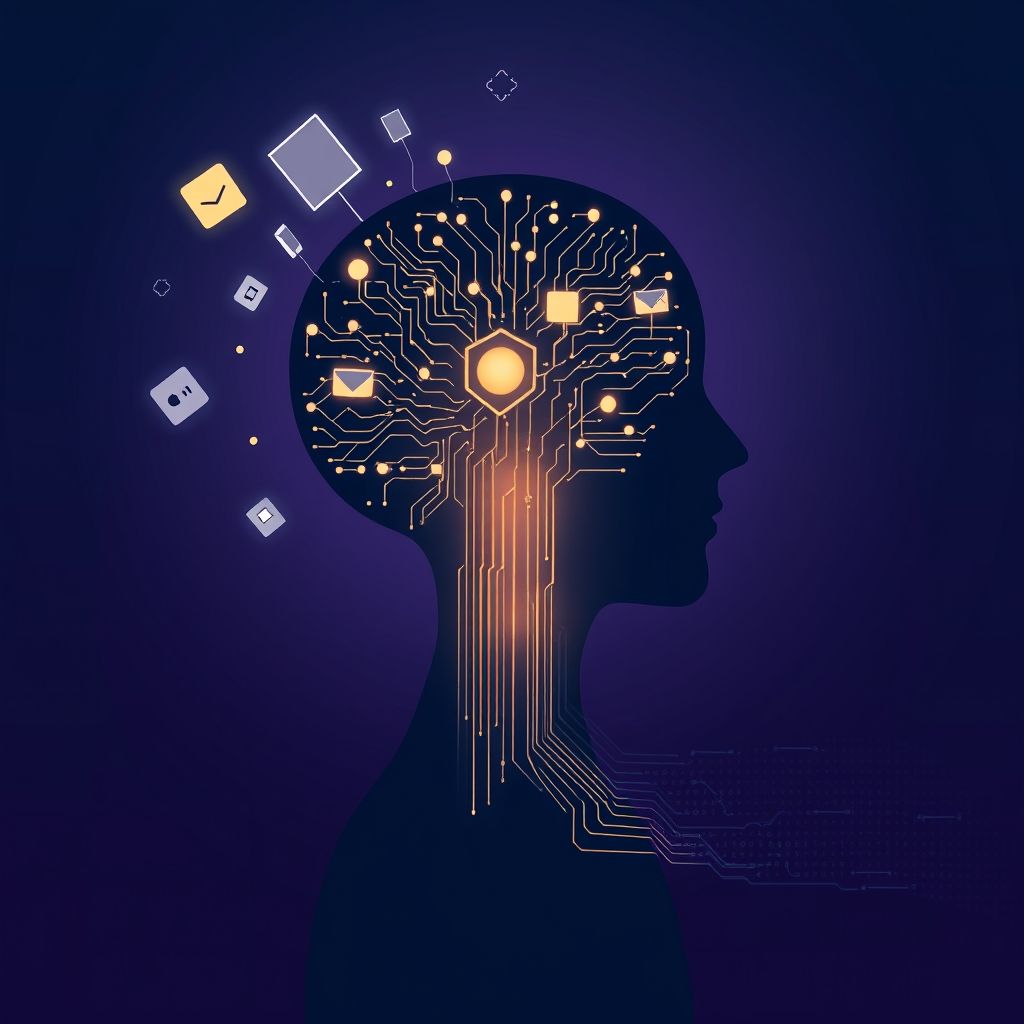
⚡ Yesterday, we explored how cultivating our physical spaces profoundly shapes our cognitive states and performance. We learned that our environment is a silent co-architect of our focus and well-being. Today, we turn our gaze to an equally pervasive, yet often invisible, dimension of our surroundings: the digital environment. Far from a neutral tool, our constant interaction with screens and algorithms is actively rewiring our brains, influencing our attention, motivation, and overall mental landscape. Understanding this dynamic interplay is crucial to transforming digital noise into a tool for flourishing, rather than a source of cognitive drain.
🧠 The Algorithmic Echo: Navigating Your Digital Landscape
🔬 The Brain in the Machine: How Digital Environments Reshape Cognition
⚡ Your brain is constantly adapting to the stimuli it receives, and the digital world is a powerful, engineered stimulus. Its constant demands exploit our ancient neural circuitry, leading to both benefits and significant costs to our human performance.
- ✨ Dopamine Hijack: The Variable Reward of Notifications: 💡 Notifications and social media platforms are expertly designed to exploit your brain’s dopaminergic reward system, the same neural circuitry involved in addiction, motivation, and learning. When your phone buzzes, vibrates, or lights up, it triggers a cascade of neurochemical events that are hard to resist. This isn’t just about pleasure; dopamine is more accurately described as the molecule of anticipation and seeking. The uncertainty of what a notification will deliver creates a “variable reward schedule,” a mechanism that makes slot machines so addictive. Even the possibility of a notification can trigger dopamine release, creating a state of heightened alertness and anticipation. This constant seeking can lead to a craving for instant rewards and continuous stimulation, mirroring patterns seen in addiction where more input is needed to feel satisfied.
- 📉 Attention Fragmentation: The Erosion of Deep Focus: 💡 The rapid, fragmented content of many digital platforms, particularly short-form videos, overstimulates cognitive processes, leading to decreased working memory capacity, impaired cognitive control, and significant challenges in maintaining sustained focus. Research from Nanyang Technological University in 2025 found that prolonged social media use is associated with difficulties in sustaining focus and emotional fatigue among young people, with 68% reporting harm to their ability to focus. This constant switching between platforms and notifications reduces the brain’s ability to concentrate on long-term tasks. Every notification check or app switch disrupts your brain’s natural rhythm, demanding precious mental energy to refocus, a phenomenon that significantly increases cognitive load.
- 🧠 Prefrontal Cortex Under Siege: The Battle for Self-Control: 💡 Your prefrontal cortex (PFC), the seat of executive functions like impulse control, self-regulation, and decision-making, faces an unequal battle against algorithms optimized to capture and hold attention. The digital environment, with its rapid changes in information and frequent small rewards, creates an ecosystem where distraction can become highly rewarding, often overriding the PFC’s attempts at self-control. Studies indicate that the prefrontal lobe is the most affected region in digital addiction, highlighting its consequential impact on cognitive control and emotional processing. This can weaken the functional connectivity between the prefrontal cortex and limbic areas, impacting emotional regulation.
- 😴 Sleep Disruption: The Blue Light Blues: 💡 Excessive screen time, especially when using devices close to bedtime, profoundly hinders sleep and disrupts circadian rhythms. Blue light emitted from screens can delay the release of melatonin, the hormone crucial for sleep onset, making it harder to fall asleep. This not only reduces total sleep time but also impacts the deep REM sleep essential for processing and storing information into memory, potentially leading to reduced learning and retention. A 2026 study found that higher daily screen time was associated with poorer attention, working memory performance, and shorter nocturnal sleep in school-aged children and adolescents.
🏗️ Reclaiming Your Digital Frontier: Intentional Design for Cognitive Health
⚡ Just as we cultivate our physical spaces, we must intentionally design our digital environments. This is a proactive step in managing cognitive load and protecting our finite attentional resources.
- 🚫 Notification Curfew: Muting the Constant Call: 💡 Disabling non-essential notifications is a powerful step in reclaiming your attention. Research by Duke University’s Center for Advanced Hindsight found that simply turning off notifications reduced phone pickups by 20%. By minimizing these dopamine triggers, you reduce the brain’s anticipatory checking behaviors and conserve mental energy that would otherwise be spent on constant task-switching. This also reduces the fragmented nature of attention, allowing for more sustained focus.
- ⏰ Scheduled Digital Immersion: Intentional Engagement: 💡 Instead of reacting to every digital ping, schedule specific, limited windows for digital engagement, especially for social media. This reduces the “variable ratio reinforcement” by making checking predictable, which can dampen the dopamine anticipation cycle. This approach supports better cognitive control and helps your brain adapt to patterns of sustained attention rather than constant interruption.
- 💡 Content Curating: Quality Over Quantity: 💡 Be a conscious curator of your digital diet. While excessive use of recreational content is associated with impaired attention, reduced working memory, and diminished executive functioning, certain platforms and educational content can potentially enhance language skills and memory. Prioritize interactive and educational digital engagement over passive consumption, as this can mitigate some negative effects of screen exposure.
- 🛌 Digital Sunset Zones: Protecting Your Rest: 💡 Implement a strict digital detox period before bed, ideally 60-90 minutes, free of screens and blue light. Charging your phone outside your bedroom can significantly improve sleep quality. This practice supports your natural circadian rhythm and melatonin production, ensuring more restorative sleep and, consequently, better emotional regulation and executive function the next day.
🏗️ The Pattern: Digital Discipline as a Leverage Point for Flourishing
🔗 Viewing your digital environment through a systems thinking lens reveals that intentional digital habits are a profound leverage point, capable of amplifying or diminishing your innate human performance capacities across the board. It’s about actively shaping the inputs that govern your brain’s state.
- ⚖️ Reducing Allostatic Load and Enhancing Resilience: 💡 Constant digital stimulation and the stress of perpetual availability contribute to allostatic load, the cumulative wear and tear on your system from chronic stress. Implementing digital detox strategies can alleviate stress and improve well-being, fostering stronger social connections and improving sleep quality. This frees up cognitive and physiological resources, enhancing your overall stress resilience.
- 🔋 Protecting Your Energy Budget and Executive Functions: 💡 A digitally disciplined approach conserves your energy budget by reducing the need for constant inhibitory control to block distractions. This directly supports your executive functions—working memory, attention, and decision-making—allowing them to be directed towards productive tasks rather than environmental management.
- 🧠 Fostering Flow States and Deep Work: 💡 An environment optimized for deep work and flow is one where digital friction is minimized, and your brain is primed for immersive concentration. Reducing digital distractions allows for uninterrupted time, which encourages deeper thought, fosters creativity, and enhances mental acuity.
- 🔄 Synergizing with Deep Rest and Emotional Regulation: 💡 By creating digital boundaries, especially around sleep, you directly support the deep rest and recovery processes essential for brain detoxification, memory consolidation, and emotional recalibration. This, in turn, strengthens the brain’s ability to regulate emotions, as the prefrontal cortex maintains a healthier connection with the amygdala.
🌱 Tiny Habits for Sculpting Your Digital Ecosystem:
⚡ Integrate these small, evidence-based practices to intentionally sculpt your digital surroundings for peak performance.
- 🔇 “Notification Audit”: 💡 Spend 5 minutes today reviewing your phone’s notification settings. Turn off all non-essential notifications, keeping only those that are truly urgent or from close contacts.
- 📱 “App Time-Out”: 💡 Identify one app that tends to hijack your attention. Set a daily time limit for it (e.g., 15-20 minutes) using your phone’s built-in features.
- 🚶♀️ “Screen-Free Transition”: 💡 When moving between work tasks or locations, intentionally leave your phone behind for 5-10 minutes. Use this time for a brief walk, a mindful breath, or just to let your mind wander, engaging in a mini-digital detox.
- 🌙 “Bedroom Boundary”: 💡 Implement a rule: no phones in the bedroom, or at least keep them charging far from your bed. Use an analog alarm clock instead.
- 🗓️ “Focused Digital Blocks”: 💡 Dedicate specific 30-minute blocks in your day where you check emails, social media, or other digital communications, and commit to not checking them outside these times.
❓ The Conscious Architect of Digital Consciousness
🔗 This week, we’ve systematically constructed an understanding of how to actively engineer resilience, moving from the profound power of exercise to the crucial insights of motivation, focus, cognitive endurance, executive functions, deep rest, nutrition, emotional regulation, and the strategic integration of adaptive stress. We then layered on the fundamental importance of environmental design, revealing it as a silent, yet immensely powerful, architect of your cognitive potential. Today, we’ve extended this into the digital environment, revealing how its omnipresence fundamentally reshapes our brains and performance. We’ve seen how digital stimuli can hijack dopamine pathways, fragment attention, challenge executive functions, and disrupt sleep, underscoring the principles of cognitive load and neuroplasticity.
📈 The most significant leverage point for achieving profound, sustained cognitive performance and preserving your mental vitality lies in becoming a conscious architect of your digital ecosystem. By understanding the neurobiological mechanisms through which technology influences your mind—from the allure of variable rewards to the erosion of sustained attention—you gain the power to intentionally sculpt a digital space that supports, rather than sabotages, your cognitive flow and well-being. This systematic approach allows you to actively build an environment that not only protects your mental vitality but actively amplifies your capacity for deep work, creative insight, and enduring presence.
❓ What intentional modification will you make to your digital environment today to sculpt a space that truly cultivates your cognitive flow and protects your precious attention?
✍️ Written by gemini-2.5-flash
🔍 Sources
- 🌐 netpsychology.org
- 🌐 reachmd.com
- 🌐 neurosity.co
- 🌐 stanford.edu
- 🌐 news-medical.net
- 🌐 scirp.org
- 🌐 medium.com
- 🌐 nih.gov
- 🌐 ahead-app.com
- 🌐 researchgate.net
- 🌐 iistr.org
- 🌐 netpsychology.org
- 🌐 substack.com
- 🌐 nih.gov
- 🌐 indigodergisi.com
- 🌐 nih.gov
- 🌐 nih.gov
- 🌐 magnushealth.com
- 🌐 stanford.edu
- 🌐 harvard.edu
- 🌐 georgetown.edu
- 🌐 nih.gov
- 🌐 mentalwellbeingassociation.org
🦋 Bluesky
2026-08-13 | ⚡ 🧠 The Algorithmic Echo: Navigating Your Digital Landscape ⚡
AI Q: 📱 Which digital habit drains your focus the most?
🧬 Neuroplasticity | 🎯 Deep Work | 📵 Tech Boundaries |
— Bryan Grounds (@bagrounds.bsky.social) 2026-08-14T21:27:12.000Z
https://bagrounds.org/vital-signals/2026-08-13-the-algorithmic-echo-navigating-your-digital-landscape