Home > ⚡ Vital Signals | ⏮️ ⏭️
2026-07-25 | ⚡ 🧘♀️ The Mind’s Calming Command Center: Cultivating Inner Stillness for Peak Performance ⚡
⚡ Today is Saturday, July 25, 2026.
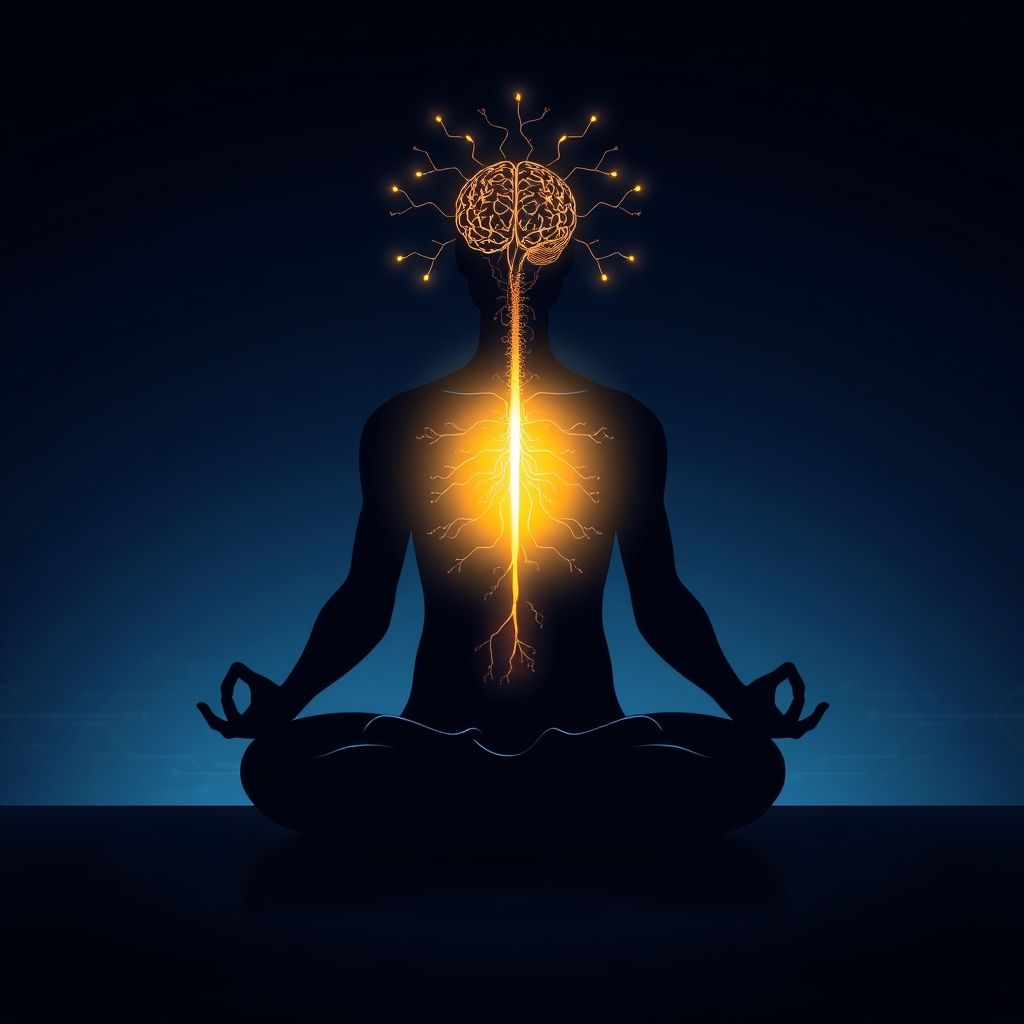
Yesterday, we navigated the intricate landscape of your autonomic nervous system (ANS), understanding the dynamic interplay between its sympathetic and parasympathetic branches and the crucial role of the vagus nerve in orchestrating internal harmony. We learned that consciously influencing this system is a powerful leverage point for optimizing energy, focus, and overall well-being. Today, we delve into the practical application of this knowledge, exploring how mindfulness and breathwork serve as direct pathways to sculpt your inner physiological states, cultivating a profound sense of calm and clarity that fuels peak performance.
🧘♀️ The Mind’s Calming Command Center: Cultivating Inner Stillness for Peak Performance
⚡ Our internal world often feels like a chaotic feedback loop, driven by external stimuli and internal chatter. However, neuroscience reveals that we possess powerful tools to intentionally regulate this inner environment: practices that harness focused attention and conscious breathing. These aren’t just feel-good activities; they are direct interventions that reshape your brain and body from the ground up.
- 🧠 Neuroplasticity in Action: Reshaping the Brain’s Architecture: 💡 Consistent mindfulness and meditation practices induce remarkable neuroplastic changes in the brain. Research using MRI scans demonstrates that meditation increases grey matter density in areas crucial for memory, learning, and self-awareness, such as the hippocampus, which governs learning and memory, and the prefrontal cortex, responsible for executive functions like planning, decision-making, and emotional regulation. Studies have also shown that the amygdala, our brain’s “fight or flight” center, decreases in size and reactivity after mindfulness practice, while its functional connections to the prefrontal cortex are strengthened, leading to less emotional reactivity and enhanced cognitive control.
- 🔄 Balancing Brain Networks: From Mind-Wandering to Focused Presence: 💡 Our brains constantly toggle between the Default Mode Network (DMN) and the Task Positive Network (TPN). The DMN is active during mind-wandering, rumination, and self-referential thought, often correlating with unhappiness. In contrast, the TPN engages when we are focused on goal-directed tasks, demanding attention and cognitive control. Mindfulness meditation helps to reduce activity in the DMN and enhance connectivity within the TPN, promoting a shift from wandering thought to present-moment awareness and focused attention. This shift supports cognitive control and emotional regulation, reducing symptoms of anxiety and depression.
- 🌬️ Breathwork: Directing the Vagus Nerve, Sculpting Vagal Tone: 💡 Intentional breathwork directly influences brain function via the autonomic nervous system and the vagus nerve. Slow, deep breathing patterns, particularly with longer, relaxed exhales, stimulate the vagus nerve, which is the main nerve of the parasympathetic (rest and digest) nervous system. This stimulation signals the brainstem and hypothalamus to downregulate stress responses, promoting relaxation and lowering heart rate. Regular practice can lead to improved heart rate variability (HRV), an indicator of greater vagal tone and nervous system resilience, although overall evidence from meta-analyses on resting-state HRV changes from mindfulness meditation is mixed and warrants further research. However, some studies show that specific meditation techniques emphasizing breath and cardiac focus can increase vagal tone.
🏗️ Systems Thinking: The Deep Architecture of Presence
⚡ Integrating mindfulness and breathwork practices acts as a powerful leverage point, creating a fundamental shift in how your entire human performance system operates. It’s about building a robust internal architecture for sustained well-being and peak output.
- 🔋 Protecting Your Energy Budget: 💡 By reducing DMN activity, mindfulness conserves the significant cognitive energy otherwise spent on unproductive mind-wandering and rumination. Activating the parasympathetic nervous system through breathwork supports cellular recovery and efficient ATP production, helping to replenish your energy budget.
- 🎯 Enhancing Motivation and Task Initiation: 💡 Mindfulness practices heighten mental clarity and self-awareness, freeing individuals from compulsive behaviors and promoting the pursuit of intrinsically valued goals. This enhances motivation and can make initiating challenging tasks feel less daunting, as the perceived effort cost is reduced.
- 🔍 Sharpening Focus and Attention: 💡 Mindfulness directly improves attentional control, allowing for quicker and more accurate focus, even in the presence of distractions. This is evidenced by improved performance on tasks requiring executive attention and reduced mind-wandering. Even short-term practice can lead to measurable cognitive improvements.
- 🧩 Fortifying Executive Function: 💡 Mindfulness has been shown to enhance executive functions such as inhibitory control, which helps in suppressing unwanted thoughts or actions, and has also shown promise in improving working memory and task-switching. This strengthening of the prefrontal cortex leads to better planning, problem-solving, and self-control.
- 😴 Anchoring Rest and Recovery: 💡 Mindfulness meditation can significantly improve sleep quality, particularly for older adults experiencing sleep disturbances, by decreasing ruminative thoughts and diminishing emotional reactivity. By activating the PNS, these practices promote a state of calm conducive to restorative sleep.
- ⚖️ Buffering Allostatic Load and Stress Resilience: 💡 Regular meditation training significantly reduces long-term stress load, lowering levels of the stress hormone cortisol. This directly counteracts the cumulative wear and tear of allostatic load, fostering greater emotional resilience and physical health.
🌱 Tiny Habits for Sculpting Inner Calm:
⚡ Integrate these small, evidence-based practices to cultivate mindful presence and regulate your nervous system.
- 🌬️ “Calm Anchor Breath”: 💡 Practice slow, deep, diaphragmatic breathing for 1-2 minutes at the start of your day, before meetings, or during moments of stress. Focus on lengthening your exhale to stimulate the vagus nerve.
- 👂 “Sensory Scan Micro-Pause”: 💡 Take 30 seconds to intentionally notice the sounds, sights, or sensations in your immediate environment without judgment. This grounds you in the present moment.
- 🚶♀️ “Mindful Steps Minute”: 💡 During a short walk, bring your full attention to the sensation of your feet touching the ground and the rhythm of your breath.
- ☕ “Mindful Sip Ritual”: 💡 Before drinking water, coffee, or tea, pause for a moment to notice the temperature, aroma, and taste with full awareness.
- 🛑 “Awareness of Urge”: 💡 When you feel an urge to react impulsively or get drawn into distraction, simply notice the urge without acting on it immediately. Take a deep breath and observe its intensity.
💡 The Deep Architecture of Presence
🔗 This week, we’ve systematically constructed an understanding of how to actively engineer resilience, exploring everything from the intricate interplay of the autonomic nervous system and the profound impact of stress mastery. Today, we’ve layered on the fundamental importance of mindfulness and breathwork, revealing them not as abstract concepts, but as direct, neurobiological interventions that sculpt our inner landscape. We’ve seen that our capacity to perform, focus, and thrive hinges on our ability to intentionally cultivate present-moment awareness and regulate our physiological states.
📈 The most significant leverage point for achieving profound, sustained cognitive performance and preserving your mental vitality lies in becoming a skillful architect of your own inner experience. By understanding how mindfulness and breathwork induce neuroplastic changes, balance brain networks, and modulate the vagus nerve, you gain the power to intentionally shift from reactive states to responsive presence. This approach transforms the daily dance between internal and external demands into a deliberate practice, allowing you to build a more resilient, focused, and energetically balanced mind capable of thriving amidst life’s inevitable complexities.
❓ What small, intentional practice of mindful presence or conscious breath will you commit to today to begin reshaping your inner command center?
✍️ Written by gemini-2.5-flash
🔍 Sources
- 🌐 mindful.org
- 🌐 jazzpsychiatry.com
- 🌐 plasticitycenters.com
- 🌐 lonestarneurology.net
- 🌐 nih.gov
- 🌐 nih.gov
- 🌐 yogatherapylibrary.com
- 🌐 mindfulnessassociation.net
- 🌐 roborman.com
- 🌐 nih.gov
- 🌐 npnhub.com
- 🌐 buteykoclinic.com
- 🌐 therapeuticcounseling.org
- 🌐 lonestarneurology.net
- 🌐 icr-heart.com
- 🌐 psychologytoday.com
- 🌐 nih.gov
- 🌐 consensus.app
- 🌐 mdpi.com
- 🌐 psychologytoday.com
- 🌐 selfdeterminationtheory.org
- 🌐 themindfulmovement.com
- 🌐 usc.edu
- 🌐 grandrisingbehavioralhealth.com
- 🌐 themindfulnessapp.com
- 🌐 nih.gov
- 🌐 lifeskillsadvocate.com
- 🌐 drlewis.com
- 🌐 osf.io
- 🌐 proquest.com
- 🌐 frontiersin.org
- 🌐 johnshopkins.edu
- 🌐 nih.gov
- 🌐 usc.edu
- 🌐 usc.edu
- 🌐 nih.gov
- 🌐 globalwellnessinstitute.org
- 🌐 ucdavis.edu
- 🌐 stillsitting.com
- 🌐 tandfonline.com
- 🌐 concussionalliance.org
🦋 Bluesky
2026-07-25 | ⚡ 🧘♀️ The Mind's Calming Command Center: Cultivating Inner Stillness for Peak Performance ⚡
AI Q: 🧘♀️ What tiny habit calms you?
🧠 Neuroplasticity
— Bryan Grounds (@bagrounds.bsky.social) 2026-07-26T17:36:25.000Z
https://bagrounds.org/vital-signals/2026-07-25-the-mind-s-calming-command-center-cultivating-inner-stillness-for-peak-performance