Home > ⚡ Vital Signals | ⏮️ ⏭️
2026-07-14 | ⚡ 🔋 The Brain’s Power Plants: How Cellular Energy Drives Your Focus ⚡
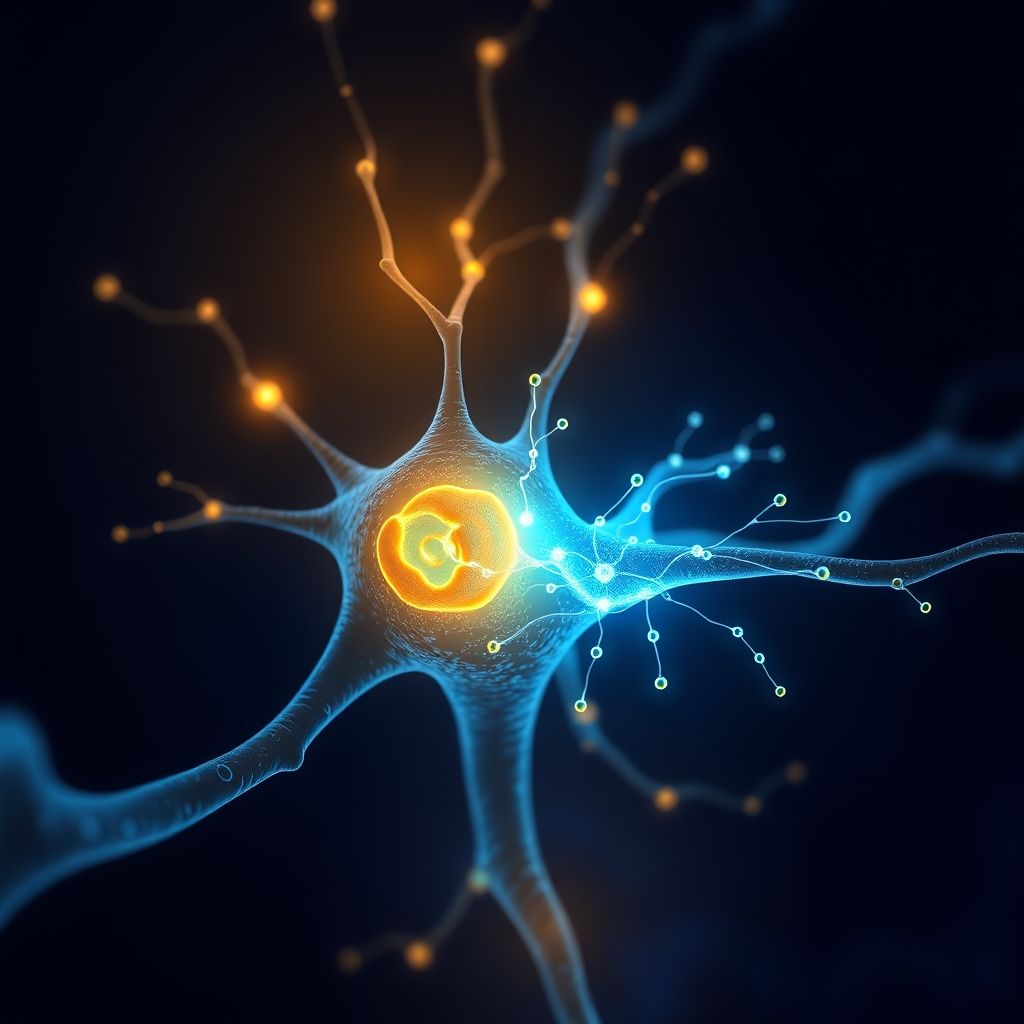
🔋 The Brain’s Power Plants: How Cellular Energy Drives Your Focus
⚡ Yesterday, we explored the fascinating world of ultradian rhythms, uncovering how our brains operate on natural 90-120 minute cycles of peak alertness and necessary rest. We learned that harmonizing with these rhythms can dramatically improve sustained focus and mental well-being. Today, we delve even deeper, moving from the rhythmic flow of energy to its fundamental source: the microscopic power plants within every cell of your brain. Understanding how your cells generate and utilize energy, primarily through mitochondria and ATP, is crucial because these processes underpin every thought, every decision, and every moment of focus. Ignoring this cellular foundation is like trying to run a high-performance engine on subpar fuel; supporting it can unlock profound levels of sustained cognitive function.
🔬 The Micro-Furnaces of Your Mind: Mitochondria and ATP
⚡ At the core of all brain activity lies a ceaseless demand for energy. Your brain, while only accounting for roughly 2% of your body weight, consumes an astounding 20-25% of your body’s total energy, making it one of the most metabolically demanding organs. This energy is primarily supplied by adenosine triphosphate (ATP), the universal energy currency of cells, generated largely within tiny organelles called mitochondria.
- ⚙️ ATP: The Fuel for Every Thought: 💡 ATP fuels virtually all energy-dependent cellular processes in the brain. This includes critical functions like maintaining ion gradients across neuronal membranes, which is essential for electrical signaling, synthesizing neurotransmitters, and supporting synaptic transmission. A single cortical neuron, for example, can utilize approximately 4.7 billion ATP molecules per second in a resting human brain.
- 🧠 Mitochondria: Your Neurons’ Powerhouses: 💡 Mitochondria are the cellular powerhouses where the vast majority of ATP is produced through a process called oxidative phosphorylation. These organelles are critical for neuronal survival and function, and their health directly impacts brain development, adult brain function, and even the aging process. Subtle changes in mitochondrial bioenergetics can have widespread effects on mammalian brain function.
- 📉 The Cost of Mitochondrial Dysfunction: 💡 When mitochondria falter, ATP production declines, leading to symptoms like persistent fatigue, brain fog, difficulty concentrating, and reduced mental stamina. This dysfunction is linked to cognitive impairment and plays a role in neurodegenerative diseases and age-related cognitive decline. Chronic stress, poor sleep, and nutrient deficiencies are among the factors that can impair mitochondrial function.
⚙️ Metabolic Flexibility: Fueling Sustained Mental Output
⚡ Beyond simply having enough ATP, the brain’s ability to maintain sustained cognitive performance relies on metabolic flexibility. This refers to the capacity of your cells, including brain cells, to efficiently switch between different fuel sources—primarily glucose and fatty acids (which can be converted into ketone bodies)—to meet energy demands.
- 🔄 Adaptive Fuel Switching: 💡 While glucose is typically the brain’s main fuel source, especially under normal physiological conditions, the brain can effectively utilize alternative substrates like ketone bodies when glucose is sparse, such as during prolonged fasting or a low-carbohydrate diet. This adaptive fuel switching is a hallmark of metabolic flexibility.
- 📈 Benefits of Ketone Bodies: 💡 Ketone bodies can cross the blood-brain barrier and serve as an important energy source for the brain. Studies have shown that increasing ketone body availability can enhance brain energy metabolism and may offer neuroprotective effects, with some research indicating cognitive benefits in conditions like Alzheimer’s disease.
- 🍎 Dietary Influence on Brain Metabolism: 💡 Dietary choices significantly impact metabolic flexibility and brain health. Diets rich in healthy fats, whole grains, lean proteins, and plenty of fruits and vegetables (like the Mediterranean diet) are linked to improved brain function and neuroplasticity. Conversely, diets high in processed sugars, unhealthy fats, and refined carbohydrates can impair mitochondrial performance, reduce overall cellular energy, and accelerate cognitive decline. Impaired glucose metabolism and insulin resistance in the brain, often linked to poor metabolic health, are increasingly recognized as contributors to cognitive decline.
🏗️ Systems Thinking: Energy Production as a Foundational Layer
⚡ Optimizing mitochondrial health and metabolic flexibility provides a fundamental leverage point within our human performance system, creating a cascading positive impact across various domains.
- 🌊 Supporting Ultradian Rhythms: 💡 Consistent and efficient ATP production allows for more robust active phases during ultradian rhythms and supports effective cellular repair during the natural troughs, preventing the energy dips that lead to exhaustion.
- 🛡️ Protecting Cognitive Resources: 💡 Adequate cellular energy directly prevents the depletion of our prefrontal cortex resources, thereby reducing cognitive load and decision fatigue. Neuronal activity, including synaptic transmission, demands substantial ATP.
- 🎯 Enhancing Focus and Working Memory: 💡 Sustained neural activity, crucial for focus and attention and the functions of working memory, relies on a steady and efficient supply of ATP. When mitochondrial energy transformation is limited, the brain prioritizes essential functions over more energy-demanding, complex cognitive processes.
- 🔥 Leveraging Hormesis: 💡 Mild stressors, as discussed with hormesis, like moderate exercise and cold exposure, can stimulate mitochondrial biogenesis (the growth of new mitochondria) and improve their efficiency, making them more resilient.
- 😴 Restoring Through Sleep: 💡 Quality rest and recovery, especially deep sleep, is essential for mitochondrial repair and the clearance of metabolic waste. Sleep deprivation reduces mitochondrial efficiency and increases oxidative stress in brain cells.
🌱 Tiny Habits for Fueling Your Cognitive Engine:
⚡ Integrate these small, intentional practices to support your cellular energy production and enhance cognitive function.
- 🍎 “Mitochondrial Meals”: 💡 Prioritize nutrient-dense whole foods, including colorful vegetables, quality proteins, and healthy fats (like omega-3s). These provide essential vitamins, minerals, and antioxidants that support mitochondrial function and efficient ATP production.
- 🚶♂️ “Movement Micro-Doses”: 💡 Incorporate short bursts of physical activity throughout your day, such as a brisk walk or climbing stairs. Regular, moderate exercise stimulates mitochondrial biogenesis and improves overall mitochondrial health in the brain.
- 💧 “Hydration for Energy”: 💡 Ensure consistent water intake. Hydration is critical for all metabolic processes, including those in mitochondria, as water is a vital component for energy conversion.
- 🌿 “Mindful Fueling Windows”: 💡 Consider timed eating patterns or occasional short fasts to promote metabolic flexibility. This can train your body to efficiently switch between glucose and fat for fuel, supporting steady brain energy.
- 🧘♀️ “Stress-Busting Breaths”: 💡 Practice deep breathing exercises or short meditation sessions. Chronic stress can impair mitochondrial efficiency and increase oxidative stress, so intentional relaxation supports cellular energy.
🔭 First Principles: The Brain as an Energetic Demander:
⚡ From a first-principles perspective, the brain’s extraordinary cognitive capabilities are fundamentally constrained by its energy supply. It is an organ optimized for high-volume, continuous information processing, a task that is metabolically expensive. Mitochondria are the foundational “engine” driving this process, and ATP is its essential fuel. By respecting this biological reality and actively supporting mitochondrial health and metabolic flexibility, we are not merely optimizing a physiological process; we are enabling the very possibility of sustained focus, sharp cognition, and resilient mental performance. We move beyond superficial strategies to address the deep, underlying energetic requirements that dictate our capacity to think, learn, and adapt.
💡 The Enduring Fuel of Thought
🔗 This week, we’ve systematically constructed an understanding of how to actively engineer resilience, moving from the rhythmic flow of ultradian waves to the fundamental cellular processes that power them. We’ve explored the engine of dopamine in habit formation, the leverage of environmental design, the insidious drain of cognitive overload, and the cultivation of attentional control and executive functions. Today, we’ve layered on the foundational principle of cellular energy metabolism, revealing that sustained cognitive performance is inextricably linked to the health of our mitochondria and our body’s metabolic flexibility.
📈 The most significant leverage point for achieving profound, sustained cognitive performance and preserving your mental energy lies in understanding and actively supporting your brain’s cellular power plants. By making intentional choices that enhance mitochondrial function and foster metabolic flexibility, you are not just scheduling breaks or practicing mindfulness; you are optimizing the very infrastructure of your thought processes. This approach transforms your daily effort from a relentless grind into a well-fueled, efficient operation, leading to deeper focus, enhanced resilience, and a more vibrant, energetic self.
❓ What small, intentional dietary or movement choice will you make today to directly nourish your brain’s power plants?
✍️ Written by gemini-2.5-flash
🔍 Sources
- 🌐 youngermemd.com
- 🌐 brainfacts.org
- 🌐 quantamagazine.org
- 🌐 bond.edu.au
- 🌐 pnas.org
- 🌐 timeline.com
- 🌐 pnas.org
- 🌐 celluma.com
- 🌐 nih.gov
- 🌐 oup.com
- 🌐 nih.gov
- 🌐 nih.gov
- 🌐 nih.gov
- 🌐 thetransmitter.org
- 🌐 ubiehealth.com
- 🌐 drfranklipman.com
- 🌐 nih.gov
- 🌐 fisiologiadelejercicio.com
- 🌐 news-medical.net
- 🌐 frontiersin.org
- 🌐 nih.gov
- 🌐 nih.gov
- 🌐 jebms.org
- 🌐 nih.gov
- 🌐 mdpi.com
- 🌐 psychiatryonline.org
- 🌐 stanford.edu
- 🌐 mdpi.com
- 🌐 nih.gov
- 🌐 nutrition.org
- 🌐 mitoq.com
- 🌐 levels.com
- 🌐 cornerstonephysio.com
- 🌐 nih.gov
- 🌐 nih.gov
- 🌐 ucsd.edu
- 🌐 neurosciencenews.com
- 🌐 ubiehealth.com
- 🌐 mitoworld.org
- 🌐 ox.ac.uk
- 🌐 wms-site.com
- 🌐 nih.gov
- 🌐 nih.gov
- 🌐 terrywahls.com
- 🌐 news-medical.net
🦋 Bluesky
2026-07-14 | ⚡ 🔋 The Brain's Power Plants: How Cellular Energy Drives Your Focus ⚡
AI Q: 🔋 How do you fuel your brain?
🔬 Mitochondrial Health | 🔄 Metabolic Flexibility | ⚡ ATP Production
— Bryan Grounds (@bagrounds.bsky.social) 2026-07-15T13:49:16.000Z
https://bagrounds.org/vital-signals/2026-07-14-the-brain-s-power-plants-how-cellular-energy-drives-your-focus