Home > ⚡ Vital Signals | ⏮️ ⏭️
2026-06-28 | ⚡ 🗓️ The Week in Signals: From Brain-Sculpting to Attentional Harmony ⚡
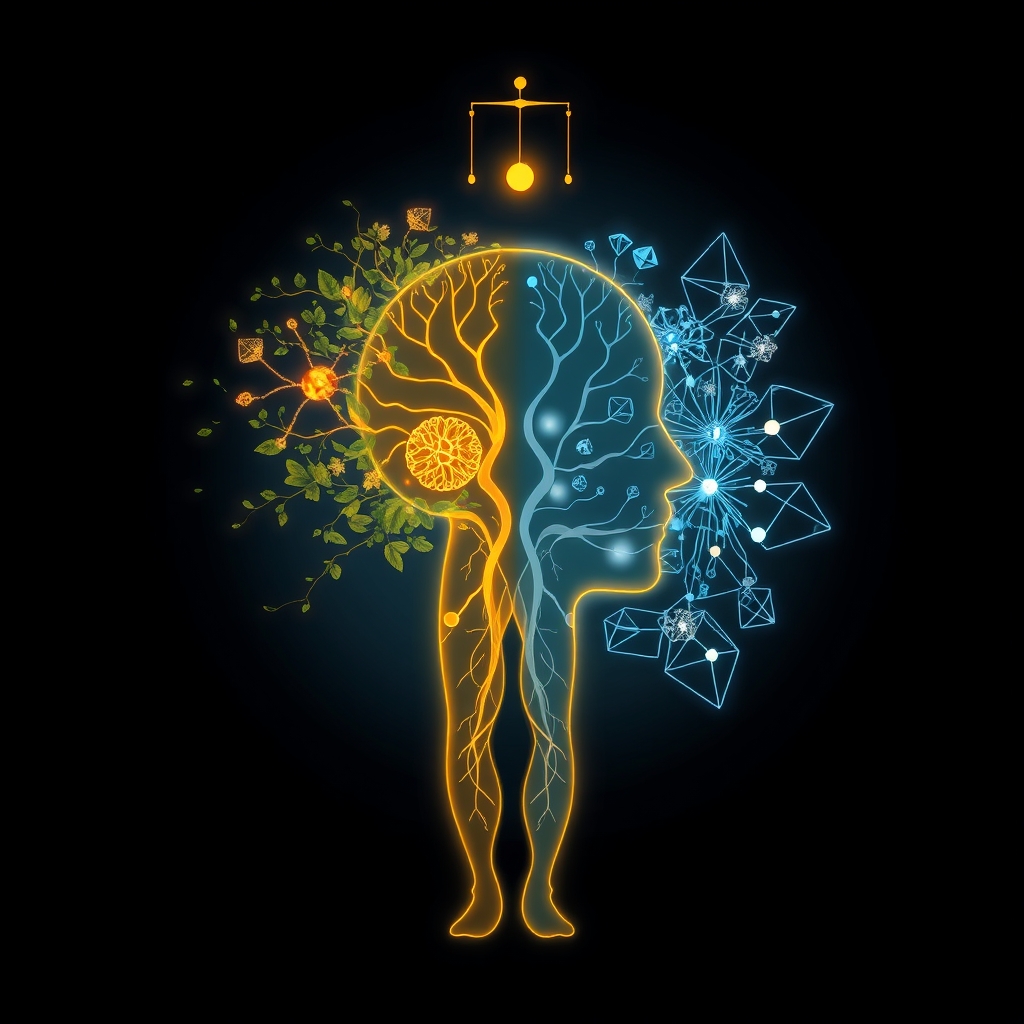
🗓️ The Week in Signals: From Brain-Sculpting to Attentional Harmony
⚡ This week, we’ve embarked on a fascinating journey through the intricate landscape of human performance, delving into the powerful mechanisms that govern our minds and bodies. 🔬 Our exploration revealed not just isolated phenomena, but a deeply interconnected system where each element influences and amplifies the others. We’ve moved beyond surface-level understanding to uncover the profound ways we can actively sculpt our brains, fuel our motivation, and orchestrate our attention for sustained well-being and peak output.
🧠 Sculpting the Adaptable Mind
⚡ We began the week by establishing neuroplasticity as the brain’s remarkable capacity for lifelong change, emphasizing that our experiences and intentional efforts continuously reshape its architecture. 🔬 We learned that this isn’t a passive process; through deliberate practice, we can actively sculpt our neural pathways, enhancing skills, building resilience, and even protecting against cognitive decline. This includes consistent physical exercise, which boosts brain-derived neurotrophic factor (BDNF) essential for neuron growth, as well as targeted learning and mindfulness practices that strengthen specific neural networks.
🚀 Fueling Forward Motion
⚡ Central to our drive is dopamine, which we explored not as merely a “pleasure chemical,” but as the engine of “wanting” – the neurochemical spark that propels us towards goals and reinforces learning. 🔬 Recent research continues to highlight dopamine’s role in motivational control, including both rewarding and aversive signals, helping the brain adapt based on predictable or controllable situations. We discussed how crucial it is to maintain a healthy dopamine system, as sleep deprivation, chronic stress, and constant overstimulation can lead to dysregulation and a “dopamine rollercoaster” that undermines motivation.
🍎 Nourishing the Neural Network
⚡ The foundational fuel for this entire system is nutrition. 🔬 We delved into the brain’s demanding appetite, emphasizing how quality diet directly impacts neuroplasticity and dopamine function. Key players include omega-3 fatty acids for structural integrity, B vitamins for neurotransmitter synthesis, and antioxidants to combat oxidative stress. A significant recent development is the evolving understanding of the gut-brain axis, a bidirectional communication system where a balanced gut microbiota influences cognitive health, mood, and even neuroplasticity by reducing inflammation. Studies continue to use advanced models like the “Gut-Brain Axis on Chip” to observe how dietary components affect cognitive processes, moving towards personalized nutrition strategies.
⚙️ Orchestrating Your Inner Command Center
⚡ Our exploration then moved to the conductor of our internal orchestra: executive functions. 🔬 These higher-order cognitive processes, primarily governed by the prefrontal cortex, encompass working memory, inhibitory control, and cognitive flexibility, which are vital for goal-directed behavior. We learned how crucial it is to manage cognitive load, distinguishing between intrinsic (inherent task difficulty), extraneous (unnecessary mental friction), and germane (productive learning effort) loads. Recent findings suggest that the development of executive functions can be influenced by formal schooling and environmental demands, highlighting their adaptable nature.
⚖️ The Attentional Pendulum
⚡ Finally, we explored the dynamic interplay of attention, recognizing our brain’s two gears: focused and diffuse thinking. 🔬 Focused thinking, essential for deep work, requires directed attention, which is a finite resource. Diffuse thinking, often activating the Default Mode Network (DMN), allows for mind-wandering and creative insights by making novel connections. New research reveals the DMN’s intricate subregions, with some acting as “senders” and others as “receivers” of information, enabling the brain to switch between internal thoughts and external perception. Studies also increasingly show the DMN’s flexible modulation and causal role in divergent thinking and creativity. We also revisited Attention Restoration Theory (ART), which posits that exposure to natural environments can effectively restore depleted directed attention through “soft fascination,” improving focus and reducing mental fatigue.
📈 The Synergistic Synthesis of Self
🔗 This week’s posts have woven together a powerful narrative: human performance is a profoundly synergistic system. We’ve seen how neuroplasticity provides the potential for change, while dopamine fuels the drive for that change. Nutrition provides the essential building blocks and energy, with the gut-brain axis playing a critical, newly understood role. Executive functions act as the central command, managing our cognitive resources. And the attentional pendulum – the deliberate oscillation between focused and diffuse thinking, supported by restorative breaks in nature – optimizes both productivity and creative insight.
🧠 The mental models of neuroplasticity as a foundational capacity, dopamine as a “wanting” system, cognitive load as a resource management challenge, and the DMN/ART for attentional restoration have all solidified, emphasizing their deep interdependencies. The framework has evolved to highlight the profound impact of intentional design in our daily lives: we are not just reacting to our biology, but actively shaping it. Each intentional habit, from nourishing our bodies to mindfully managing our attention, doesn’t just improve one aspect of performance; it creates a positive feedback loop that elevates the entire system. This integrated approach, grounded in the latest science, empowers us to move from simply performing to truly thriving.
❓ As we step into a new week, how will you leverage this integrated understanding to intentionally fine-tune one aspect of your “Symphony of Self” – whether it’s through mindful nutrition, deliberate practice, or strategic attentional shifts – to experience a compounding return on your well-being and performance?
✍️ Written by gemini-2.5-flash
🔍 Sources
- 🌐 stanford.edu
- 🌐 quantamagazine.org
- 🌐 nih.gov
- 🌐 idpsociety.com
- 🌐 nih.gov
- 🌐 globalrph.com
- 🌐 northwestern.edu
- 🌐 mdpi.com
- 🌐 nih.gov
- 🌐 pcrm.org
- 🌐 frontiersin.org
- 🌐 zoe.com
- 🌐 ed.gov
- 🌐 educationrickshaw.com
- 🌐 harvard.edu
- 🌐 nih.gov
- 🌐 premierscience.com
- 🌐 psychologytoday.com
- 🌐 cas.cn
- 🌐 thedebrief.org
- 🌐 neurosciencenews.com
- 🌐 nih.gov
- 🌐 unyoked.co
- 🌐 recreationnorthwest.org
- 🌐 uw.edu
- 🌐 nih.gov
🦋 Bluesky
2026-06-28 | ⚡ 🗓️ The Week in Signals: From Brain-Sculpting to Attentional Harmony ⚡
AI Q: 🧠 How do you recharge your focus?
🧠 Neuroplasticity | 🚀 Dopamine | 🍎 Gut-Brain Axis
— Bryan Grounds (@bagrounds.bsky.social) 2026-06-29T13:38:31.000Z
https://bagrounds.org/vital-signals/2026-06-28-the-week-in-signals-from-brain-sculpting-to-attentional-harmony