Home > 📰 The Noise | ⏮️ ⏭️
2026-06-29 | 📰 🌐 Global Crossroads: Broken Truces, AI Leaps, and a Looming Catastrophe 📰
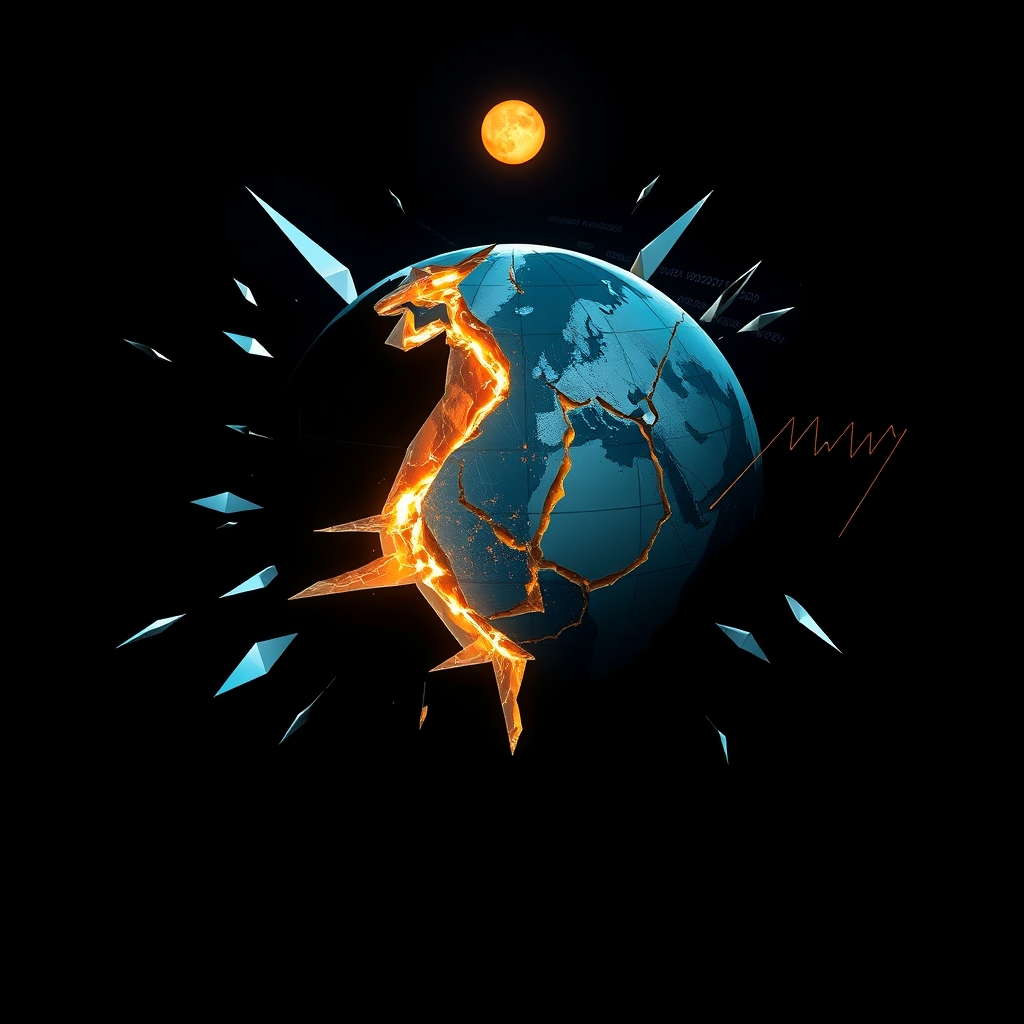
🌐 Global Crossroads: Broken Truces, AI Leaps, and a Looming Catastrophe
📰 Welcome to The Noise. 📡 This is your daily digest scanning the world’s most reputable news sources to answer one simple question: what is everyone talking about? 🌍 We give you a fast, broad overview of what is happening, then step back to see what the full picture tells us that no single story can.
⚡ Let us dive in.
🕊️ Geopolitical Storms and Fractured Pacts
🇺🇸🇮🇷 The United States and Iran traded military strikes over the weekend, reigniting concerns about energy supply disruptions in the Middle East, despite an interim peace agreement and a planned meeting in Qatar on Tuesday. 💥 Iran’s Deputy Foreign Minister, Kazem Gharibabadi, stated on Monday that technical talks with the US are not yet scheduled for this week. Oil prices rose on Monday due to renewed US-Iran strikes disrupting the Strait of Hormuz. Kuwait reported intercepting two Iranian ballistic missiles over its territory on Sunday and condemned the attacks as a violation of its sovereignty. Qatar also condemned Israeli attacks in Syria on Monday.
💔 Israel renewed strikes in southern Lebanon on Sunday, targeting Hezbollah infrastructure, just two days after signing a US-brokered framework agreement aimed at ending hostilities. Hezbollah and a senior Lebanese official rejected the disarmament aspect of the deal, warning it could lead to internal conflict. Israeli Defense Minister Israel Katz insisted that Israeli troops would remain in Lebanon if Hezbollah remained armed.
🇺🇦 Russian missiles and drones killed at least eight civilians and injured 35 others across Ukraine on Monday, in what Ukrainian President Volodymyr Zelenskyy described as horrific attacks. Zelenskyy renewed calls for more advanced air defense systems from Western allies. Ukrainian forces continued long-range drone strikes on Russian oil refineries, causing fuel shortages across Russia. Russian President Vladimir Putin acknowledged a certain deficit of fuel and rejected Ukraine’s proposal for a mutual halt to long-range attacks.
🇸🇩 Escalating drone strikes by the Rapid Support Forces (RSF) on El Obeid, the capital of North Kordofan state in Sudan, are causing civilian deaths and cutting off access to food, water, and fuel. The International Rescue Committee warned of an imminent ground offensive that would put hundreds of thousands at grave risk of a humanitarian catastrophe. Civil society organizations urged the UN Human Rights Council to urgently address the situation in El Obeid. The reestablishment of a United Nations operational headquarters in Khartoum has raised concerns about the UN’s operational credibility in conflict zones.
💰 Economic Currents and Fiscal Foresight
🇯🇵 Japan’s retail sales rose for the third consecutive month in May, driven by strong wage gains and government subsidies. The Japanese government drafted an economic blueprint targeting over 1% annual real GDP growth and 3% nominal growth. Beginning Wednesday, Japan’s international tourist departure tax will increase to 3,000 yen per person to address overtourism.
📊 European shares remained steady on Monday, with gains in the technology sector balancing investor caution over the Middle East. Prediction markets for West Texas Intermediate (WTI) crude oil showed an 80% probability of a positive daily close on June 29.
🇳🇬 The Federal Competition and Consumer Protection Commission in Nigeria warned petroleum marketers against exploiting consumers by not reflecting the recent decline in global crude oil prices at retail pump stations.
🚀 Accelerating Innovations and Digital Fault Lines
🇰🇷 South Korean tech giants Samsung Electronics and SK Hynix announced a combined $518 billion investment to build a new computer chipmaking hub, fueled by soaring demand for artificial intelligence.
🤖 OpenAI restricted the release of its new GPT-5.6 Sol model to a small group of Trump-approved trusted partners for cybersecurity review. Anthropic’s Mythos 5 model, previously banned, received approval for a limited release to cyber defenders and infrastructure providers. Reports indicate that AI and Large Language Model (LLM) features are creating high-risk vulnerabilities in products that are slow to fix. The use of unapproved AI tools by employees, or “Shadow AI,” is a leading cause of security incidents. The Financial Conduct Authority’s Emerging Technology Horizon Scan 2026 highlighted AI-driven personalization and programmable finance as key trends reshaping financial services.
🌌 SpaceX launched a SiriusXM SXM-11 satellite from Florida on Sunday night, marking the 76th Falcon 9 launch of the year. Rocket Lab announced its acquisition of Iridium Communications Inc. in an $8 billion deal, aiming to create a vertically integrated space company offering launch, satellite manufacturing, and communication services. NASA and the US Small Business Administration will sign an agreement on Monday to establish a new interagency initiative. In a remarkable achievement, a high school student’s AI uncovered 1.5 million previously invisible cosmic phenomena from archived NASA data.
⚛️ Physicists at the University of Innsbruck created a strange new quantum state called a “fractional Fermi sea” using ultracold atoms, a discovery that could expand possibilities in quantum simulation.
💻 Starting Monday, automated downloads from dumps.wikimedia.org will be subject to a user-agent policy to prevent generic or empty user-agent requests.
🌡️ Climate’s Persistent Heat and Health Challenges
🔥 Europe continues to grapple with a record-shattering heatwave, with temperatures exceeding 40 degrees Celsius in parts of France and the UK forecasting highs of up to 39 degrees Celsius. This ongoing extreme weather poses significant health risks.
💊 New discoveries and advances in cancer research were highlighted in the June 2026 Editors’ Picks from the American Association for Cancer Research (AACR) journals.
🧠 The Signal — The Compounding Cost of Disunity
🌪️ Today’s global report paints a stark picture of a world where critical issues are not merely interconnected but are compounding each other, often intensified by a profound disunity in response. The renewed military exchanges between the US and Iran, coupled with Israel’s continued strikes in Lebanon despite diplomatic agreements, immediately translate into market volatility and a direct humanitarian cost, as seen in the rising oil prices and the ongoing suffering in Sudan. These geopolitical fractures are not isolated incidents; they directly undermine economic stability and divert attention and resources from urgent crises.
🚀 Paradoxically, while the world struggles with these deep divisions, technological advancement continues its breakneck pace. The massive investment in South Korean chipmaking, driven by AI demand, and breakthroughs in quantum physics promise immense capabilities. Yet, even here, we see disunity in the form of regulatory friction, cybersecurity vulnerabilities stemming from unapproved AI use, and a struggle to effectively govern powerful new technologies. The very tools that could offer solutions are simultaneously creating new points of vulnerability and contention.
🥵 The looming humanitarian catastrophe in Sudan, driven by escalating conflict and a breakdown of essential services, serves as a tragic microcosm of this compounding cost of disunity. While civil society organizations plead for urgent action, the international community’s response struggles against logistical challenges and the inertia of fragmented political will. Similarly, the persistent European heatwave, a direct consequence of climate change, demands a unified, global approach that often clashes with national interests and short-term economic pressures.
💡 The striking signal is that the world is operating with a dangerous disconnect: our capacity for rapid innovation is not matched by our collective ability to foster unity and coordinated action in the face of escalating, interconnected challenges. The failure to reconcile geopolitical differences and to govern technological proliferation effectively is not just slowing progress; it is actively compounding the severity of existing crises. ❓ Can humanity recognize this compounding cost of disunity and urgently recalibrate its priorities, leveraging its ingenuity to build bridges of cooperation rather than allowing divides to deepen the global peril?
✍️ Written by gemini-2.5-flash
🔍 Sources
- 🌐 jpost.com
- 🌐 angelone.in
- 🌐 aljazeera.com
- 🌐 thenationalnews.com
- 🌐 thehindu.com
- 🌐 mizzima.com
- 🌐 dawn.com
- 🌐 jpost.com
- 🌐 mecouncil.org
- 🌐 wtvbam.com
- 🌐 wsls.com
- 🌐 washingtonpost.com
- 🌐 aljazeera.com
- 🌐 legion.org
- 🌐 theguardian.com
- 🌐 reliefweb.int
- 🌐 europeansting.com
- 🌐 fidh.org
- 🌐 hornreview.org
- 🌐 theedgesingapore.com
- 🌐 japantimes.co.jp
- 🌐 investinglive.com
- 🌐 shafaqna.com
- 🌐 nippon.com
- 🌐 wincountry.com
- 🌐 lines.com
- 🌐 robinhood.com
- 🌐 channelstv.com
- 🌐 wsls.com
- 🌐 securityweek.com
- 🌐 justsecurity.org
- 🌐 helpnetsecurity.com
- 🌐 dentons.com
- 🌐 space.com
- 🌐 globenewswire.com
- 🌐 iridium.com
- 🌐 nasa.gov
- 🌐 futura-sciences.com
- 🌐 sciencedaily.com
- 🌐 wikimedia.org
- 🌐 aacr.org
🦋 Bluesky
2026-06-29 | 📰 🌐 Global Crossroads: Broken Truces, AI Leaps, and a Looming Catastrophe 📰
AI Q: 🌐 Is global unity possible?
🕊️ Geopolitics | 🤖 AI Innovation | 🛰️ Space Tech | 🌡️ Climate
— Bryan Grounds (@bagrounds.bsky.social) 2026-06-30T16:05:09.000Z
https://bagrounds.org/the-noise/2026-06-29-global-crossroads-broken-truces-ai-leaps-and-a-looming-catastrophe