🧪🎯🦋 Tiny Experiments: How to Live Freely in a Goal-Obsessed World
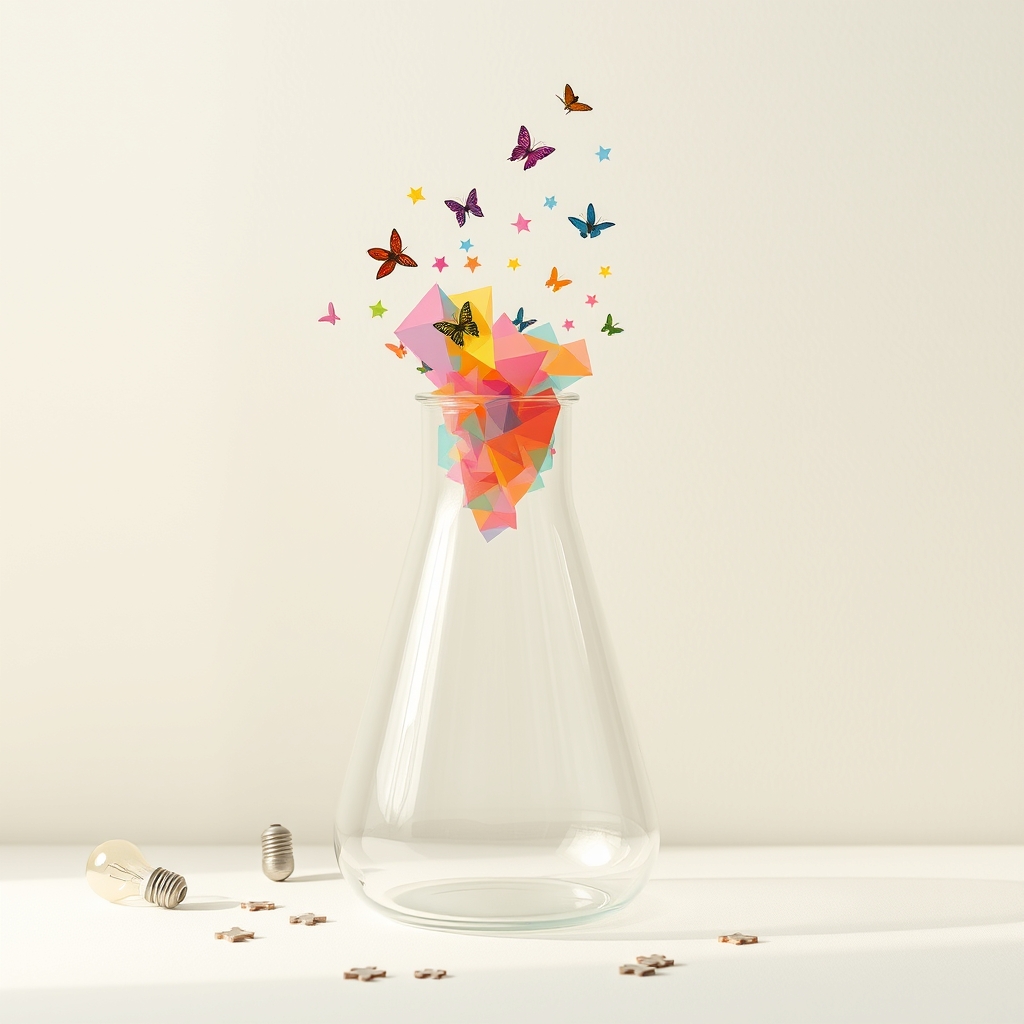
🔬💡🔄 Tiny Experiments: How to Live Freely in a Goal-Obsessed World offers a paradigm shift from rigid, linear goal-setting to a dynamic, experimental approach, fostering self-discovery, adaptability, and continuous growth in an uncertain world.
🤖 AI Summary
🎯 Core Philosophy
- 🧪 Life as a laboratory: Treat personal growth as a series of small, low-risk experiments, not a linear path to fixed outcomes.
- 🦋 Embrace uncertainty: View ambiguity as a state of expanded possibility and a space for metamorphosis, rather than something to escape.
- 🧐 Prioritize curiosity: Systematic curiosity drives discovery and reawakens drive.
- ♻️ Growth loops over ladders: Replace linear progression with iterative cycles of action, observation, reflection, and adjustment.
- ⚙️ Process over outcome: Define progress through incremental experimentation, making change a source of reinvention.
- 🛠️ Strategic imperfection: Focus on consistent action over perfect execution; mistakes are data for learning.
- 🌱 Generativity over legacy: Prioritize present impact and meaningful contributions.
🚶♀️ Actionable Steps
- 📝 Formulate Pacts:
- ✨ Commit to curiosity through small experiments, not rigid goals.
- 📝 Pact format: I will [action] for [duration].
- ✅ Pacts are purposeful, actionable, continuous, and trackable.
- 🎯 Focus on outputs (e.g., write every weekday for six months) not outcomes.
- 🧘♀️ Practice Mindful Productivity:
- ⏳ Identify magic windows for optimal energy and focus.
- 🚫 Avoid multitasking; practice sequential focus.
- ⚖️ Manage emotions: adapt to keep productivity windows open.
- 🤝 Collaborate with Uncertainty (React):
- 📊 View disruption as data, not disaster.
- 🔄 Evaluate experiments using Persist, Pause, Pivot framework.
- 📣 Learn in public to get real-time feedback and foster a culture of learning.
- 🧠 Unlearn Cognitive Scripts:
- 🚧 Challenge internalized patterns (Sequel, Crowdpleaser, Epic scripts) that guide actions.
- ❓ Ask: Am I following my past or discovering my path? Following the crowd or discovering my tribe? Following passion or discovering curiosity?
- ❤️🩹 Cultivate Emotional Awareness:
- 🏷️ Label emotions and consider broader impacts of disruptions.
- 🗓️ Embrace the year of ‘maybe’ to manage emotional reactions to uncertainty.
⚖️ Evaluation
- ❌ Critique of Traditional Goal-Setting: Tiny Experiments effectively highlights the downsides of rigid, linear goal-setting, such as stimulating fear, encouraging toxic productivity, and fostering unhealthy competition and isolation. This perspective is supported by research indicating that overly ambitious or inflexible goals can lead to frustration, burnout, tunnel vision, and reduced intrinsic motivation. The book argues that traditional goal models often fail because they assume we know the right path, ignoring inherent uncertainty and the need for adaptation.
- 🌱 Emphasis on Adaptability and Growth: The book’s core message of embracing an experimental mindset, systematic curiosity, and growth loops aligns strongly with contemporary thought in personal development and agile methodologies. Agile principles, originally from software development, emphasize iteration, continuous improvement, flexibility, and the ability to respond to change, directly mirroring the book’s recommendations for personal growth.
- 🛠️ Practicality vs. Depth: Reviewers generally find Tiny Experiments to be practical and actionable, offering a clear roadmap for breaking down large ideas into small, manageable experiments. The concept of pacts provides a concrete tool for implementation. However, some critiques suggest that while the framing around curiosity and growth loops is interesting, the overall content might feel like a compilation of familiar self-development ideas, potentially lacking groundbreaking novelty for seasoned readers.
- 🌟 Benefits of Experimental Approach: The book’s proposed experimental approach is lauded for reducing anxiety and pressure, increasing resilience, enhancing creativity and innovation, improving self-knowledge, and promoting sustainable growth over burnout. These benefits are consistent with observations on how small-scale experiments lead to clarity, freedom, and structured growth, minimizing emotional damage from setbacks.
🔍 Topics for Further Understanding
- 💪 Antifragility in Personal Development: How individuals can not just withstand, but actually benefit and grow from volatility, uncertainty, and disorder, extending the experimental mindset.
- 🧠 Cognitive Biases and Decision-Making: Deeper exploration of how common cognitive biases (beyond cognitive scripts) impact goal-setting and how experimentation can mitigate their negative effects.
- 🔬 Neuroplasticity and Habit Formation: A more in-depth scientific look at how the brain adapts through small, consistent actions, providing a neurological basis for tiny experiments and growth loops.
- 🤔 The Ethics of Self-Optimization: Examining the potential societal and psychological pressures that even a flexible approach to personal growth might inadvertently create.
- 🤝 Collective Experimentation and Community Building: Expanding the concept of individual experiments to group dynamics, fostering curiosity circles and collaborative problem-solving for shared ambitions.
- 🎲 Play and Serendipity as Methodologies: Exploring the deliberate integration of playfulness and cultivating conditions for unexpected beneficial discoveries in one’s life and career.
❓ Frequently Asked Questions (FAQ)
💡 Q: What is Tiny Experiments: How to Live Freely in a Goal-Obsessed World about?
✅ A: Tiny Experiments: How to Live Freely in a Goal-Obsessed World challenges the traditional linear model of goal-setting, advocating instead for a playful, experimental approach to personal and professional growth through small, manageable experiments. It aims to help readers embrace uncertainty and cultivate a more fulfilling, dynamic life.
💡 Q: Who is Anne-Laure Le Cunff, the author of Tiny Experiments: How to Live Freely in a Goal-Obsessed World?
✅ A: Anne-Laure Le Cunff is a neuroscientist, entrepreneur, and writer, known as the founder of Ness Labs. A former Google executive, she pursued a PhD in neuroscience and specializes in mindful productivity and systematic curiosity, writing about evidence-based ways to navigate uncertainty.
💡 Q: How does Tiny Experiments: How to Live Freely in a Goal-Obsessed World challenge traditional goal setting?
✅ A: Tiny Experiments argues that traditional, linear goal-setting is often flawed because it fixates on specific outcomes, limits exploration, and can lead to fear, toxic productivity, and a disconnection from one’s authentic self. It proposes replacing rigid goals with an experimental mindset, focusing on continuous learning, adaptation, and discovery.
💡 Q: What are pacts in Tiny Experiments: How to Live Freely in a Goal-Obsessed World?
✅ A: In Tiny Experiments, pacts are small-scale, purposeful commitments designed as experiments to explore possibilities with minimal risk and gain meaningful insight. They are actionable commitments fulfilled for a set duration, focusing on outputs rather than predetermined outcomes.
💡 Q: What are growth loops in the context of Tiny Experiments: How to Live Freely in a Goal-Obsessed World?
✅ A: Growth loops, as described in Tiny Experiments, replace linear paths of progress with iterative cycles of action, observation, reflection, and adjustment. This approach, aligning with how brains and significant achievements actually work, fosters continuous learning and deeper exploration.
💡 Q: What are the benefits of adopting an experimental mindset as proposed by Tiny Experiments: How to Live Freely in a Goal-Obsessed World?
✅ A: Adopting an experimental mindset, according to Tiny Experiments, offers numerous benefits, including reduced anxiety and pressure, increased resilience to setbacks, enhanced creativity and innovation, improved self-knowledge through direct experience, and sustainable growth. It allows for flexibility and informed decision-making.
📚 Book Recommendations
📖 Similar Books
- ⚛️🔄 Atomic Habits: An Easy & Proven Way to Build Good Habits & Break Bad Ones by James Clear
- 🤏♻️ Tiny Habits: The Small Changes That Change Everything by B.J. Fogg
- 📉🧪🚀 The Lean Startup: How Today’s Entrepreneurs Use Continuous Innovation to Create Radically Successful Businesses by Eric Ries
- 🎲 Little Bets by Peter Sims
- 📈 Kaizen by Robert Maurer
- 🏗️😊🗺️✨ Designing Your Life: How to Build a Well-Lived, Joyful Life by Bill Burnett and Dave Evans
- 🗺️ Why Greatness Cannot Be Planned by Kenneth Stanley and Joel Lehman
↔️ Contrasting Books
- 👤📈🎯🌟🔑🤝🏆 The 7 Habits of Highly Effective People by Stephen R. Covey
- 📝 Write It Down, Make It Happen by Henriette Anne Klauser
- 🛑 Necessary Endings by Henry Cloud
🔗 Related Books
- ⭐ Anything You Want by Derek Sivers
- 🌊🧘🏼♀️🧠📈 Flow: The Psychology of Optimal Experience by Mihaly Csikszentmihalyi
- ⏰ Four Thousand Weeks by Oliver Burkeman
- 🌐🔭🎨🧩👨🎓 Range: Why Generalists Triumph in a Specialized World by David Epstein
- 🎲🤔 Thinking in Bets: Making Smarter Decisions When You Don’t Have All the Facts by Annie Duke
- 🎭 Do Improvise by Robert Poynton
🫵 What Do You Think?
🤔 Which tiny experiment are you most eager to try in your life, and what rigid goal are you ready to transform into a curious pact? Share your thoughts below!