⚡🗣️ Think Faster, Talk Smarter: How to Speak Successfully When You’re Put on the Spot
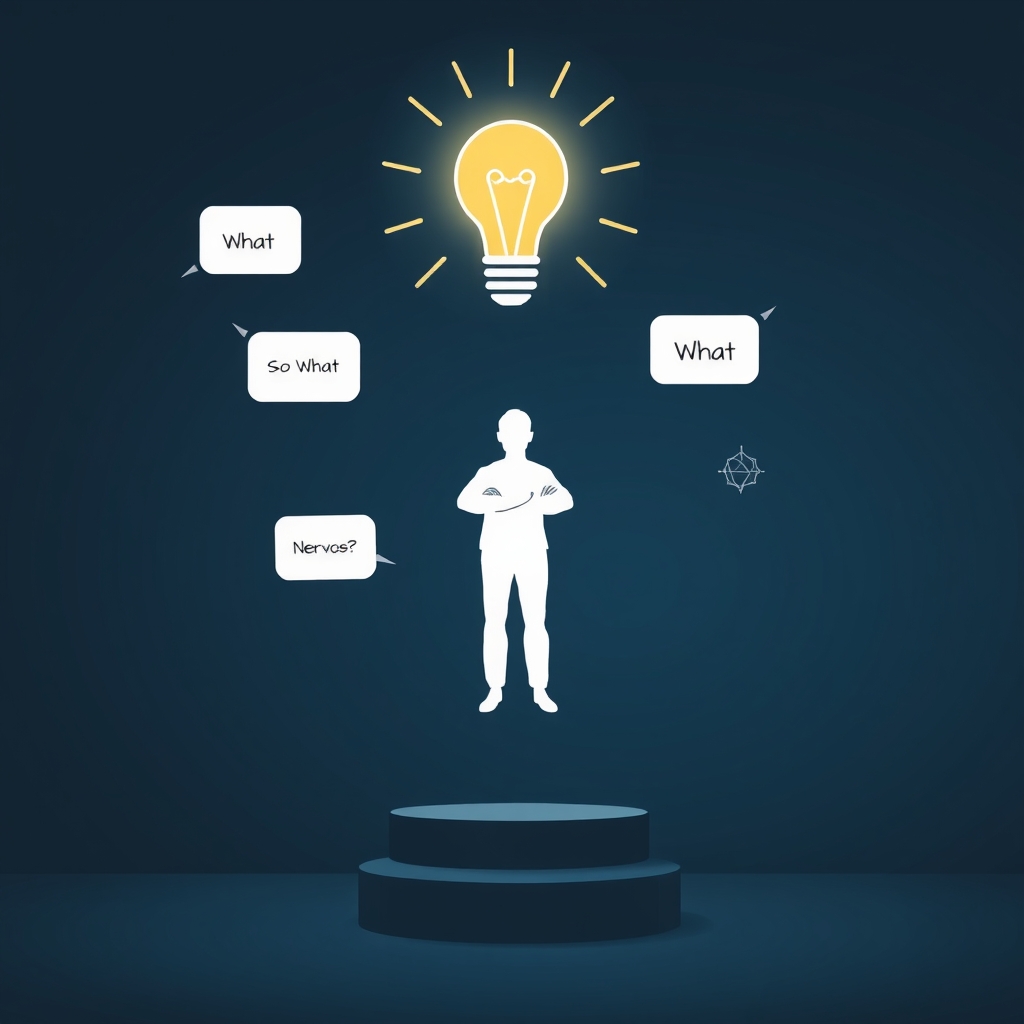
🚀🗣️💡 Practical, structured methods to calm anxiety, organize thoughts, and deliver clear, confident impromptu communication, emphasizing connection over perfection and audience-centric messaging.
🤖 AI Summary
🧠 Core Philosophy
- 💡 Mindset Shift: Reframe spontaneous speaking as opportunity, not threat. Embrace growth mindset; imperfection is learning. Prioritize connection over perfection.
- 🎯 Audience Focus: Tailor message to listener needs, not solely personal agenda.
- ⚙️ Structured Spontaneity: Employ frameworks to enable clarity and creativity in unplanned situations.
🧘♀️ Anxiety Management Plan (AMP)
- 🌬️ Calm: Manage physical symptoms.
- ↔️ Separate: Distance from anxiety.
- 🐢 Slow: Deep exhales, twice as long as inhales, reduces nervous system activity.
- 🤫 Stick: Embrace silence, avoid filler words.
- 🧊 Physical: Hold cold object (e.g., water bottle) to cool body.
- ✨ Reframing: Anxiety = Excitement.
- 🎁 Presence: Focus on the moment, not future outcomes.
🗣️ Communication Structures
- 🗺️ General Purpose (What-So What-Now What):
- ❓ What: State the idea/issue.
- 🤔 So What: Explain importance/relevance.
- ➡️ Now What: Call to action/next step.
- ❓ Q&A (ADD Method):
- 💬 Answer: Directly address the question.
- 📝 Detail: Elaborate with relevant information.
- 🛑 Done: Conclude concisely.
- 👍 Feedback (4 I’s):
- ✨ Intent: State purpose of feedback.
- 💥 Impact: Describe effect.
- ℹ️ Information: Provide specific details.
- 📈 Implications: Discuss future actions.
- 💡 Pitching Ideas (Problem-Solution-Benefit):
- ⚠️ Problem: Identify the issue.
- ✅ Solution: Offer a resolution.
- 🌟 Benefit: Explain advantages.
- 🎤 General Impromptu (PREP):
- 📍 Point: Clear main idea.
- ❓ Reason: Explain why.
- 📖 Example: Illustrate with a story/instance.
- 📍 Point: Reiterate key message.
💪 Key Skills
- 👂 Active Listening: Fully present, don’t plan response, paraphrase for clarity.
- ✂️ Conciseness: Focus on relevance, avoid rambling.
- ⏸️ Pauses/Silence: Allow brain to catch up, audience to process; conveys thoughtfulness.
- 🎯 Practice: Deliberate, consistent practice (micro-practice, recording, feedback) builds fluency.
⚖️ Evaluation
- ✅ Highly Actionable & Practical: The book delivers on its promise to provide easy-to-implement tips and practical tools for various spontaneous speaking scenarios. Matt Abrahams, a Stanford lecturer, grounds his advice in science-based techniques.
- 🛡️ Addresses Core Obstacle (Anxiety): A significant strength is the focus on managing speaking anxiety, offering tangible techniques like the 3S Anxiety Management Plan and reframing. This aligns with common public speaking advice.
- 🏗️ Structured Spontaneity Concept: The idea that structure liberates rather than restricts improvisation is a well-received core tenet. This counter-intuitive approach provides a tangible path for improving impromptu communication.
- 🤝 Emphasis on Audience and Connection: The book stresses shifting focus from self-concern to audience needs and prioritizing connection over perfection. This is a fundamental principle of effective communication.
🔍 Topics for Further Understanding
- 🧠 Neuroscience of anxiety and its specific impact on verbal fluency and memory recall during high-pressure situations.
- 📜 Advanced rhetorical devices and their application in spontaneous communication beyond basic structures.
- 🌍 Cultural differences in impromptu communication styles and audience expectations.
- 👤 The role of non-verbal cues (body language, vocalics, proxemics) in complementing verbal spontaneity.
- 🤖 Integrating AI tools (e.g., real-time feedback, speech coaching apps) for personalized impromptu speaking practice.
- ⚖️ Strategies for maintaining ethical communication in high-stakes, unscripted dialogues.
❓ Frequently Asked Questions (FAQ)
💡 Q: What is Think Faster, Talk Smarter about?
✅ A: Think Faster, Talk Smarter by Matt Abrahams provides strategies and frameworks to help individuals speak more successfully, confidently, and clearly when put on the spot in various spontaneous communication scenarios, from meetings to social gatherings.
💡 Q: Who is the author of Think Faster, Talk Smarter?
✅ A: The author of Think Faster, Talk Smarter is Matt Abrahams, a lecturer in Strategic Communication at Stanford Graduate School of Business and host of the popular Think Fast, Talk Smart podcast.
💡 Q: What are the key takeaways from Think Faster, Talk Smarter?
✅ A: Key takeaways include managing anxiety through specific techniques, adopting an audience-focused mindset, embracing imperfection, and utilizing clear communication structures like What-So What-Now What to organize thoughts quickly and effectively.
💡 Q: How does Think Faster, Talk Smarter address speaking anxiety?
✅ A: Think Faster, Talk Smarter offers an Anxiety Management Plan (AMP) with techniques such as reframing anxiety as excitement, deep breathing exercises, allowing for pauses, and creating physical distance from the anxious feeling.
💡 Q: Does Think Faster, Talk Smarter provide practical frameworks for impromptu speaking?
✅ A: Yes, the book provides several practical frameworks, including the What-So What-Now What structure for general communication, the ADD method for Q&A, the 4 I’s for feedback, and the PREP method (Point, Reason, Example, Point) for organizing thoughts quickly.
📚 Book Recommendations
🤝 Similar
- 📖 Speak with No Fear by Mike Acker: Focuses on overcoming anxiety and building confidence in public speaking.
- 📚 The Quick and Easy Way to Effective Public Speaking by Dale Carnegie: A classic guide to building confidence and improving speaking skills.
- 🧠 Communication Skills Training by Ian Tuhovsky: Comprehensive guide to improving various communication aspects, including social intelligence and public speaking.
↔️ Contrasting
- 🧘♀️ Quiet: The Power of Introverts in a World That Can’t Stop Talking by Susan Cain: Explores the strengths of introversion, contrasting with a focus on overt communication.
- 🧰💬 Crucial Conversations: Tools for Talking When Stakes Are High by Kerry Patterson et al.: Focuses on navigating planned, high-stakes conversations with specific, structured dialogue.
🔗 Related
- 🎤 Talk Like TED by Carmine Gallo: Analyzes successful TED Talks to distill nine public speaking secrets for persuasive and memorable presentations.
- ⚛️🔄 Atomic Habits: An Easy & Proven Way to Build Good Habits & Break Bad Ones by James Clear: Provides a framework for building good habits and breaking bad ones, applicable to practicing communication skills consistently.
- 🧍♀️ Presence by Amy Cuddy: Explores how body language and mindset can influence confidence and performance in high-pressure situations.
🫵 What Do You Think?
💭 Which speaking technique resonates most with your communication challenges? Does structured spontaneity liberate or does it feel counter-intuitive? Share your experiences below!