🧠⛓️🚫 The Biology of Desire: Why Addiction Is Not a Disease
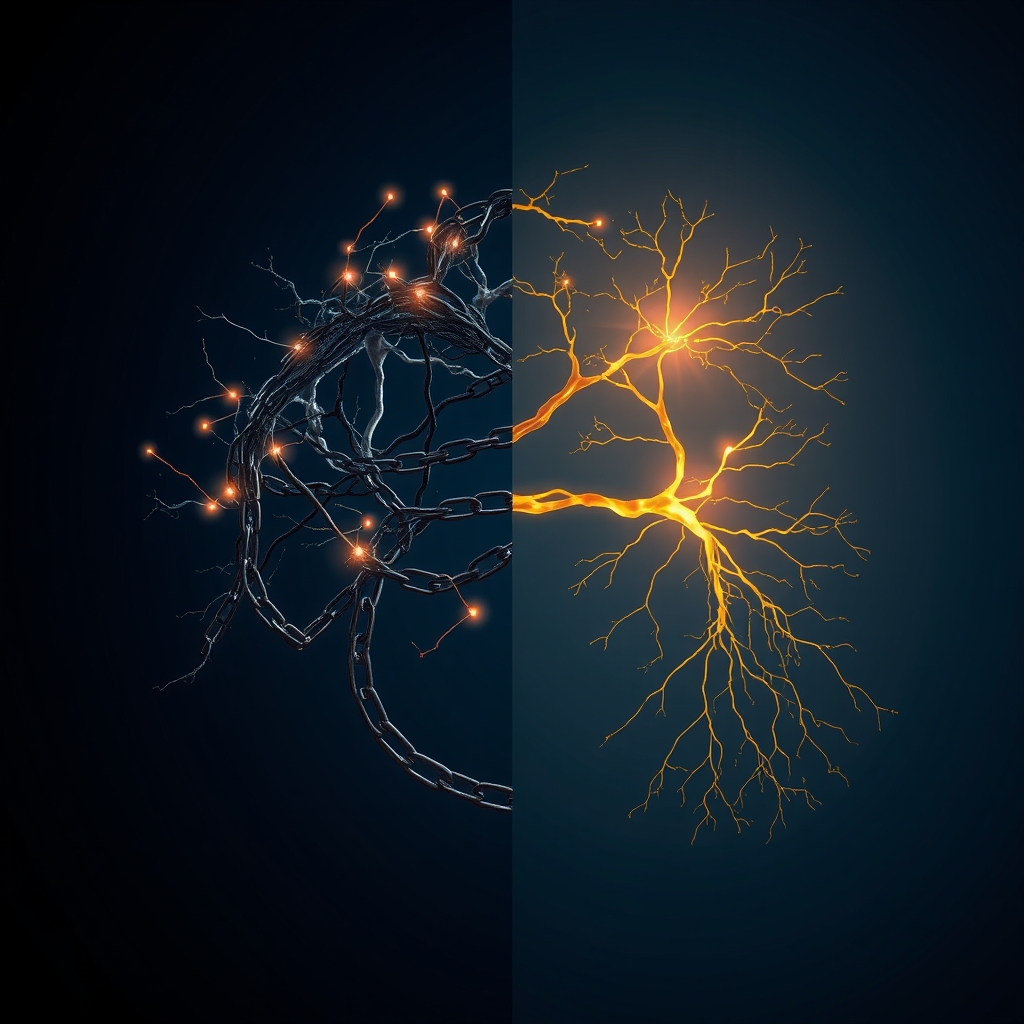
🧠🔄💡 Marc Lewis, a neuroscientist and former addict, argues that addiction is not a disease but a powerfully learned habit driven by normal brain neuroplasticity and desire, suggesting recovery through re-prioritizing goals and self-directed change.
🤖 AI Summary
🧠 Core Philosophy: Addiction as Deep Learning
- 🚫 Not a Disease: Addiction is fundamentally a developmental learning process, not a brain disease or moral failing.
- ✨ Normal Brain Function: Brain changes in addiction reflect normal neuroplasticity in response to intense, repeated goal pursuit, similar to other strong desires (e.g., love, sports).
- 🔥 Desire-Driven: Addiction is fueled by intense desire (wanting), not solely pleasure (liking), as the brain becomes highly efficient in seeking the addictive reward.
- 🎯 Narrowed Goals: Addictive patterns lead to a severe narrowing of goals, where little else matters beyond the addictive substance or behavior.
- 🔁 Self-Perpetuating Habit: Addiction becomes a deeply entrenched, self-perpetuating habit due to motivated repetition and the brain’s reward circuitry.
⚙️ Mechanism: Neuroplasticity & Brain Circuits
- 💪 Synaptic Strengthening: Repeated addictive behaviors build strong synaptic patterns and networks, often involving the ventral and dorsal striatum, fueled by dopamine.
- 🎢 Reward System Alterations: Drugs intensely activate the brain’s reward system (mesolimbic system), strengthening pathways that reinforce drug-seeking.
- ➡️ Shift from Goal-Directed to Habitual: Initially goal-directed, drug-seeking transitions to compulsive, habitual responses mediated by shifts in brain regions (e.g., ventral to dorsal striatum).
- 📉 Weakened Prefrontal Control: Overactivity in reward circuits can weaken connectivity to the prefrontal cortex, impairing judgment, decision-making, and impulse control.
🌟 Recovery: Agency & Reorientation
- 🌱 Self-Directed Neuroplasticity: Recovery leverages the same neuroplasticity that formed the addiction, allowing for the development of new, healthier neural pathways and habits.
- ✨ New Motivations/Goals: Overcoming addiction requires replacing the intense desire for the addictive substance with new, more positive, long-term goals and motivations.
- 🔗 Reconnecting Desire: Harnessing desire for change and reconnecting it with broader life goals is crucial for recovery.
- 📖 Narrative & Responsibility: Developing a sense of agency, accepting responsibility (distinct from blame), and constructing a coherent self-narrative are key for overcoming addiction.
- ⛰️ Suffering as Catalyst: Reaching a rock-bottom moment of exhaustion or profound suffering can act as a catalyst for recognizing the need for change and forming new goals.
⚖️ Evaluation
- ❌ Critique of Disease Model: Lewis argues the brain changes in addiction are normal learning, not pathology, challenging the widely accepted brain disease model of addiction (BDMA) promoted by organizations like the National Institute on Drug Abuse (NIDA).
- ✅ Supporting Evidence for BDMA: Proponents of the BDMA cite consistent preclinical and clinical studies showing molecular and functional neuroplastic changes (e.g., altered dopamine transmission, changes in reward and executive function circuits) triggered by repeated drug exposure, viewing these as pathological and difficult to reverse.
- 👍👎 BDMA Benefits & Criticisms: The BDMA has been credited with de-stigmatizing addiction and advancing research/treatment, but critics argue it may overemphasize biological factors, downplay environmental/social influences, and potentially foster helplessness by framing individuals as powerless over a disease.
- 🤔 Lewis’s Nuance on Brain Changes: Lewis acknowledges brain changes but interprets them as the brain’s normal functioning to seek pleasure and relief, becoming highly efficient in wanting the drug through learning. This contrasts with BDMA views that these changes represent a dysfunction or abnormal messages within the brain.
- 🙏 Recovery Implications: Lewis’s deep learning model emphasizes agency, self-empowerment, and the reorientation of desire for recovery, which some see as more hopeful and empowering than a deterministic disease model. However, some argue that acknowledging addiction as a disease does not negate personal responsibility but rather reinforces the need for treatment.
- 🧪 Role of Dopamine: Lewis highlights dopamine’s role in fueling the attractiveness of rewards and strengthening connections, a point largely consistent with mainstream neuroscience, which identifies dopamine as central to reward, motivation, and habit formation in addiction.
🔍 Topics for Further Understanding
- 💔 The intersection of trauma, attachment theory, and addiction development.
- 🌍 The socio-economic and cultural factors contributing to addiction rates and recovery outcomes.
- 🧘♀️ Specific therapeutic modalities that explicitly leverage self-directed neuroplasticity.
- ⚖️ The ethical implications of defining addiction as a disease versus a learned behavior, particularly regarding healthcare policy and legal frameworks.
- 🍄 The role of psychedelics in addiction treatment and their proposed mechanisms of action on brain plasticity.
- 😴 Detailed mechanisms of ego fatigue and now appeal in reinforcing addictive behaviors.
- 🫂 The influence of loneliness and lack of connection on addiction vulnerability and recovery, as popularized by Johann Hari and Gabor Maté.
❓ Frequently Asked Questions (FAQ)
💡 Q: What is Marc Lewis’s main argument in The Biology of Desire: Why Addiction Is Not a Disease?
✅ 🗣️ A: In The Biology of Desire: Why Addiction Is Not a Disease, Marc Lewis argues that addiction is not a chronic brain disease, but rather a powerfully learned habit that emerges from normal brain development and the fundamental process of neuroplasticity in response to intense desires.
💡 Q: How does The Biology of Desire: Why Addiction Is Not a Disease explain brain changes in addiction?
✅ 🧠 A: The Biology of Desire: Why Addiction Is Not a Disease posits that brain changes associated with addiction, such as alterations in reward pathways and executive function, are a result of the brain’s normal learning mechanisms and its capacity to adapt to repeated, highly motivated behaviors, rather than a pathology.
💡 Q: Does The Biology of Desire: Why Addiction Is Not a Disease deny that addiction is a serious problem?
✅ 🙏 A: No, The Biology of Desire: Why Addiction Is Not a Disease acknowledges the profound suffering and destructive nature of addiction. It simply redefines the underlying mechanism, moving away from a disease model to one of deep learning and habit formation, which offers a different perspective on pathways to recovery.
💡 Q: What is self-directed neuroplasticity in the context of The Biology of Desire: Why Addiction Is Not a Disease?
✅ ⬆️ A: Self-directed neuroplasticity, as discussed in The Biology of Desire: Why Addiction Is Not a Disease, refers to the brain’s inherent ability to rewire itself. This principle suggests that individuals can consciously guide their brains to form new, healthier neural pathways and break existing addictive habits by actively pursuing new goals and motivations.
💡 Q: What are the implications of The Biology of Desire: Why Addiction Is Not a Disease for addiction treatment?
✅ 💪 A: The Biology of Desire: Why Addiction Is Not a Disease suggests that treatment should focus less on curing a disease and more on empowering individuals to reorient their desires, cultivate new, positive goals, and engage in self-directed change, leveraging the brain’s natural capacity for learning and adaptation.
📚 Book Recommendations
🤝 Similar Books
- 📚 Memoirs of an Addicted Brain by Marc Lewis (Lewis’s previous book, blending memoir and science)
- 💡 The Unbroken Brain: A Revolutionary New Way of Understanding Addiction by Maia Szalavitz (Challenges disease model, emphasizes learning and development)
- ❤️🩹 Beyond Addiction: How Science and Kindness Help People Change by Jeffrey Foote, Carrie Wilkens, and Nicole Kosanke (Focuses on evidence-based strategies for families)
↔️ Contrasting Books
- 👻🔗 In the Realm of Hungry Ghosts: Close Encounters with Addiction by Gabor Maté (Explores trauma and the psycho-social roots of addiction, often aligns with disease/trauma-informed models)
- ⚖️ Dopamine Nation: Finding Balance in the Age of Indulgence by Anna Lembke (Discusses addiction from a neurobiological perspective, including dopamine’s role, and challenges the pursuit of constant pleasure)
- 🔬 Drugs, Brains, and Behavior: The Science of Addiction (National Institute on Drug Abuse publication, represents the mainstream disease model)
➕ Related Books
- 🧠🔄🏆 The Brain That Changes Itself: Stories of Personal Triumph from the Frontiers of Brain Science by Norman Doidge (Explores neuroplasticity in various contexts)
- 🤔🐇🐢 Thinking, Fast and Slow by Daniel Kahneman (Explores cognitive biases and decision-making, relevant to impulsive vs. deliberate choices in addiction)
- ⚛️🔄 Atomic Habits: An Easy & Proven Way to Build Good Habits & Break Bad Ones by James Clear (Practical guide to habit formation and change, aligning with Lewis’s view of addiction as a deep habit)
🫵 What Do You Think?
❓ Considering addiction as a deeply learned habit rather than a disease, what societal changes or treatment approaches do you believe would be most impactful? How might this perspective shift personal responsibility or compassion in addiction discourse?