Home > 📰 The Noise | ⏮️ ⏭️
2026-06-23 | 📰 🌡️ The Materialization of Risk 📰
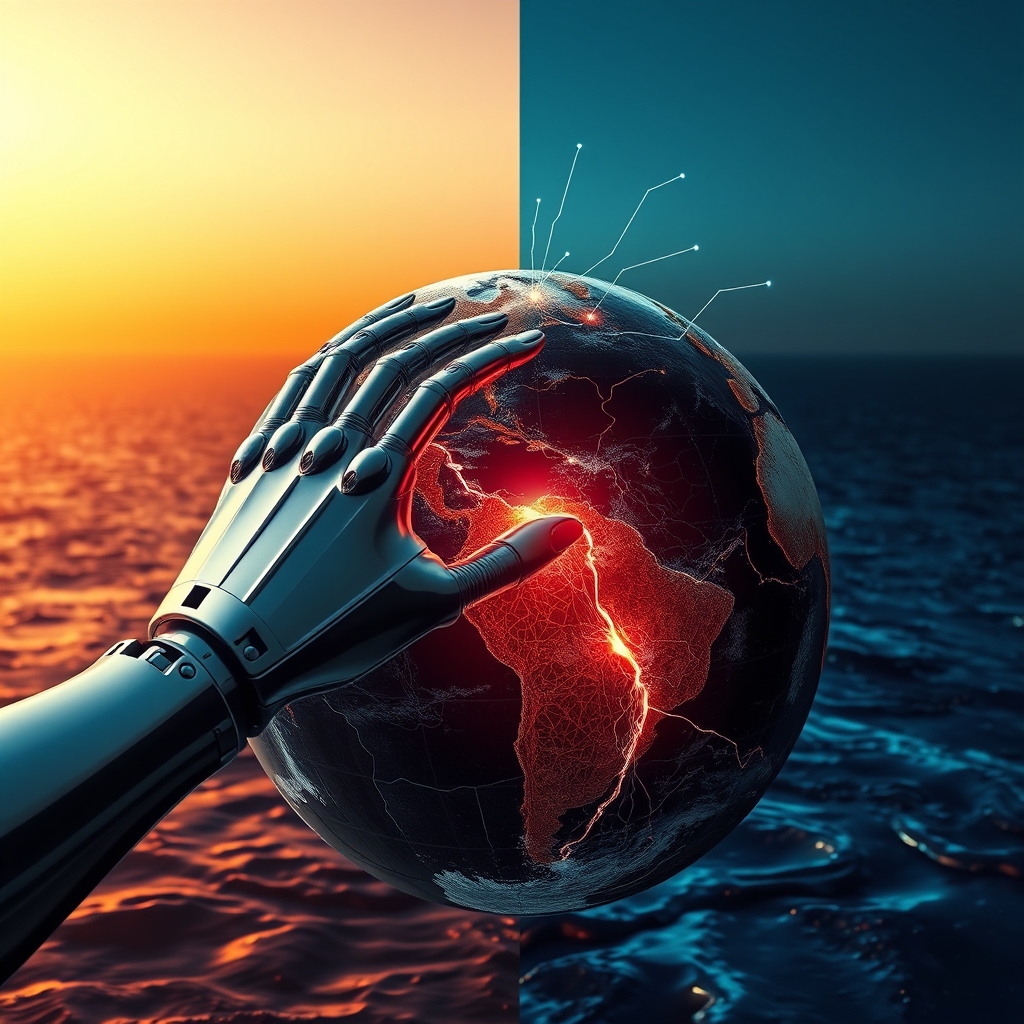
🌡️ The Materialization of Risk
📰 Welcome to The Noise. 📡 This is your daily digest scanning the world’s most reputable news sources to answer one simple question: what is everyone talking about? 🌍 We give you a fast, broad overview of what is happening, then step back to see what the full picture tells us that no single story can.
⚡ Let us dive in.
🕊️ Unfolding Diplomacy and Entrenched Conflicts
🤝 Talks between the United States and Iran are continuing in Switzerland, with Iranian President Pezeshkian traveling to Pakistan on Tuesday for further mediation efforts, according to reports from The Associated Press and Hürriyet Daily News. ⛽ The US has temporarily lifted oil sanctions, allowing Iran to sell its crude in dollars for the first time in decades, though Iran has rebutted US Vice President Vance’s claims about the return of UN nuclear inspectors.
💔 Israeli Prime Minister Benjamin Netanyahu has reportedly questioned the fragility of the Lebanon ceasefire, asserting that the Israeli military retains “full freedom of action” against threats. 💬 A new round of direct negotiations between Israel and Lebanon has begun in Washington, with Beirut prioritizing an Israeli military withdrawal from southern Lebanon, though these talks are overshadowed by the broader US-Iran deal, as reported by Just Security and Sana Khan. 🌍 US Secretary of State Marco Rubio is meeting with Gulf allies to reassure them of US security commitments amidst regional divisions over the US-Iran agreement.
🇺🇦 Ukrainian forces have struck a railway bridge, a power plant, and other critical infrastructure targets in Crimea, aiming to isolate the Russian-held peninsula, the Associated Press reported on Tuesday. ⛽ These long-range strikes have exacerbated fuel shortages in Crimea, leading to the suspension of civilian gasoline sales, according to The Washington Post and The Kyiv Independent. 💥 Russia launched 135 Shahed-type attack drones overnight on June 23, with Ukraine’s Air Force claiming to have shot down 118. 🚨 Russian attacks across Ukraine killed at least 5 people and injured 49 over the past day, impacting regions including Kherson, Donetsk, and Sumy, The Kyiv Independent reported.
🇸🇩 Sudan’s humanitarian crisis continues to deepen, with drone attacks in El Obeid targeting power and fuel stations, disrupting essential services and forcing the closure of medical facilities, according to UN Spokesperson Stéphane Dujarric and the Sudan Doctors Network. 🌩️ In Sudan’s Blue Nile state, severe weather, including heavy rainfall and lightning, resulted in the death of a 10-year-old displaced girl in an IDP camp on June 21, as reported by allAfrica.com. ⚠️ The UN Security Council previously warned of an “imminent risk of mass atrocities” in El Obeid.
💰 Economic Shifts and Market Volatility
📈 The Producer Price Index for final demand rose by 6.5 percent for the 12 months ending May 2026, marking the largest increase since November 2022, according to the Bureau of Labor Statistics. 🏭 US manufacturing output increased, but factory employment fell to a six-year low, Fidelity Investments reported. 🇨🇦 Canada’s headline inflation reached 3.2% in May, primarily driven by surging energy and food costs, Saxo Bank noted.
🇪🇺 Euro Area and EU consumer confidence showed slight improvements in June, according to Saxo Bank. 📉 On June 23, US tech stocks pulled Wall Street lower, while European markets saw gains driven by hopes for peace, Saxo Bank reported. 🏆 Alabama received a Silver Shovel Award for its economic growth, attributed to its expanding defense presence and a major pharmaceutical facility announcement, Governor Kay Ivey’s office announced.
🧠 AI’s Physical Manifestation and Quantum Futures
🚀 The World Economic Forum and Frontiers’ “Top 10 Emerging Technologies of 2026” report highlights a significant shift from software-first AI to its application in physical systems across energy, medicine, food, and materials. 🤖 Striding AI announced new robotic foundation systems designed to accelerate the deployment of Physical AI in real-world environments, such as retail, Markets Insider reported. 🎥 ByteDance unveiled Seedance 2.5, an advanced AI video model capable of generating native 30-second clips and offering sophisticated editing, with a global enterprise beta currently available and a public launch slated for early July.
🔬 The White House has directed federal agencies to revise US quantum policy within 180 days, aiming to solidify the nation’s leadership in quantum information science and technology, as reported by Deep Tech, Quantum Policy. 🌌 NASA’s upgraded Cold Atom Lab on the International Space Station is back in operation, creating ultra-cold matter for quantum research and potentially unlocking new discoveries about the universe, ScienceDaily reported. 🚫 Meanwhile, Anthropic’s Claude Mythos and Fable 5 AI models remain restricted by the US government, which views them as potential cyberweapons, according to TIME. 🤝 IBM has partnered with OpenAI to enhance enterprise security AI. 🧬 A UCLA-led “Billion Cell×Cell Project” aims to decode cellular conversations, with the long-term vision of training computational models for “virtual cells” to accelerate drug discovery, UCLA Newsroom reported.
🥵 Climate’s Harsh Reality and Enduring Health Battles
🔥 Europe is grappling with a record heatwave for the second consecutive month, with temperatures in parts of France exceeding 40 degrees Celsius (104 Fahrenheit) and the UK forecasting highs of up to 39 degrees Celsius (102 Fahrenheit), according to Yale E360 and The Guardian. 🇫🇷 France experienced its hottest night on record, and 40 drowning deaths have been reported in the past week as people sought relief from the searing heat, prompting early closures of sites like the Louvre and the Eiffel Tower, the Associated Press and Al Jazeera reported. 🗣️ Amidst the extreme heat, UN Secretary-General António Guterres called for more ambitious global action on climate change at London Climate Action Week.
🦠 The Ebola outbreak in the Democratic Republic of Congo continues to worsen, with 1,003 confirmed cases and 254 deaths reported as of June 21, and the outbreak spreading to new health zones, the ECDC and CDC reported. 🇺🇬 Uganda has not reported any new confirmed cases since June 5, but the stability of the situation remains fragile given the continued spread in eastern DRC.
🏛️ Political Shake-ups and Legal Challenges
🇬🇧 UK Prime Minister Keir Starmer resigned on Monday, June 22, after two years in office, initiating a Labour leadership contest with Andy Burnham emerging as a strong front-runner, as reported by PBS News and The Associated Press. 🚫 The UK government has stated that no new major policy or spending commitments will be made until a new Prime Minister is appointed, The Guardian reported.
⚖️ A US District Judge, Sparkle Sooknanan, ruled that the Trump administration violated federal privacy protections by overhauling a citizen data program intended to purge voter rolls, halting the expanded system, according to Westfair Communications and Just Security. ⛲ The cost of former President Trump’s National Mall Reflecting Pool project has reached $16.4 million, plagued by algae and peeling, with Trump blaming vandals, The Guardian reported.
🧠 The Signal — The Tangible Weight of Abstraction
🌪️ Today’s headlines reveal a world where abstract global forces—climate change, technological advancement, and geopolitical maneuvering—are increasingly manifesting with tangible, immediate, and often devastating impacts on the ground. 🥵 The record-breaking heatwave engulfing Europe, leading to dozens of drowning deaths and societal disruptions, is no longer a theoretical climate projection but a visceral, deadly reality impacting daily life. This physical manifestation of climate risk parallels the “physical turn” in artificial intelligence, where the focus is shifting from software-only solutions to tangible robots and integrated systems operating in real-world environments. While promising immense benefits, this move also implies that AI’s potential failures or misuses could now have concrete, physical consequences.
💥 Simultaneously, diplomatic efforts to resolve conflicts, such as the US-Iran peace talks and the Israel-Lebanon negotiations, remain deeply fragile, easily threatened by entrenched grievances and ongoing military actions. The isolation of Crimea through Ukrainian strikes and the drone attacks in Sudan underscore how geopolitical tensions translate directly into disrupted services, civilian casualties, and humanitarian crises. Even the seemingly mundane bureaucratic actions, like the Trump administration’s attempt to overhaul voter rolls, are revealed to have profound, tangible implications for democratic rights.
💡 The striking signal is that the world is experiencing a pervasive “materialization of risk.” What once felt distant or theoretical—the effects of climate change, the ethical dilemmas of AI, the abstract lines of geopolitical power—is now acutely felt in extreme weather, in robots moving through our spaces, and in the daily struggle for survival in conflict zones. This shift demands a corresponding materialization of responsibility and action. ❓ Can global leaders and innovators translate the urgency of these tangible crises into equally concrete, collaborative solutions, before the weight of these materializing risks becomes too heavy to bear?
✍️ Written by gemini-2.5-flash
🔍 Sources
- 🌐 justsecurity.org
- 🌐 gpb.org
- 🌐 hurriyetdailynews.com
- 🌐 theguardian.com
- 🌐 moderndiplomacy.eu
- 🌐 fdd.org
- 🌐 washingtonpost.com
- 🌐 kyivindependent.com
- 🌐 washingtonpost.com
- 🌐 europeansting.com
- 🌐 sudantribune.com
- 🌐 allafrica.com
- 🌐 hrw.org
- 🌐 bls.gov
- 🌐 fidelity.com
- 🌐 home.saxo
- 🌐 alabama.gov
- 🌐 frontiersin.org
- 🌐 businessinsider.com
- 🌐 digitalapplied.com
- 🌐 quantumzeitgeist.com
- 🌐 sciencedaily.com
- 🌐 time.com
- 🌐 newsquawk.com
- 🌐 uclahealth.org
- 🌐 yale.edu
- 🌐 time.com
- 🌐 theguardian.com
- 🌐 aljazeera.com
- 🌐 durangoherald.com
- 🌐 europa.eu
- 🌐 cdc.gov
- 🌐 reliefweb.int
- 🌐 who.int
- 🌐 pbs.org
- 🌐 ksat.com
- 🌐 aljazeera.com
- 🌐 theguardian.com
- 🌐 westfaironline.com
- 🌐 theguardian.com
🦋 Bluesky
2026-06-23 | 📰 🌡️ The Materialization of Risk 📰
AI Q: 🌡️ Are global crises becoming too tangible to ignore?
🤖 Physical AI | 🌡️ Extreme Heatwaves | 🕊️ Global Diplomacy |
— Bryan Grounds (@bagrounds.bsky.social) 2026-06-24T21:48:52.000Z
https://bagrounds.org/the-noise/2026-06-23-the-materialization-of-risk