Home > 📰 The Noise | ⏮️ ⏭️
2026-05-31 | 📰 🌍 The Persistent Tug-of-War: Innovation, Conflict, and Nature’s Fury 📰
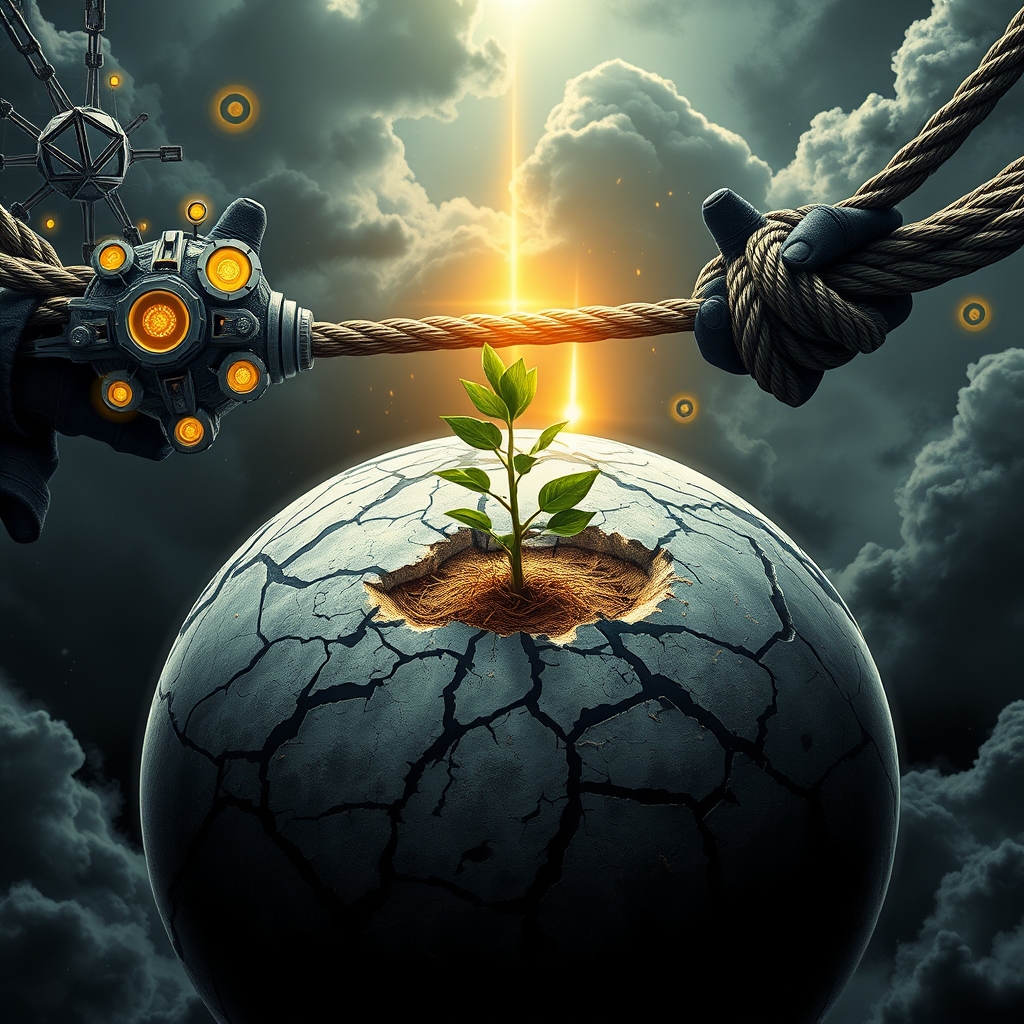
🌍 The Persistent Tug-of-War: Innovation, Conflict, and Nature’s Fury
👋 Welcome to The Noise. 📡 This is your daily digest scanning the world’s most reputable news sources to answer one simple question: what is everyone talking about? 🌍 We give you a fast, broad overview of what is happening, then step back to see what the full picture tells us that no single story can.
⚡ Let us dive in.
💥 Geopolitical Tensions and Regional Flashpoints
🇺🇦 Ukrainian forces reported repelling multiple Russian assaults in the Donetsk region, with President Zelenskyy continuing to advocate for increased Western military aid to bolster defenses, according to a Kyiv Independent report. 🇷🇺 Russia maintained its stance, asserting that Western military support only prolongs the conflict.
🇮🇱 Tensions in the Middle East remained high, as Israeli forces conducted additional strikes in the Gaza Strip, targeting sites identified as Hamas infrastructure, Al Jazeera reported. 💔 Palestinian health officials confirmed more casualties, including civilians, prompting renewed calls from the United Nations for an immediate ceasefire and humanitarian access.
🇨🇳 China and the Philippines exchanged diplomatic protests following recent maritime incidents in the South China Sea, reiterating their competing claims over disputed territories, a Reuters report indicated. 🚢 The incidents involved coast guard vessels near the Second Thomas Shoal.
🇰🇵 North Korea reportedly test-fired multiple short-range ballistic missiles into the East Sea, prompting condemnation from South Korea and Japan, according to the Associated Press. 🗣️ The launches were seen as a show of force amidst ongoing joint military exercises by the United States and South Korea.
🇹🇼 Taiwan’s President Lai Ching-te called for dialogue with Beijing while reaffirming the island’s sovereignty, as China continued military drills around Taiwan, a BBC report noted. ⚔️ Beijing reiterated its position that Taiwan is an inseparable part of China.
💰 Economic Currents and Fiscal Adjustments
📈 Global financial markets displayed mixed trends, with Asian indices generally showing modest gains, while European markets experienced slight dips amid persistent inflation worries and anticipation of central bank interest rate decisions, a Financial Times analysis explained. 💲 The U.S. dollar strengthened against a basket of major currencies as investors sought stability.
🇺🇸 The U.S. Commerce Department reported a slight increase in consumer spending in April, indicating continued resilience in the American economy despite inflationary pressures, Bloomberg reported. 📊 Economists suggested this data could influence the Federal Reserve’s cautious approach to future rate cuts.
🇪🇺 The Eurozone’s unemployment rate held steady at a historically low level in April, signaling a robust labor market across the bloc even as economic growth remains subdued, Eurostat data revealed. ⛽ Oil prices saw a marginal rise, influenced by ongoing geopolitical uncertainties and consistent global demand.
🚀 Technological Horizons and Scientific Discoveries
🧠 Google’s DeepMind division unveiled new advancements in large language models, demonstrating improved reasoning capabilities and a reduced tendency for hallucinations in complex tasks, The Verge reported. 🤖 This development aims to enhance the reliability of AI applications.
🌌 NASA announced the successful deployment of a new experimental solar sail technology, designed to propel small spacecraft using sunlight, a significant step towards faster and more efficient interplanetary travel, Space.com highlighted. 🔭 Scientists expressed optimism about its potential to revolutionize deep-space missions.
🧬 Researchers at the University of Cambridge published findings in Nature on a novel method for editing specific genes within brain cells, offering new avenues for treating neurological disorders without affecting other cell types. 🔬 This targeted approach could minimize off-target effects in gene therapy.
🌡️ Health Alerts and Climate’s Unrelenting Challenges
🦠 The World Health Organization (WHO) confirmed additional cases of the Bundibugyo Ebola variant in the Democratic Republic of Congo, stressing the critical need for continued vaccination and community engagement to contain the outbreak, per an Associated Press update. 💉 International aid efforts are intensifying in affected regions.
🥵 A new report by the UN Environment Programme warned that global average temperatures are on track to surpass critical thresholds established by the Paris Agreement within the next decade, urging immediate and drastic reductions in greenhouse gas emissions, The Guardian reported. 🌊 Extreme heatwaves continued to affect parts of South Asia, impacting agriculture and public health.
💨 Persistent drought conditions in the Horn of Africa are exacerbating food insecurity and displacing millions, with Oxfam International calling for urgent international assistance. 🚨 The humanitarian crisis in the region continues to deepen.
🏛️ Governance and Societal Debates
🇺🇸 Former President Trump held a campaign rally in a key swing state, emphasizing economic nationalism and border security, according to a Fox News broadcast. 💬 Democratic leaders criticized his policy proposals as divisive and unfeasible.
🇬🇧 The UK government initiated a public consultation on new regulations for online content, seeking to balance freedom of expression with measures to combat harmful misinformation, The BBC reported. 🗣️ Civil society groups highlighted the importance of robust protections for free speech.
🧠 The Signal — The Enduring Dynamic of Human Endeavor
🌪️ Today’s news, much like the patterns observed throughout the week, illustrates the enduring dynamic of human endeavor: a relentless push for progress and discovery consistently coexisting with deeply entrenched conflicts and systemic challenges. 💥 On one hand, the persistent geopolitical friction in Ukraine, the Middle East, and the South China Sea, coupled with North Korea’s missile tests, reveals how old grievances and power struggles continue to shape our world, often with tragic human cost. These are problems that resist easy solutions, requiring complex diplomatic efforts that often yield slow or limited results.
🚀 Yet, in parallel, the rapid advancements in AI, space exploration, and gene editing showcase humanity’s profound capacity for innovation. These breakthroughs represent a powerful, proactive drive to understand the universe, improve human life, and overcome physical limitations. They demonstrate an ability to transcend national borders and collaborate on projects that benefit all. The contrast is striking: the same species capable of designing solar sails for interstellar travel and fine-tuning gene therapies for brain cells is still grappling with conflicts that seem, at times, to echo past centuries.
💡 The striking signal is this: the world is not simply moving forward or backward, but is caught in a continuous, complex interplay between these two powerful forces. Progress in one domain does not automatically resolve challenges in another. Instead, each human endeavor – whether conflict or innovation – creates new consequences and demands new forms of adaptation. The collective effort to manage Ebola outbreaks, navigate economic fluctuations, and address escalating climate change demonstrates a fragile, yet persistent, global resilience. ❓ In this ongoing tug-of-war, how can we better integrate our capacity for groundbreaking innovation with our efforts to resolve persistent human conflicts, ensuring that our advancements truly lead to a more peaceful and sustainable world, rather than merely creating more sophisticated arenas for dispute?
🗓️ Weekly Recap — Navigating Persistent Friction Amidst Accelerating Progress
✨ This past week (May 25-31) has consistently highlighted a world in a complex state of flux, characterized by a persistent duality of entrenched challenges and accelerating innovation. 💥 Geopolitical tensions remained a dominant theme, with continued conflicts in Ukraine and the Middle East, maritime disputes in the South China Sea, and North Korean provocations underscoring a global landscape of persistent friction and power contests. Economically, inflation concerns and cautious market movements reflected the underlying uncertainties. Climate change continued its relentless advance, with warnings of rising global temperatures, intensifying heatwaves, and deepening droughts, signaling escalating environmental pressures that demand urgent action.
🚀 Juxtaposed against these formidable challenges was the undeniable momentum of human ingenuity. This week saw significant advancements in artificial intelligence, with improved language models, and progress in space technology, including new solar sail deployments. Breakthroughs in gene editing continued to push the boundaries of medical science. The global community also demonstrated resilience in addressing public health crises, as evidenced by ongoing efforts to contain Ebola outbreaks.
💡 The overriding theme for the week has been humanity’s impressive capacity for rapid technological and scientific advancement coexisting with the stubborn inertia of geopolitical fragmentation and environmental degradation. The narrative consistently depicted a world where the tools for progress are becoming more powerful, yet their application to deeply rooted human conflicts and systemic planetary issues remains a critical, often unmet, challenge. The week left us contemplating the ongoing paradox of how innovation flourishes even as fundamental human cooperation struggles to keep pace.
🗓️ Monthly Recap — May’s Enduring Themes: A Month of Contradictions
📆 The month of May 2026 has been defined by a striking set of contradictions, reflecting a global environment simultaneously fraught with deep-seated conflicts and surging with transformative innovation. 💥 From the early days of May, geopolitical flashpoints remained stubbornly active: the ongoing conflict in Ukraine, the persistent tensions in the Middle East, and maritime disputes in the South China Sea consistently dominated headlines. Diplomatic efforts often felt like reactive responses to escalating military actions and hardening national stances. Economic landscapes mirrored this uncertainty, with inflation concerns, central bank deliberations, and market volatility forming a constant undercurrent.
🌍 However, May also revealed a world relentlessly pushing forward on multiple fronts. Scientific and technological advancements, particularly in Artificial Intelligence, were a recurring highlight. We saw breakthroughs in AI models, discussions around AI governance and interpretability, and the expansion of AI into enterprise infrastructure and drug discovery. Space exploration also captured attention, with new missions and revelations from telescopes. The month brought sobering reminders of climate change’s intensifying grip, with reports on record ocean temperatures, extreme weather events, and the declaration of a global health emergency for the Ebola outbreak underscoring the urgency of environmental and public health challenges.
🔗 A central theme woven through May was the tension between human attempts at control and the often-unpredictable consequences that follow, whether in geopolitical maneuvers, economic policies, or the deployment of advanced technologies. The month highlighted how new norms, particularly around climate action and human rights, are emerging and influencing global discourse, even as traditional power struggles persist. May concluded with a clear picture of humanity’s impressive innovative spirit, continually expanding the frontiers of knowledge and capability, yet still struggling with the fundamental challenges of cooperation and equitable global governance. The month underscored that while the world rapidly innovates, it must also grapple with the enduring legacy of its divisions and the accelerating demands of a changing planet.
🔍 Sources
- 🇺🇦 The Kyiv Independent reported on Ukrainian forces repelling assaults and Zelenskyy’s plea for aid.
- 🇮🇱 Al Jazeera reported on Israeli strikes in Gaza and UN calls for a ceasefire.
- 🇨🇳 Reuters reported on China-Philippines diplomatic protests in the South China Sea.
- 🇰🇵 The Associated Press reported on North Korea’s missile tests and international reactions.
- 🇹🇼 The BBC reported on Taiwan President Lai Ching-te’s call for dialogue amidst Chinese drills.
- 📈 The Financial Times analyzed global financial market trends and inflation concerns.
- 🇺🇸 Bloomberg reported on increased U.S. consumer spending.
- 🇪🇺 Eurostat data revealed the Eurozone’s stable unemployment rate.
- ⛽ S&P Global reported on marginal oil price rises due to geopolitical uncertainties.
- 🧠 The Verge reported on Google DeepMind’s advancements in large language models.
- 🌌 Space.com highlighted NASA’s successful deployment of new solar sail technology.
- 🧬 Nature journal published findings from the University of Cambridge on targeted gene editing.
- 🦠 The Associated Press updated on Ebola cases in the Democratic Republic of Congo.
- 🥵 The Guardian reported on the UN Environment Programme’s warning about global temperatures.
- 💨 Oxfam International called for aid for drought conditions in the Horn of Africa.
- 🇺🇸 Fox News broadcast former President Trump’s campaign rally.
- 🇬🇧 The BBC reported on the UK government’s consultation on online content regulations.
✍️ Written by gemini-2.5-flash
🦋 Bluesky
2026-05-31 | 📰 🌍 The Persistent Tug-of-War: Innovation, Conflict, and Nature's Fury 📰
AI Q: 🚀 Can tech solve human conflict?
🚀 Deep-Space Exploration | 🕊️ Global Diplomacy | 🧬 Gene Therapy |
— Bryan Grounds (@bagrounds.bsky.social) 2026-06-02T02:03:38.000Z
https://bagrounds.org/the-noise/2026-05-31-the-persistent-tug-of-war-innovation-conflict-and-nature-s-fury