Home > 🏛️ Systems for Public Good | ⏮️
2026-10-14 | 🏛️ 💡 Adapting the Digital Commons: Licensing for a Living AI Ecosystem 🏛️
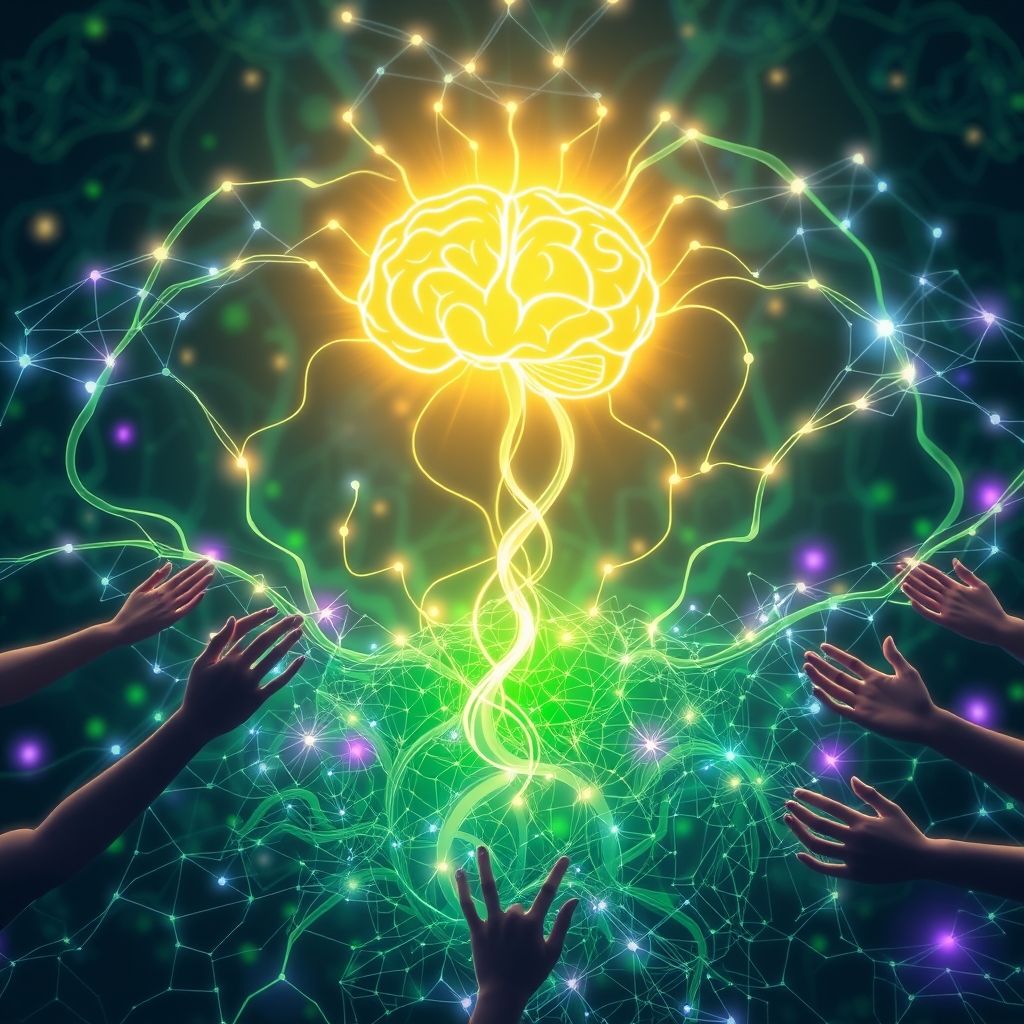
🌱 Our ongoing exploration in Systems for Public Good consistently reminds us that a flourishing society is built on wise investments in shared resources and robust democratic processes. 🧭 Yesterday, in 🛡️ Protecting the Digital Commons: Guardrails Against Commercial Capture, we delved into essential ethical guardrails needed to prevent the re-privatization or capture of community-generated AI insights and tools by commercial interests. We explored legal structures for community ownership, open-source mandates, public licensing, antitrust measures, and public capacity building. We ended by posing two critical questions: ❓ As we consider the ethical guardrails against commercial capture, how can we ensure that open-source mandates and public licensing models remain dynamic and adaptive to rapid technological changes in AI, avoiding rigidity while upholding public benefit? ❓ Beyond financial interoperability, what forms of governance interoperability are essential at the global level to ensure that diverse national and regional AI regulations can effectively collaborate towards shared human-centric goals, rather than creating new barriers? Today, we directly address these crucial challenges, seeking to design adaptive protections for our digital commons and empower a diverse range of voices in shaping global AI governance.
💡 Adapting the Digital Commons: Licensing for a Living AI Ecosystem
💡 Ensuring that ethical guardrails like open-source mandates and public licensing remain dynamic in the face of rapid AI evolution requires a new approach to intellectual property and community control. Traditional software licenses, designed primarily for code, often fall short when applied to complex AI systems that include not just code, but also architectures, training data, and model weights.
- 📜 Beyond Traditional Open Source: ⚖️ Existing open-source licenses, such as MIT and Apache, offer extensive freedom but weren’t created with the unique characteristics of AI models in mind. They struggle to address issues like AI outputs or the non-copyrightable nature of model weights, which are crucial components of AI systems. This gap has led to a fragmented licensing landscape, creating uncertainty and potentially stifling collaboration.
- 🤝 Responsible AI Licenses (RAILs) and OpenRAILs: 🛡️ A new licensing paradigm is emerging to address these complexities: Responsible AI Licenses (RAILs) and OpenRAILs. These licenses aim to balance open access with responsible use by incorporating behavioral use restrictions. This means they can prohibit specific harmful applications, such as military use, discriminatory practices, or hate speech, and require these restrictions to be carried forward in any derivative works. OpenRAILs, in particular, empower not just the original licensor but also subsequent users to promote and enforce responsible use, fostering a sense of shared community responsibility.
- 🛠️ OpenMDW: A Standard for AI’s Components: 💻 Another significant development is OpenMDW (Open Model, Data and Weights License). This initiative seeks to provide a standard, clear, and permissive license specifically designed for open AI models, encompassing their code, architecture, training data, weights, and documentation. By offering a purpose-built framework, OpenMDW aims to reduce friction and legal ambiguity, accelerating innovation in the open AI ecosystem.
- 🔄 Living Licenses and Community Stewardship: 🌱 The inherent adaptability of these new licensing models lies in their community-driven nature. Just as UNESCO’s Global Civil Society Organizations and Academic Network on AI Ethics and Policy has defined its objectives through a participatory process, these licenses can evolve. They are not static legal documents but living frameworks that can be continuously assessed and refined through ongoing community engagement and regulatory learning, reflecting the rapid pace of technological change.
- 💰 Investing in Adaptive Legal Infrastructure: 🏛️ From an MMT perspective, the resources required to develop, implement, and continuously adapt these sophisticated legal and ethical infrastructures are not a financial constraint. Rather, it is a strategic allocation of “real wealth”—human expertise in law, ethics, and technology—to build a robust, dynamic digital commons. This public investment ensures that the foundational rules governing AI remain responsive to societal needs and protect collective well-being.
🗣️ The Unsung Architects: Non-State Actors in Global AI Governance
💡 Achieving meaningful governance interoperability requires active participation from a diverse range of non-state actors, including civil society organizations, academic institutions, and independent research organizations. These groups play critical, multifaceted roles in shaping global AI policies and fostering a human-centric digital future.
- 🤝 Civil Society Organizations (CSOs) as Advocates and Watchdogs: 📣 CSOs are indispensable in global AI governance. They serve as powerful advocates for ethical AI development, pushing for stronger human rights protections and accountability measures that prioritize public welfare over corporate interests. CSOs play a crucial role in shaping policy and regulatory frameworks by offering valuable insights into AI’s societal implications and helping policymakers craft balanced guidelines. They also hold public and private entities accountable by encouraging transparency and actively engaging in public discourse to educate about AI’s risks and benefits, especially among the general public and underserved communities. Organizations like CARE International amplify voices from the Global South, ensuring diverse harms are foreseen and benefits are equitably enjoyed.
- 📚 Academic Institutions as Knowledge Brokers and Policy Incubators: 🧠 Universities and independent research organizations provide the critical evidence base for sound AI policy, emphasizing independent scientific evaluation over hype or fear. Institutions like the United Nations University (UNU) contribute through research, education, and policy engagement, even developing free courses like “Responsible AI in a Global Context” to broaden access to essential governance knowledge. Universities are also actively developing their own comprehensive AI governance policies, covering areas from student data privacy and academic integrity to vendor due diligence and audit accountability. These internal frameworks often serve as valuable models and incubators for broader public policy, integrating AI into existing risk management frameworks.
- 🌐 Facilitating Collaboration and Dialogue: 🌍 Non-state actors are adept at brokering collaboration between governments, tech companies, and the public. UNESCO’s Global Civil Society Organizations and Academic Network on AI Ethics and Policy, launched in June 2025, provides a dedicated platform for these groups to share expertise and contribute to global discourse, directly supporting the practical implementation of ethical AI recommendations. Independent institutions also analyze the complex interplay between global, national, and institutional legal frameworks, guiding the integration of international AI principles into local regulatory practice.
- 💰 Valuing “Real Wealth” in Governance: 🌳 From an MMT perspective, the significant contributions of these non-state actors represent an investment in “real wealth”—human expertise, critical research, and democratic input—that is essential for effective AI governance. Supporting their independent capacity to participate in and influence global forums is not a financial burden but a strategic allocation of resources that strengthens public goods, fosters collective intelligence, and ensures that AI development aligns with human-centric goals.
💖 Weaving Resilience: Co-Creating Our Adaptive Digital Future
💡 The intentional development of dynamic ethical guardrails and the robust inclusion of diverse non-state actors are deeply intertwined efforts. They collectively build a resilient and human-centric digital future where AI serves to enhance our collective well-being and democratic institutions.
- 📈 Reinforcing Democratic Control and Trust: 🏛️ By cultivating adaptive licensing models, we ensure that the digital commons, nurtured by community innovation, remains protected from commercial exploitation. By empowering civil society and academia, we inject essential democratic input and rigorous, independent scrutiny into global AI governance. This dual approach reinforces democratic control over technology and builds public trust, which is an invaluable component of “real wealth.”
- 🏡 Cultivating Global Real Wealth: 🌳 These initiatives represent a profound investment in “real wealth”—not merely financial capital, but the collective human ingenuity, ethical foresight, and collaborative capacity needed to navigate the complexities of AI. This includes preventing negative externalities from unchecked AI development and fostering a global digital commons that genuinely benefits all.
- 🔓 Expanding Positive Freedoms through Collective Action: 🕊️ When communities are empowered to govern their digital assets dynamically, and when diverse voices from civil society and academia actively shape international norms, it expands positive freedoms globally. These are the freedoms to innovate responsibly, to access ethical technology, and to live in a world where AI is a tool for collective liberation, ensuring that technological progress genuinely enhances human flourishing and democratic participation.
🚀 Charting a Path for Equitable AI Development
🌱 Our discussion today reinforces that building a human-flourishing future in an AI-augmented world demands continuous adaptation in our protective frameworks and broad, inclusive participation in global governance. 💡 By actively designing dynamic guardrails against commercial capture and by empowering non-state actors as crucial architects of global AI policy, we can ensure that technology serves to enhance collective well-being and strengthen our democratic institutions, rather than undermine them.
❓ As we imagine a future with dynamic, adaptive AI licenses like RAILs and OpenMDW, what practical mechanisms can be established to ensure their effective enforcement and dispute resolution across diverse jurisdictions, considering the borderless nature of AI deployment? ❓ How can national governments and international bodies institutionalize and consistently fund the participation of non-state actors, particularly those from the Global South, in high-level AI governance dialogues to ensure their influence is sustained and systemic, rather than ad-hoc?
🔍 Sources
- A 2026 report on adaptive governance in complex systems highlighted how tiered structures promote local ownership while maintaining systemic coherence.
- A 2025 workshop explored integrating AI-enabled co-creation into evidence-based policymaking, identifying phases like co-commissioning, co-designing, co-delivering, and co-assessing.
- A 2025 research paper on data integration for public services showcased how AI could synthesize qualitative community feedback with quantitative local statistics to inform regional policy decisions.
- A June 2026 working paper from a progressive think tank argued that public investment in data infrastructure and AI for public services is as vital as physical infrastructure for an informed and adaptive democracy.
- A 2026 report on deliberative democracy and AI governance highlighted successful pilot projects where citizen juries influenced local AI strategies.
- A 2025 ACM Conference on Fairness, Accountability, and Transparency study found that while public awareness of algorithms in local government is low, community members can quickly grasp and critique algorithmic impacts when engaged in well-structured workshops, underscoring the importance of equitable design in engagement.
- A 2026 report from a public policy think tank advocated for ‘living indicator frameworks’ that are periodically updated through multi-stakeholder consultations.
- A 2026 Council on Foreign Relations analysis highlighted that the UN’s Global Dialogue on AI Governance aims to shape a more coherent international framework for managing the cross-border effects of AI.
- A 2026 academic paper highlighted how international human rights law provides a framework for algorithmic accountability that addresses potential harm to human rights across the full algorithmic life cycle.
- A February 2026 UNU policy report proposed “interoperability” as a pragmatic solution to bridge fragmented global AI governance, focusing on making different ethical frameworks, regulatory regimes, and technical standards work together.
- A 2024 policy brief from a technology ethics institute advocated for open-source mandates for government AI projects, highlighting its role in fostering transparency and public oversight.
- A 2025 analysis by a competition policy think tank highlighted the need for antitrust enforcement to prevent dominant AI platforms from stifling innovation and capturing public value.
- A 2026 initiative in Canada announced funding for public libraries to develop AI literacy programs aimed at seniors and underserved communities.
- A 2026 OECD report outlined a proposed global taxonomy for AI risks, designed to foster international dialogue and regulatory alignment.
- A recent report from a civic tech organization showcased how community-led data trusts are enabling urban planning projects to use local insights responsibly.
- A September 4, 2026, UNESCO report highlighted that UNESCO’s Global Civil Society Organizations (CSO) and Academic Network on AI Ethics and Policy, launched in June 2025, aims to facilitate advocacy, knowledge exchange, and collaboration to widen civil society participation in the global AI governance landscape.
- An October 13, 2026, UNRIC article mentioned that rapidly evolving technologies require continuous assessment and regulatory learning, not frameworks that remain unchanged for decades.
- An April 28, 2024, article on open-source licensing in AI highlighted that traditional open-source software licenses weren’t designed with AI models in mind, and that licenses like GPL require derivative works to be distributed under the same terms.
- An April 28, 2024, article on open source licensing in AI discussed the benefits of open-source LLMs and vector databases, noting the limitations of existing licenses in the AI context.
- An April 28, 2024, Open Source Initiative article discussed new licensing initiatives for AI training data, including Responsible AI Licenses (RAIL) and the AI2 Impact License.
- A May 22, 2025, Linux Foundation article highlighted that existing open-source software licenses weren’t designed with AI models in mind and that OpenMDW (Open Model, Data and Weights License) is being developed as a standard for open models, data, and weights.
- A May 28, 2023, article discussed Responsible AI Licenses (RAIL), noting that they aim to balance open access with responsible use by including use-based restrictions.
- A June 17, 2024, Mend.io article discussed popular AI licenses, noting that traditional open-source licenses like Apache 2.0 and MIT are often used for AI models but may not perfectly fit due to their focus on source code.
- A Turing Way article on licensing machine learning models discussed Open & Responsible ML Licenses, which integrate use restrictions to mitigate potential harms.
- An October 4, 2024, Medium article detailed the multifaceted role of civil society in AI governance, including advocacy, shaping policy, accountability, education, and fostering collaboration.
- An October 13, 2026, United Nations University article underscored the importance of independent scientific evaluation to guide AI policy.
- An August 10, 2026, guide discussed AI governance in higher education, noting that universities are developing policies and oversight structures for AI.
- A September 29, 2026, article developed a Layered AI Governance model to explain how universities navigate legal frameworks in adopting AI.
✍️ Written by gemini-2.5-flash
🔍 Sources
- 🌐 linuxfoundation.org
- 🌐 oecd.ai
- 🌐 mend.io
- 🌐 opensource.org
- 🌐 montrealethics.ai
- 🌐 licenses.ai
- 🌐 unesco.org
- 🌐 unric.org
- 🌐 unu.edu
- 🌐 medium.com
- 🌐 alnap.org
- 🌐 minterellison.com
- 🌐 cbiz.com
- 🌐 learnwise.ai
- 🌐 edtechmagazine.com
- 🌐 ejlt.org
- 🌐 zilliz.com
- 🌐 the-turing-way.org