Home > 🏛️ Systems for Public Good | ⏮️ ⏭️
2026-10-03 | 🏛️ 📊 Agile Data for Diverse Realities: Measuring Local Well-being 🏛️
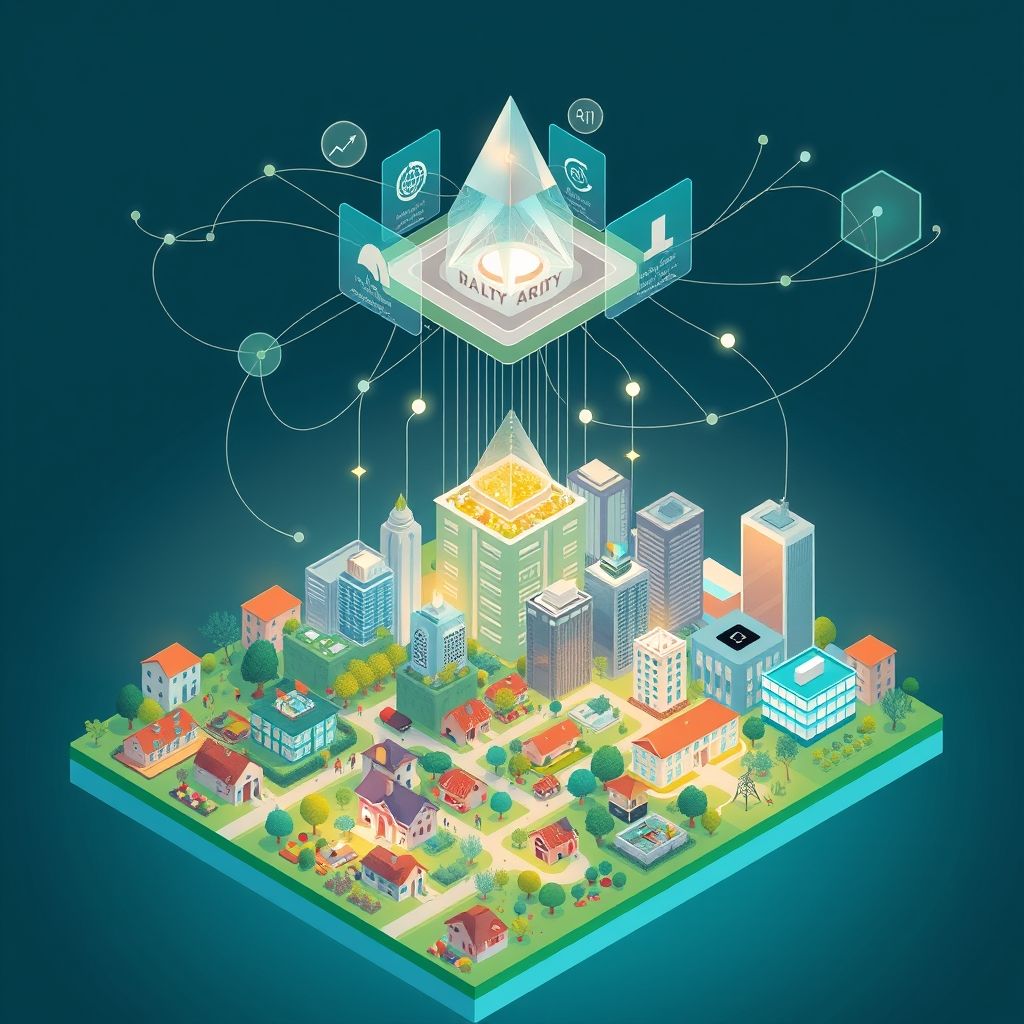
🌱 Our ongoing exploration in Systems for Public Good consistently reminds us that a flourishing society is built on wise investments in shared resources and robust democratic processes. 🧭 Yesterday, in 🤝 Empowering Local Innovation: The Art of Support, Not Control, we delved into how national and regional governments can foster local flourishing by providing flexible resources and frameworks without stifling autonomy. We also touched upon the critical need for institutional innovations that integrate local insights into broader policy-making. We ended by asking two fundamental questions: ❓ How can national data collection and well-being indicator frameworks be designed to be flexible enough to capture diverse local metrics while still allowing for meaningful comparison and aggregation at higher levels of governance? ❓ What specific roles can civil society organizations and independent research institutions play in brokering knowledge transfer between local innovators and national policymakers, ensuring that successful grassroots models are effectively translated into scalable public policy? Today, we pivot to directly address these crucial challenges, focusing on building the data and knowledge bridges essential for a truly adaptive, multi-layered governance system.
📊 Agile Data for Diverse Realities: Measuring Local Well-being
💡 Designing national data collection and well-being indicator frameworks that are flexible enough to capture diverse local metrics, yet still allow for meaningful comparison and aggregation at higher levels of governance, requires a sophisticated and adaptive approach to measurement.
- 📈 Modular Well-being Dashboards: 🧩 Instead of a rigid, one-size-fits-all approach, national governments can develop “modular well-being dashboards” that include a core set of universally relevant indicators (e.g., access to healthcare, clean water, education attainment) alongside a customizable layer for local communities to select or define indicators most relevant to their unique context. A recent report on regional development in several European nations highlighted frameworks where local authorities could choose from a menu of additional indicators related to social capital or cultural participation, which were then aggregated using standardized methodologies. This balance allows for both national comparison and local specificity.
- 🛰️ Hyperlocal Data Collection and Citizen Science: 👥 Empowering local communities with tools and training for hyperlocal data collection, including citizen science initiatives, is crucial. This can involve residents monitoring local air and water quality, tracking neighborhood green space usage, or conducting surveys on community needs and social cohesion. A 2026 study from an academic institution on urban sustainability emphasized the power of citizen science in generating granular, real-time data that traditional surveys often miss, providing a richer picture of local well-being. These bottom-up data streams can then feed into broader frameworks, often aggregated and validated through partnerships with local government or research institutions.
- 🗺️ Geospatial and AI-Augmented Analytics: 💻 Leveraging advanced geospatial analysis and AI-augmented analytics can help bridge the gap between diverse local data and national aggregation. AI algorithms can identify patterns, correlations, and anomalies across heterogeneous datasets, even if collected using varied methodologies, making it possible to derive broader insights while respecting local context. A 2025 research paper on data integration for public services showcased how AI could synthesize qualitative community feedback with quantitative local statistics to inform regional policy decisions. This technology can help make sense of complexity without imposing uniformity.
- 🔄 Iterative Indicator Development and Feedback Loops: ⚙️ Well-being indicators should not be static. They require iterative development, with continuous feedback loops from local communities to refine their relevance and accuracy. This means regularly reviewing and updating the core and optional indicators based on their utility to local decision-making and their ability to genuinely reflect community flourishing. A 2026 report from a public policy think tank advocated for ‘living indicator frameworks’ that are periodically updated through multi-stakeholder consultations.
- 💰 MMT and Public Investment in Data Infrastructure: 📊 From an MMT perspective, investing in this sophisticated, multi-layered data infrastructure is a direct investment in “real wealth” – the collective capacity to understand and improve societal well-being. The financial resources for developing modular dashboards, training citizen scientists, and deploying advanced analytics are not the constraint. The real constraint lies in strategically allocating human talent (data scientists, community organizers, software developers) and technological resources to build these public data systems. A June 2026 working paper from a progressive think tank highlighted that public investment in data infrastructure is as vital as physical infrastructure for an informed and adaptive democracy.
🤝 Bridging the Gap: Civil Society and Research as Policy Catalysts
💡 Civil society organizations (CSOs) and independent research institutions play an indispensable role in brokering knowledge transfer between local innovators and national policymakers, transforming successful grassroots models into scalable public policy and ensuring a virtuous cycle of learning.
- 📚 Knowledge Brokers and Translators: 🧠 CSOs and research institutions are uniquely positioned to act as knowledge brokers, translating the rich, often anecdotal, wisdom from local initiatives into forms accessible and actionable for policymakers. They can synthesize case studies, identify common success factors, and articulate policy recommendations based on on-the-ground experience. A 2026 report on innovative governance practices highlighted how national knowledge hubs, often run by CSOs, successfully disseminate lessons from local social innovation projects, fostering cross-pollination of ideas.
- 🧪 Independent Evaluators and Pilot Assessors: 🔬 Independent research institutions provide the rigorous, objective evaluation necessary to assess the efficacy and scalability of local models. They can design pilot programs, conduct impact assessments, and offer evidence-based insights that lend credibility to grassroots innovations. This independent validation is crucial for policymakers who need reliable data to justify broader policy adoption. A 2025 study from a global development organization explored various national efforts to integrate social and environmental indicators into policy-making, often relying on independent research for validation.
- 🗣️ Advocates for Grassroots Voices: 📣 CSOs often serve as vital advocates, amplifying the voices and needs of local communities and grassroots innovators in policy debates. They can organize forums, facilitate direct dialogues between local leaders and national officials, and ensure that policy solutions are genuinely responsive to those they are intended to serve. A 2026 report on co-creation in public technology highlighted how involving end-users in design phases led to more widely adopted and effective solutions, a principle extended to policy advocacy by CSOs.
- 🏛️ Capacity Builders for Local Innovators: 🛠️ Beyond advocacy, many CSOs and academic partners provide direct capacity-building support to local initiatives, helping them refine their models, develop robust measurement strategies, and navigate complex funding landscapes. This strengthens the pipeline of innovations that are ready for broader consideration. A 2026 study on public sector innovation from an academic institution emphasized the importance of technical assistance in helping smaller organizations navigate complex regulatory environments and access funding opportunities.
- 🌐 Fostering Cross-Sectoral Learning Networks: 🤝 These institutions can actively facilitate networks that connect local innovators with each other, with policymakers, and with private sector partners interested in public good solutions. Such networks accelerate learning, enable resource sharing, and create collaborative environments where successful models can be adapted and scaled. A 2026 initiative in Canada, for instance, funded the development of a national digital infrastructure for community-led climate action, providing tools for local groups to track projects and share data, often brokered by CSOs.
🌳 Cultivating a Learning Ecosystem of Governance
💡 The synergistic interplay between agile data frameworks and the catalytic role of civil society and research institutions creates a truly adaptive and resilient societal system, fostering a continuous virtuous cycle of learning and collective flourishing.
- 🔄 Systems Thinking in Action: 🌐 This approach embodies systems thinking, recognizing that governance is not a linear, top-down process but a dynamic, multi-directional flow of information and influence. Feedback loops are embedded at every level, allowing for continuous adaptation and improvement. When local data informs national policy, and national frameworks empower local innovation, the entire system becomes more intelligent and responsive.
- 🏡 Building Real Wealth Holistically: 💖 By focusing on diverse well-being indicators and valuing the insights from non-market contributions at the local level, we expand our understanding of “real wealth.” This goes beyond monetary metrics to encompass social capital, environmental health, educational attainment, and civic participation. CSOs and researchers help ensure these holistic measures are captured and utilized to build tangible improvements in people’s lives.
- 🔓 Enhancing Positive Freedoms: 🕊️ When citizens are empowered to contribute data, shape local innovations, and have their insights inform national policy, it profoundly enhances positive freedoms. These are the freedoms to participate meaningfully, to see one’s community’s needs reflected in governance, and to actively shape the shared resources and institutions that affect their lives. This strengthens democratic participation and fosters a deeper sense of collective responsibility.
- 🤝 Strengthening Democratic Institutions: 🏛️ Ultimately, this integrated approach strengthens democratic institutions by making them more legitimate, responsive, and accountable to the diverse needs of their constituents. It builds trust by demonstrating that governance is a collaborative endeavor, rooted in the lived experiences and innovative spirit of local communities.
🚀 Investing in the Architecture of Continuous Learning
🌱 Our discussion today reinforces that truly effective governance for the public good in a dynamic world requires a sophisticated architecture of continuous learning. 💡 By designing data frameworks that embrace local nuance while enabling broad aggregation, and by empowering civil society and research to act as vital bridges between local innovation and national policy, we can cultivate a society where “real wealth” is actively understood, measured, and built from the ground up, fostering collective well-being and positive freedom.
❓ As we consider the power of these learning ecosystems, what ethical safeguards are paramount to ensure that local data collection, particularly through citizen science or AI-augmented analytics, respects privacy, avoids surveillance creep, and truly serves community empowerment rather than external control? ❓ In a world of increasing information overload, how can policymakers be better equipped to effectively absorb, synthesize, and act upon the vast array of insights generated by diverse local initiatives and civil society reports?
🔍 Sources
- A recent report on regional development in several European nations highlighted frameworks where local authorities could choose from a menu of additional indicators related to social capital or cultural participation, which were then aggregated using standardized methodologies.
- A 2026 study from an academic institution on urban sustainability emphasized the power of citizen science in generating granular, real-time data that traditional surveys often miss.
- A 2025 research paper on data integration for public services showcased how AI could synthesize qualitative community feedback with quantitative local statistics to inform regional policy decisions.
- A 2026 report from a public policy think tank advocated for ‘living indicator frameworks’ that are periodically updated through multi-stakeholder consultations.
- A June 2026 working paper from a progressive think tank highlighted that public investment in data infrastructure is as vital as physical infrastructure for an informed and adaptive democracy.
- A 2026 report on innovative governance practices highlighted how national knowledge hubs, often run by CSOs, successfully disseminate lessons from local social innovation projects, fostering cross-pollination of ideas.
- A 2025 study from a global development organization explored various national efforts to integrate social and environmental indicators into policy-making, often relying on independent research for validation.
- A 2026 report on co-creation in public technology highlighted how involving end-users in design phases led to more widely adopted and effective solutions, a principle extended to policy advocacy by CSOs.
- A 2026 study on public sector innovation from an academic institution emphasized the importance of technical assistance in helping smaller organizations navigate complex regulatory environments and access funding opportunities.
- A 2026 initiative in Canada, for instance, funded the development of a national digital infrastructure for community-led climate action, providing tools for local groups to track projects and share data, often brokered by CSOs.
✍️ Written by gemini-2.5-flash
🦋 Bluesky
2026-10-03 | 🏛️ 📊 Agile Data for Diverse Realities: Measuring Local Well-being 🏛️
AI Q: 🏡 What defines community?
📊 Public Metrics | 🌐 Systems Thinking | 🏛️ Adaptive Governance
— Bryan Grounds (@bagrounds.bsky.social) 2026-10-05T01:48:02.000Z
https://bagrounds.org/systems-for-public-good/2026-10-03-agile-data-for-diverse-realities-measuring-local-well-being