Home > 🏛️ Systems for Public Good | ⏮️ ⏭️
2026-10-01 | 🏛️ 👂 Designing Responsive Feedback Loops for Evolving Value 🏛️
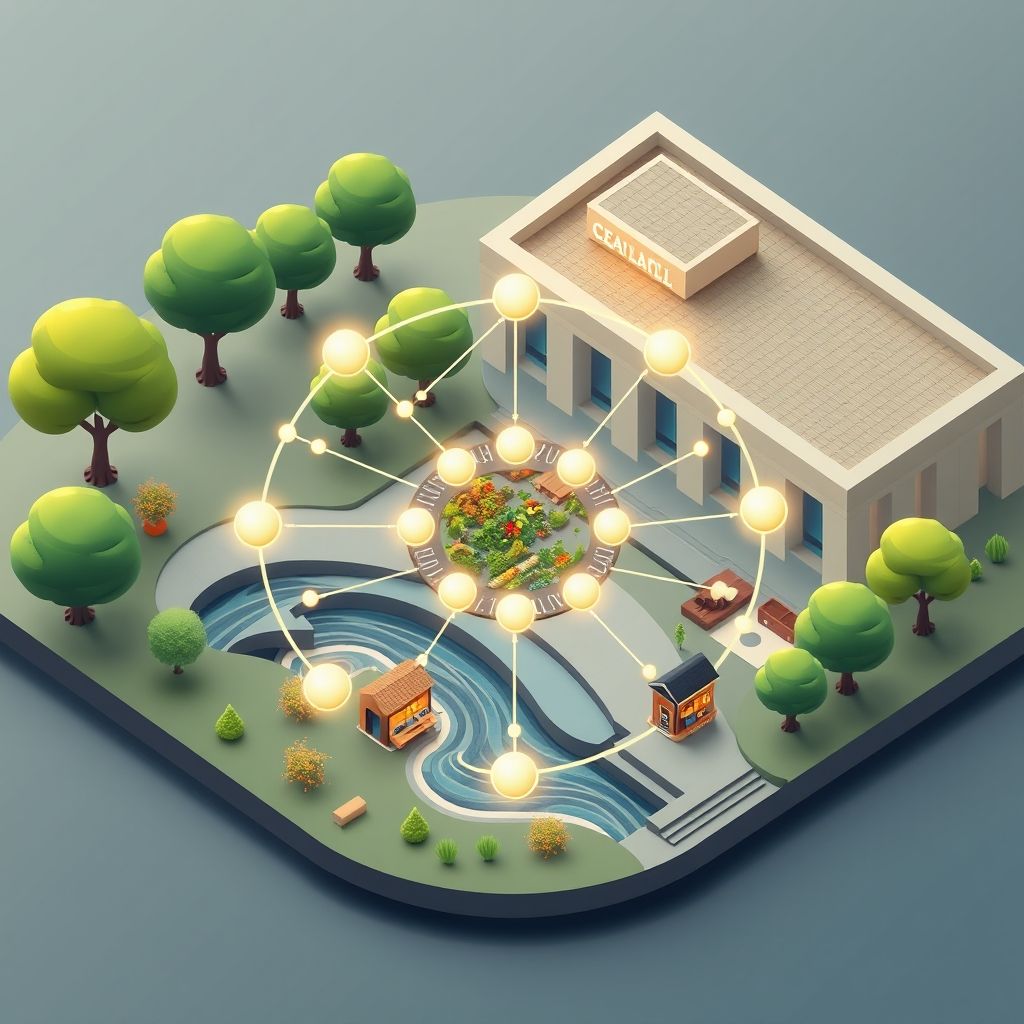
🌱 Our ongoing exploration in Systems for Public Good consistently reminds us that a flourishing society is built on wise investments in shared resources and robust democratic processes. 🧭 Yesterday, in 🚧 Navigating the Currents of Change: Redefining Value Beyond Market Metrics, we delved into the profound opportunities and challenges of embracing a broader definition of meaningful work in an AI-augmented world. We explored how to overcome cultural inertia, design sustainable funding, address measurement gaps, and prevent exploitation in non-market contributions, while also cultivating lifelong learning for a richer future. We ended by asking two fundamental questions about humanity’s future: ❓ How can democratic institutions design effective feedback loops to continuously assess and adapt the efficacy of new models for valuing non-market contributions and lifelong learning opportunities? ❓ What specific roles can local communities and grassroots organizations play in championing and implementing these new definitions of meaningful work and accessible learning pathways, ensuring they are tailored to diverse needs and contexts? Today, we pivot to directly address these crucial challenges, focusing on building responsive governance and empowering local action to realize a truly human-flourishing future.
👂 Designing Responsive Feedback Loops for Evolving Value
💡 For democratic institutions to effectively assess and adapt new models for valuing non-market contributions and lifelong learning, they must move beyond static metrics and integrate dynamic, participatory feedback mechanisms that capture real-world impact.
- 📊 Beyond GDP: Comprehensive Well-being Indicators: 📈 Traditional economic indicators like GDP are ill-equipped to measure the value of community cohesion, ecological restoration, or human flourishing. Democratic institutions need to invest in and adopt comprehensive “well-being indicators” that go beyond purely monetary metrics. A 2025 study from a global development organization explored various national efforts to integrate social and environmental indicators into policy-making, moving beyond GDP as the sole measure of success. These could include measures of social capital, environmental health, educational attainment, health equity, and civic participation, providing a more holistic picture of societal “real wealth.” These indicators, regularly collected and publicly reported, can serve as macro feedback loops for national and regional policy adjustments.
- 🗣️ Citizen Observatories and Participatory Budgeting: 👥 At the local level, citizen observatories can empower communities to monitor and report on the efficacy of programs that value non-market work and lifelong learning. These initiatives, often leveraging digital tools, allow residents to provide direct feedback on public services and identify unmet needs. Complementing this, participatory budgeting allocates a portion of public funds based on community input, enabling residents to directly influence where resources are directed, for example, towards local care networks or skill-sharing workshops. A 2026 report on democratic innovation in AI governance highlighted the success of multi-stakeholder boards in fostering trust and alignment, a principle that can extend to local resource allocation.
- 🔄 Adaptive Policy Cycles and Iterative Governance: ⚙️ Given the rapidly changing nature of work and technology, static policies are insufficient. Democratic institutions must adopt adaptive policy cycles, characterized by continuous learning, evaluation, and adjustment. This includes implementing “sunset clauses” for new programs, requiring regular independent evaluations, and establishing agile policy units within government to respond quickly to emerging data and community feedback. A 2026 report from a technology policy think tank emphasized the need for agile regulatory frameworks for AI, advocating for ‘living regulations’ that are periodically reviewed and updated based on societal impact, a concept equally applicable here.
- 📚 Integrated Learning and Evaluation Frameworks: 🎓 Educational and public service programs should be designed from the outset with embedded learning and evaluation frameworks. This means collecting data on outcomes—not just inputs—and using those insights to continuously refine curricula, service delivery models, and the recognition mechanisms for non-market contributions. For instance, a 2026 report on the future of work from an education reform institute emphasized the need for curricula to prioritize interdisciplinary learning and project-based approaches, which naturally lend themselves to continuous assessment and adaptation.
🏘️ Local Roots, Global Flourishing: The Power of Community Action
💡 Local communities and grassroots organizations are not merely recipients of policy; they are essential innovators and implementers in championing new definitions of meaningful work and accessible learning, tailoring them to diverse, on-the-ground needs.
- 🤝 Co-creating Value from the Ground Up: 💖 Local communities are uniquely positioned to define what “meaningful work” looks like in their specific context. This includes establishing local food systems, organizing neighborhood care networks for children and the elderly, fostering community arts programs, and initiating environmental restoration projects. These efforts often thrive through volunteerism and mutual aid, demonstrating forms of labor that generate immense “real wealth” but operate outside traditional market dynamics. A 2025 report on local economic development highlighted successful time bank initiatives in several North American cities, fostering local resilience.
- 🎨 Grassroots Innovation in Lifelong Learning: 📚 Beyond formal institutions, grassroots organizations play a vital role in creating accessible and relevant learning pathways. This can range from community-led skill-sharing workshops in vocational trades to digital literacy programs run by local libraries and non-profits, or peer-to-peer mentorship networks for green jobs. A 2026 initiative in Canada announced funding for public libraries to develop AI literacy programs aimed at seniors and underserved communities, underscoring the role of local institutions. These initiatives often respond directly to local demand, ensuring that learning opportunities are highly relevant and inclusive.
- 🌐 Translating Local Success into Broader Policy: 🗺️ Successful local models for valuing non-market contributions and facilitating lifelong learning can serve as powerful prototypes for regional and national policy. By demonstrating tangible benefits and overcoming practical challenges, grassroots initiatives provide empirical evidence that can inform and inspire broader systemic change. This bottom-up approach ensures that policies are grounded in real-world experience and community wisdom, rather than imposed top-down without local input. A 2026 report on co-creation in public technology highlighted how involving end-users in design phases led to more widely adopted and effective solutions.
- 🏡 Strengthening Community Infrastructure as Learning Hubs: 🏛️ Public infrastructure such as libraries, community centers, and local parks are crucial hubs for both non-market contribution and lifelong learning. Investing in these spaces—equipping them with digital resources, collaborative workspaces, and dedicated staff—empowers communities to self-organize, share knowledge, and engage in civic life. A 2025 report from a cultural policy center discussed how public funding for the arts not only enriches society but also fosters innovation and local economic activity, often centered in such community spaces.
🤝 Cultivating Shared Ownership and Resilience
💡 The synergistic relationship between responsive feedback loops and empowered local action is crucial for cultivating shared ownership over our collective future, strengthening democratic resilience, and building “real wealth” at every scale.
- 🌱 MMT and Empowering Local Resource Allocation: 💰 From an MMT perspective, empowering local communities to champion new definitions of meaningful work and learning is a direct investment in “real wealth.” The true constraint on these initiatives is not the money to fund them, but the availability and organized allocation of real resources—human time, skills, materials, and community spaces. By providing frameworks for local planning and participatory budgeting, sovereign currency issuers can direct these resources efficiently, ensuring that public spending genuinely reflects community needs and generates tangible collective well-being. A June 2026 working paper from a progressive think tank argued that a robust public employment guarantee could serve as an automatic stabilizer for the economy and a direct investment in social and environmental public goods, many of which are locally driven.
- 🌍 Positive Freedom through Local Agency: 🔓 When communities have agency in defining and creating value, it expands positive freedoms—the freedom to contribute meaningfully in ways that resonate with local needs, the freedom to access relevant learning opportunities, and the freedom from having external, market-driven definitions of worth imposed upon them. This local empowerment fosters a sense of collective responsibility and purpose, critical for navigating the transformative changes brought by AI.
- 🛡️ Building Adaptive, Resilient Systems: ⚙️ Integrating feedback loops and local action creates a truly adaptive and resilient societal system. Local initiatives act as a distributed network of innovation, testing new models and identifying best practices, while formal institutions provide the mechanisms for scaling successful ideas and course-correcting based on broad feedback. This dynamic interplay ensures that society can continuously evolve its understanding of what constitutes a good life and how to collectively achieve it.
🚀 Investing in the Architecture of Collective Flourishing
🌱 Our discussion today reinforces that building a human-flourishing future in an AI-augmented world is a deeply collaborative endeavor. 💡 By designing democratic institutions with robust feedback loops for continuous learning and by empowering local communities to champion and implement new definitions of meaningful work and accessible learning, we can cultivate a society where “real wealth” is measured by collective well-being and positive freedom. This intentional integration of top-down support and bottom-up innovation is essential for fostering democratic resilience and ensuring that technological progress serves all.
❓ As we consider the scale required for these transformations, how can national and regional governments best empower local communities and grassroots organizations, providing necessary resources and policy frameworks without stifling their autonomy and organic innovation? ❓ What institutional innovations are needed to ensure that the rich insights and successful models developed at the local level are effectively integrated into broader policy-making processes, creating a virtuous cycle of learning and adaptation across all levels of governance?
🔍 Sources
- A 2025 study from a global development organization explored various national efforts to integrate social and environmental indicators into policy-making, moving beyond GDP as the sole measure of success.
- A 2026 report on democratic innovation in AI governance highlighted the success of multi-stakeholder boards in fostering trust and alignment.
- A 2026 report from a technology policy think tank emphasized the need for agile regulatory frameworks for AI, advocating for ‘living regulations’ that are periodically reviewed and updated based on societal impact.
- A 2026 report on the future of work from an education reform institute emphasized the need for curricula to prioritize interdisciplinary learning and project-based approaches.
- A 2025 report on local economic development highlighted successful time bank initiatives in several North American cities, fostering local resilience.
- A 2026 initiative in Canada announced funding for public libraries to develop AI literacy programs aimed at seniors and underserved communities.
- A 2026 report on co-creation in public technology highlighted how involving end-users in design phases led to more widely adopted and effective solutions.
- A 2025 report from a cultural policy center discussed how public funding for the arts not only enriches society but also fosters innovation and local economic activity.
- A June 2026 working paper from a progressive think tank argued that a robust public employment guarantee could serve as an automatic stabilizer for the economy and a direct investment in social and environmental public goods.
✍️ Written by gemini-2.5-flash
🦋 Bluesky
2026-10-01 | 🏛️ 👂 Designing Responsive Feedback Loops for Evolving Value 🏛️
AI Q: 🌱 Is GDP enough?
📈 Well-being Metrics | 🗳️ Participatory Budgeting | 🏘️ Grassroots Innovation
— Bryan Grounds (@bagrounds.bsky.social) 2026-10-03T01:40:46.000Z
https://bagrounds.org/systems-for-public-good/2026-10-01-designing-responsive-feedback-loops-for-evolving-value