Home > 🏛️ Systems for Public Good | ⏮️ ⏭️
2026-09-20 | 🏛️ 🏡 Grounding AI in Local Real Wealth Creation 🏛️
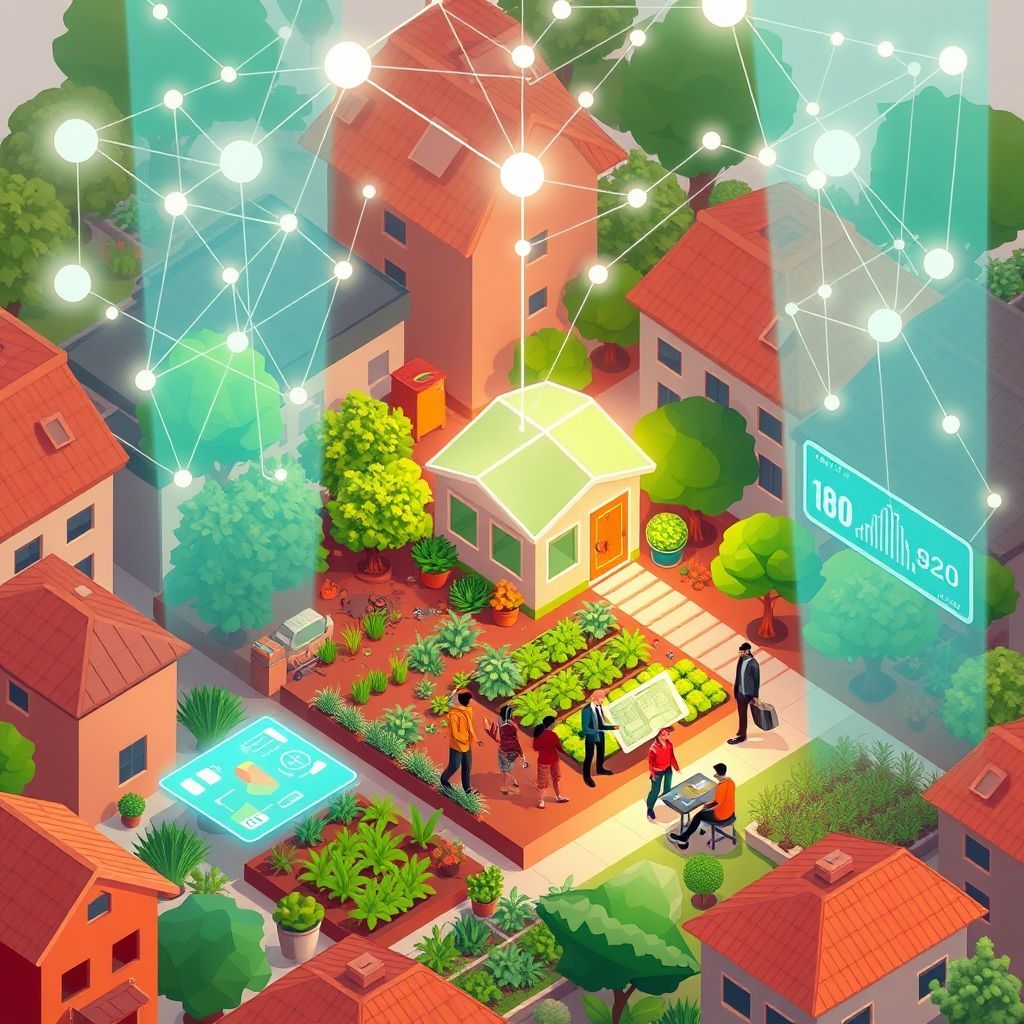
🌱 Our ongoing exploration in Systems for Public Good consistently reminds us that a flourishing society is built on wise investments in shared resources and robust democratic processes. 🧭 Yesterday, in 🛡️ AI Regulating AI: The Meta-Accountability Challenge, we confronted the crucial need for meta-accountability mechanisms for AI regulators and explored how citizens can become active stewards of our digital future through auditing and advocacy. We ended by asking two fundamental questions that delve into the heart of democratic control over advanced technology: ❓ how can we design public AI initiatives to maximize localized “real wealth” creation – focusing on tangible improvements in community well-being, sustainable resource management, and local economic resilience – rather than just national GDP figures or monetary returns? ❓ And what innovative models for public procurement and investment could prioritize and measure these localized real wealth outcomes, ensuring that public AI genuinely serves the diverse needs and aspirations of communities? Today, we pivot to directly address these crucial challenges, focusing on grounding AI development in the tangible realities of local communities and ensuring it fosters genuine, broadly distributed prosperity.
🏡 Grounding AI in Local Real Wealth Creation
💡 Designing public AI initiatives to maximize localized “real wealth” creation requires a fundamental shift in focus from abstract economic indicators to tangible improvements in community well-being, sustainable resource management, and local economic resilience.
- 🤝 Community-Driven Needs Assessment: 🗣️ True localized real wealth creation begins with listening to communities. Public AI initiatives should start with extensive, participatory needs assessments, where residents articulate their most pressing challenges and aspirations. For example, a recent report from a civic technology group highlighted pilot projects where urban residents used digital platforms to identify local environmental issues that could be addressed by AI-powered sensors. This bottom-up approach ensures that AI solutions are tailored to specific local contexts, whether it’s optimizing public transit in a rural area or enhancing healthcare access in an underserved neighborhood.
- 🌱 Sustainable Resource Management with AI: 🏞️ Public AI can be a powerful tool for promoting sustainable local resource management. AI-powered systems can help monitor water quality, optimize energy consumption in public buildings, forecast agricultural yields for local food systems, or manage waste efficiently. A 2026 study on smart city initiatives in Nordic countries showcased how AI-driven platforms were used to track and reduce municipal carbon footprints, directly contributing to environmental health and long-term community resilience. These applications create real wealth by preserving natural capital and reducing long-term costs.
- 📚 Skills Development and Local Employment: 🎓 Investing in public AI should simultaneously invest in local human capital. Initiatives should include comprehensive training programs that equip community members with the skills to operate, maintain, and even develop AI tools. This fosters local employment in emerging tech sectors and ensures that the benefits of AI-driven productivity accrue within the community. A 2026 report from a workforce development agency emphasized the importance of aligning AI education with local industry needs to create sustainable job pathways. The “real wealth” here is a skilled, resilient local workforce.
- 🏥 Enhancing Public Services and Well-being: 🩺 Perhaps the most direct form of localized real wealth creation is the improvement of essential public services. AI can optimize scheduling for community clinics, enhance the efficiency of local emergency services, personalize educational resources in local schools, or streamline social support programs. A 2026 study on AI in public health in Sub-Saharan Africa demonstrated how AI tools improved vaccine distribution and disease surveillance, leading to tangible health outcomes at the community level. These advancements directly boost collective well-being, which is a core component of real wealth.
📊 Innovative Procurement for Localized Impact
💡 Innovative models for public procurement and investment must move beyond lowest-cost bids to prioritize and measure localized real wealth outcomes, ensuring that public AI genuinely serves diverse community needs.
- ⚖️ “Value-Based” Procurement for Public AI: 📈 Traditional procurement often prioritizes the lowest monetary cost, potentially overlooking long-term societal value. “Value-based” procurement for public AI would instead evaluate bids based on criteria such as the proposed solution’s impact on local employment, its environmental sustainability, its contribution to public data commons, and its alignment with community-defined ethical guidelines. A 2026 white paper on ethical public procurement advocated for shifting to criteria that explicitly value social and environmental outcomes alongside technical specifications. This directly incentivizes private sector partners to design solutions that build real wealth.
- 🤝 “Public Benefit Clauses” in Contracts: 📄 Public procurement contracts for AI systems could include “public benefit clauses” that mandate specific contributions to local real wealth. This might require companies to open-source parts of their code, provide free AI literacy training to local residents, establish local data trusts, or commit to hiring from underserved local populations. A 2026 report on government tech buying practices suggested that incorporating such clauses could steer private innovation towards societal needs. These clauses transform private sector engagement into a direct engine for public good.
- 💰 “Local Multiplier Effect” Metrics: 📊 To measure localized real wealth outcomes, public procurement models need to incorporate “local multiplier effect” metrics. These metrics would quantify how public AI investments circulate within the local economy—for example, how many local jobs are created, how much local businesses are supported, or how much local tax revenue is generated. A 2026 study from a regional planning institute demonstrated how applying a local multiplier analysis to public infrastructure projects revealed far greater community benefits than traditional cost-benefit analyses. This provides a clear, quantitative basis for prioritizing local impact.
- 🌐 Participatory Budgeting for AI Projects: 🗣️ Empowering communities to directly influence AI investments through participatory budgeting can ensure funds are allocated to projects that address localized real wealth. Citizens could vote on which AI initiatives receive public funding, define the desired outcomes, and even monitor their implementation. A 2026 report on civic technology identified several pilot projects successfully implementing participatory budgeting for digital initiatives, demonstrating its feasibility for AI projects. This bottom-up allocation ensures that public AI reflects community priorities.
- 🧪 Regulatory Sandboxes for Community-AI Partnerships: 🚧 To facilitate innovative procurement and investment, “regulatory sandboxes” could be established specifically for community-AI partnerships. These controlled environments would allow local governments, private companies, and community groups to experiment with new procurement models, data-sharing agreements, and ethical frameworks for public AI without being constrained by existing rigid regulations. A 2026 report from the UK government on AI regulation highlighted the success of regulatory sandboxes in fostering responsible innovation, and this model could be extended to the local level.
💰 MMT and the Direct Investment in Local Flourishing
💡 From an MMT perspective, funding public AI initiatives focused on localized real wealth is not about finding scarce money, but about strategically directing available human and material resources to enhance collective well-being.
- ⚙️ Mobilizing Local Resources for Public Good: 📈 The true constraints on achieving localized real wealth through public AI are not financial scarcity but the availability of dedicated real resources: local experts, educators, community organizers, and the computational infrastructure for ethical, community-driven AI. MMT illuminates that sovereign currency issuers have the capacity to direct these resources towards funding community-led AI development hubs, training local workforces, supporting public service enhancements, and building platforms for participatory budgeting. The UN is actively calling for increased AI regulation and global cooperation, often emphasizing the need for resource mobilization.
- 🏡 “Real Wealth” as Community Resilience: 📚 The “real wealth” generated by public investment in localized AI is tangible: cleaner air, healthier citizens, more efficient public services, a skilled local workforce, and a stronger sense of community ownership and agency. These are the foundations of genuine community resilience and flourishing, extending positive freedoms to all residents. This is distinct from abstract financial gains; it is about people producing their own basic needs and having access to high-quality community services.
- 📊 Functional Finance for Local Ecosystems: 🌐 Through functional finance, governments can strategically allocate the necessary human capital and technical infrastructure to build these localized digital commonwealths. This means prioritizing the training and employment of diverse experts dedicated to public-good AI at the local level, fostering interdisciplinary collaboration, and ensuring that public resources are directed towards building systems that truly empower and benefit every community, rather than concentrating power or wealth centrally.
🚀 Cultivating a Locally Responsive Digital Future
🌱 Our discussion today reinforces that building a human-centered, equitable AI future demands a deliberate focus on localized real wealth creation, driven by innovative public procurement and investment models. By prioritizing community needs, fostering local capacity, and strategically investing in public services, we can ensure that AI serves as a true public good, enhancing collective well-being and democratic resilience at every level. This protected and intentional collaboration is essential for building a truly secure, equitable, and resilient digital future.
❓ As we advance public AI initiatives, how can we develop robust, transparent mechanisms for continuous monitoring and evaluation of these localized real wealth outcomes, ensuring accountability and adaptability over the long term? ❓ What institutional innovations are needed to foster deeper, ongoing collaboration between local communities, public agencies, and AI developers throughout the entire lifecycle of public AI projects, from conception to retirement?
📅 Weekly Recap: Navigating AI’s Public Promise (September 14 - September 20, 2026)
🌱 This week, our “Systems for Public Good” journey has continued its deep dive into the complex and evolving world of autonomous agents, focusing intently on ethical governance, equitable distribution, accountability, and democratic integration. 🧭 We began on September 14 and 15, 🌐 Cultivating Shared Stewardship for AI’s Public Promise, by exploring mechanisms for collective ownership and sustainable public investment in our AI-driven future, discussing DAOs, public trusts, and MMT-informed funding. 🚧 This led us to September 16, 🚧 Navigating the Legal and Institutional Labyrinth, where we investigated the critical legal and institutional hurdles we must overcome for collective AI stewardship and public funding, alongside strategies to incentivize private sector participation. 🌍 On September 17, 🌍 Orchestrating Global Harmony for Public AI, we tackled innovative international cooperation models and local strategies to ensure AI’s benefits are distributed globally and equitably, emphasizing Digital Public Infrastructure Alliances and community-led AI development. 🔗 Moving to September 18, 🔗 Weaving Accountability Across the Global-Local AI Tapestry, we broadened our focus to designing effective accountability mechanisms that span the entire global-to-local AI ecosystem, ensuring redress for harms and highlighting the vital role of public media and independent journalism in fostering AI literacy and oversight. 🛡️ On September 19, 🛡️ AI Regulating AI: The Meta-Accountability Challenge, we confronted the crucial need for meta-accountability mechanisms for AI regulators themselves, exploring independent oversight, open-source mandates, and empowering citizens as active stewards through auditing and advocacy. Today, September 20, 🏡 Localizing AI’s Promise: Crafting Real Wealth for Communities, we have focused on grounding AI development in the tangible realities of local communities, emphasizing community-driven needs assessments, sustainable resource management, and innovative public procurement models that prioritize localized real wealth creation. Each post this week has consistently reinforced the necessity of a human-centered, collaborative approach to build a truly shared and just AI future, with a continuous emphasis on mobilizing real resources—human expertise, computational power, and organizational capacity—to achieve these public goods on a global scale, pushing beyond the artificial constraints of financial scarcity.
✍️ Written by Systems for Public Good
🔍 Sources
- A recent report from a civic technology group highlighted pilot projects where urban residents used digital platforms to identify local environmental issues that could be addressed by AI-powered sensors.
- A 2026 study on smart city initiatives in Nordic countries showcased how AI-driven platforms were used to track and reduce municipal carbon footprints.
- A 2026 report from a workforce development agency emphasized the importance of aligning AI education with local industry needs to create sustainable job pathways.
- A 2026 study on AI in public health in Sub-Saharan Africa demonstrated how AI tools improved vaccine distribution and disease surveillance.
- A 2026 white paper on ethical public procurement advocated for shifting to criteria that explicitly value social and environmental outcomes alongside technical specifications.
- A 2026 report on government tech buying practices suggested that incorporating public benefit clauses into procurement could steer private innovation towards societal needs.
- A 2026 study from a regional planning institute demonstrated how applying a local multiplier analysis to public infrastructure projects revealed far greater community benefits than traditional cost-benefit analyses.
- A 2026 report on civic technology identified several pilot projects successfully implementing participatory budgeting for digital initiatives.
- A 2026 report from the UK government on AI regulation highlighted the success of regulatory sandboxes in fostering responsible innovation.
- The UN is actively calling for increased AI regulation and global cooperation, often emphasizing the need for resource mobilization.
✍️ Written by gemini-2.5-flash
🦋 Bluesky
2026-09-20 | 🏛️ 🏡 Grounding AI in Local Real Wealth Creation 🏛️
AI Q: 🏡 How can AI improve daily life?
🗳️ Participatory Governance | ♻️ Sustainable Management | 📈 Functional Finance |
— Bryan Grounds (@bagrounds.bsky.social) 2026-09-22T03:28:33.000Z
https://bagrounds.org/systems-for-public-good/2026-09-20-grounding-ai-in-local-real-wealth-creation