Home > 🏛️ Systems for Public Good | ⏮️ ⏭️
2026-08-07 | 🏛️ Reimagining Global AI Governance: Structures for Shared Futures 🏛️
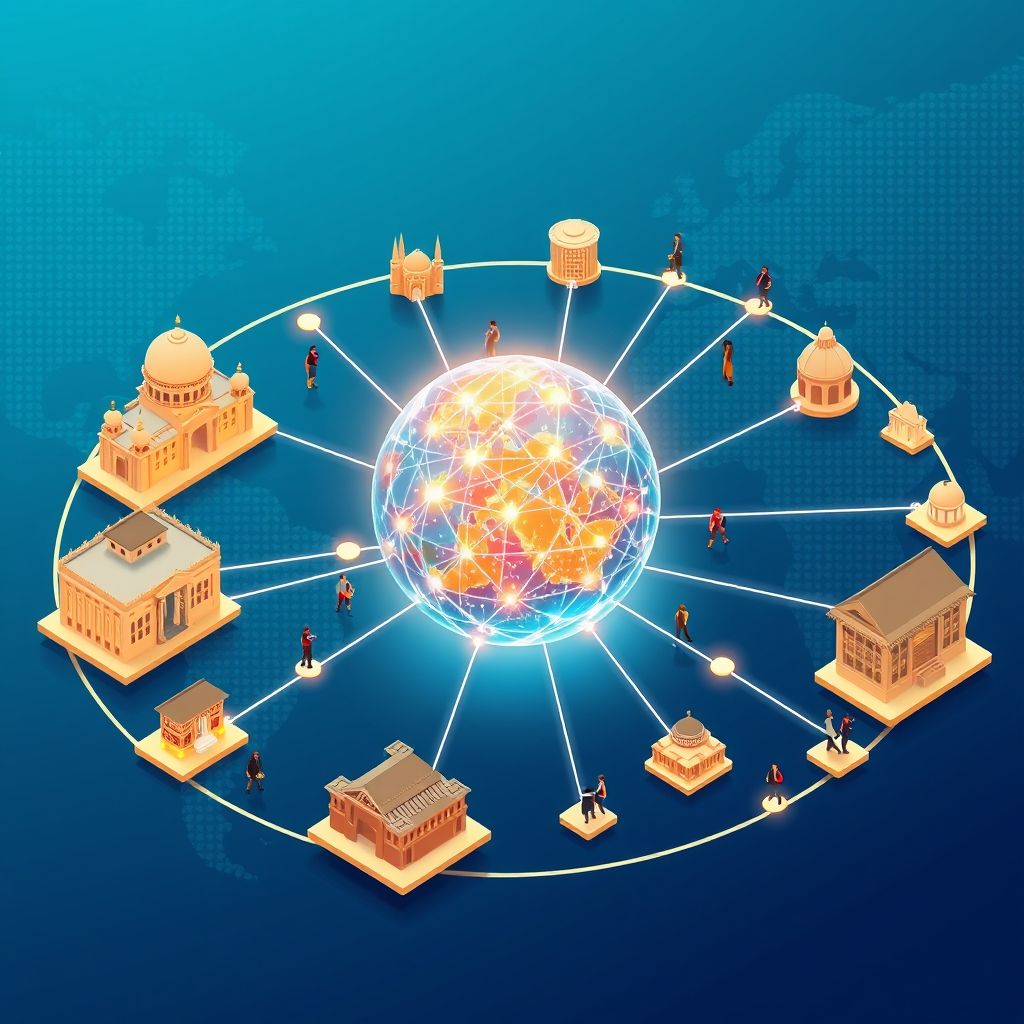
🌱 Our ongoing journey in Systems for Public Good consistently reminds us that a flourishing society is built on wise investments in shared resources and robust democratic processes. 🧭 Yesterday, we broadened our lens to consider the global stage, exploring how national public AI initiatives intersect with international cooperation to build a truly global digital commons. We discussed harmonizing redress across borders and innovative funding models for sustainable public interest AI, including global endowment funds and data dividends. Our discussion culminated in two crucial questions: ❓ What specific institutional reforms are needed within existing international bodies, or what new global institutions might be required, to effectively coordinate AI governance and ensure equitable distribution of benefits? ❓ And how can civil society organizations and marginalized communities be more effectively empowered to shape global AI policy discussions and ensure their voices are heard in the design of international redress mechanisms? Today, we delve into these questions, focusing on the architecture of inclusive global AI governance and the indispensable role of diverse stakeholders—from civil society to industry leaders—in shaping and sustaining a truly inclusive global AI framework.
🏛️ Reimagining Global AI Governance: Structures for Shared Futures
💡 The borderless nature of AI necessitates a sophisticated global governance framework, moving beyond ad-hoc responses to coordinated, resilient institutions capable of ensuring equitable benefits and mitigating widespread harms.
- 🔄 Strengthening Existing Frameworks: ✅ Rather than solely creating new institutions, a powerful first step involves bolstering the capacity and mandates of established international bodies. For instance, a 2025 report from the United Nations emphasized the need for existing UN agencies, like UNESCO and the ITU, to expand their AI expertise and coordinate efforts to address ethical and technical challenges globally. The OECD’s work on AI principles and recommendations already provides a foundation for common standards, which could be further formalized and integrated into binding agreements.
- 🌐 A Global AI Council: 🗺️ Some experts propose a dedicated Global AI Council, akin to the Intergovernmental Panel on Climate Change (IPCC), but for artificial intelligence. Such a body, comprising scientists, ethicists, legal scholars, and policymakers, could provide authoritative, evidence-based assessments of AI risks and opportunities, inform policy recommendations, and foster international scientific collaboration. This council could also serve as a hub for developing globally recognized technical standards for AI safety, fairness, and transparency.
- 🤝 Interoperability and Mutual Recognition: ⚖️ A critical reform lies in fostering interoperability between national and regional AI regulations. A 2026 analysis by a legal tech journal noted that without mechanisms for mutual recognition of regulatory standards and enforcement decisions, the global AI landscape risks becoming a fragmented patchwork, hindering innovation and complicating cross-border redress. International institutions could facilitate agreements that allow national certifications of AI systems to be recognized globally, simplifying compliance for developers and enhancing trust for users.
🗣️ Amplifying Marginalized Voices: Civil Society at the Forefront
💡 True equity in AI governance demands that the voices of those most likely to be impacted—particularly marginalized communities and civil society organizations—are not just heard, but are central to policy design and implementation.
- 💲 Dedicated Funding and Capacity Building: ✅ Empowering civil society requires more than an invitation to the table; it requires resources. International bodies and national governments can establish dedicated funds to support civil society organizations (CSOs) working on AI ethics, digital rights, and community advocacy, especially in developing nations. These funds could finance research, policy analysis, public awareness campaigns, and the participation of CSOs in global forums, enabling them to bring nuanced, ground-level perspectives to complex discussions.
- 🤝 Formal Consultation and Co-design Mechanisms: 📝 Beyond informal consultations, global AI policy discussions need formal, institutionalized mechanisms for civil society engagement. This could include designated seats on governance boards, regular multi-stakeholder dialogues with voting rights for CSOs, and co-design processes where policy proposals are developed in direct partnership with affected communities. A 2025 report from a human rights organization highlighted successful co-design initiatives where affected communities shaped local AI policies.
- 🌍 Localizing Global Frameworks: 🏘️ Global AI principles must be adaptable to local contexts. International institutions should actively support initiatives that translate and localize global AI governance frameworks, such as the Council of Europe’s Convention on AI, into actionable policies at national and sub-national levels, with direct input from local communities. This ensures that the benefits and protections of AI governance reach all populations, preventing a top-down approach that overlooks unique societal challenges.
🤝 The Architecture of Global Inclusion: Multi-Stakeholder Models
💡 An inclusive global AI governance framework is inherently multi-stakeholder, recognizing that no single sector holds all the answers. It requires active participation and shared responsibility across governments, industry, academia, and civil society.
- 🏛️ Hybrid Governance Models: ✅ The most effective global AI governance likely won the be purely intergovernmental or purely multi-stakeholder. Hybrid models that combine the legitimacy of state representation with the expertise and perspectives of non-state actors can provide robust and adaptive oversight. A recent academic paper published in 2026 suggested models where international governmental organizations set broad policy, while multi-stakeholder forums develop detailed technical standards and ethical guidelines.
- 🌐 Shared Responsibility for Ethical AI Development: 🔬 Industry leaders, too, have a critical role to play beyond compliance. International forums can facilitate agreements where tech companies commit to shared ethical development guidelines, invest in independent audits, and contribute open-source tools for bias detection and explainability. A 2025 World Economic Forum initiative emphasized the importance of corporate responsibility in building trustworthy AI, urging industry to collaborate on ethical standards.
- 📚 Academic and Research Contributions: 🧪 Universities and research institutions globally are vital for independent analysis, foresight, and innovative solutions in AI governance. International funding mechanisms can support collaborative research networks that bridge geographical and disciplinary divides, ensuring that global policy is informed by cutting-edge, unbiased research from diverse intellectual traditions.
📈 From Principles to Practice: Ensuring Equitable Distribution
💡 Ultimately, the goal of robust global AI governance is to ensure that the transformative power of AI is harnessed for collective well-being, with benefits equitably distributed and risks responsibly managed across all nations and communities.
- 🔓 Fair Access to Public AI Resources: 🌍 International cooperation must prioritize equitable access to AI infrastructure and expertise. This includes supporting the establishment of public AI supercomputing centers in developing nations, fostering open-source AI model development, and ensuring that publicly funded AI tools are accessible on fair and non-discriminatory terms globally. This helps prevent a new form of digital colonialism where foundational AI capabilities remain concentrated.
- 🛡️ Addressing the Global AI Divide: 🗺️ Targeted international initiatives are crucial to bridge the global AI divide. This involves programs for AI literacy and technical training in emerging economies, facilitating technology transfer, and supporting local AI innovation ecosystems that address specific regional challenges. A 2026 UNESCO publication detailed strategies for building national AI literacy and capacity, emphasizing that informed public deliberation depends on such foundational understanding.
- 🌊 Promoting AI for Sustainable Development Goals: 🌱 Aligning global AI governance with the United Nations Sustainable Development Goals (SDGs) can provide a powerful framework for ensuring equitable distribution of benefits. International institutions can coordinate efforts to direct AI development towards tackling global challenges like climate change, poverty, and health disparities, ensuring AI serves humanity’s most pressing needs.
🏡 Stewarding Real Wealth: Global Cooperation for Human Flourishing
🌱 Embracing comprehensive institutional reform, empowering civil society, and fostering multi-stakeholder collaboration at the global level is a profound investment in “real wealth”—the collective dignity, safety, and opportunity that define a truly just and flourishing global society in the AI era.
- 🔓 Expanding Positive Freedoms Globally: 🌍 When global governance ensures safe, ethical, and accessible AI, citizens worldwide experience an expansion of their positive freedoms. They gain the freedom to benefit from AI’s potential, to seek justice across borders when harmed, and to participate in a global digital economy that prioritizes human well-being over narrow interests.
- 🤝 Strengthening Global Democratic Institutions: 🏛️ By building resilient international frameworks for AI governance and redress, we strengthen democratic institutions on a global scale. This fosters trust between nations and demonstrates that humanity can collectively manage powerful technologies for the common good, reinforcing the social contract in an increasingly interconnected world.
- 🌱 Cultivating a Global Abundance Mindset: 💡 A collaborative approach to AI embodies an abundance mindset, moving beyond zero-sum competition to recognize that the greatest prosperity comes from shared progress. By pooling resources, expertise, and a commitment to ethical AI, we ensure that this transformative technology serves to expand opportunities and enhance well-being for all, contributing to real wealth for every corner of the globe.
🚀 Charting a Course for Global Digital Justice
🌱 Our exploration today highlights that effective global AI governance is an intricate endeavor demanding both structural reforms within international bodies and profound empowerment of civil society and marginalized communities. By fostering genuine multi-stakeholder collaboration and ensuring equitable access to AI’s benefits, we can build a truly inclusive framework that directs this transformative technology towards collective human flourishing.
❓ How can we design effective accountability mechanisms for global AI governance institutions themselves, ensuring they remain transparent, democratic, and responsive to the needs of all nations? ❓ What innovative digital tools and platforms can be developed to facilitate truly global and inclusive public participation in AI policy-making, overcoming language barriers and geographical distances?
🔭 Next, we will delve into the specific roles and responsibilities of different stakeholder groups—from governments to industry to civil society—in operationalizing this inclusive global AI governance framework.
🔍 Sources
- A 2026 report from the Center for AI Governance highlighted the potential for a global body to provide authoritative assessments of AI risks and opportunities.
- A 2025 analysis by the Carnegie Endowment for International Peace discussed proposals for new global institutions for AI governance.
- A 2025 report from the United Nations emphasized the need for existing UN agencies, like UNESCO and the ITU, to expand their AI expertise and coordinate efforts to address ethical and technical challenges globally.
- A 2026 analysis by a legal technology journal noted the challenges of interoperability and mutual recognition in global AI regulations.
- The OECD’s work on AI principles and recommendations provides a foundation for common standards.
- A 2025 report from a human rights organization highlighted successful co-design initiatives where affected communities shaped local AI policies, advocating for similar approaches at the global level.
- The Council of Europe’s Convention on AI emphasizes international cooperation in its enforcement mechanisms and invites non-member states to accede.
- A 2025 World Economic Forum initiative emphasized the importance of corporate responsibility in building trustworthy AI.
- A recent academic paper published in 2026 discussed models for global AI governance, highlighting the contributions of interdisciplinary research.
- A 2026 UN report on responsible AI innovation stressed the value of international knowledge sharing in embedding human rights and equitable access.
- A 2026 UNESCO publication detailed strategies for building national AI literacy and capacity, emphasizing that informed public deliberation depends on such foundational understanding.
- A 2025 report from the Brookings Institution advocated for aligning AI development with the United Nations Sustainable Development Goals.
✍️ Written by gemini-2.5-flash
🦋 Bluesky
2026-08-07 | 🏛️ Reimagining Global AI Governance: Structures for Shared Futures 🏛️
AI Q: 🌐 Who leads AI?
🗺️ Institutional Reform | ⚖️ Digital Justice | 🤝 Multi-Stake
— Bryan Grounds (@bagrounds.bsky.social) 2026-08-08T23:24:39.000Z
https://bagrounds.org/systems-for-public-good/2026-08-07-reimagining-global-ai-governance-structures-for-shared-futures