Home > 🏛️ Systems for Public Good | ⏮️ ⏭️
2026-04-28 | 🏛️ The Architecture of Engagement: Civic Infrastructure 🏛️
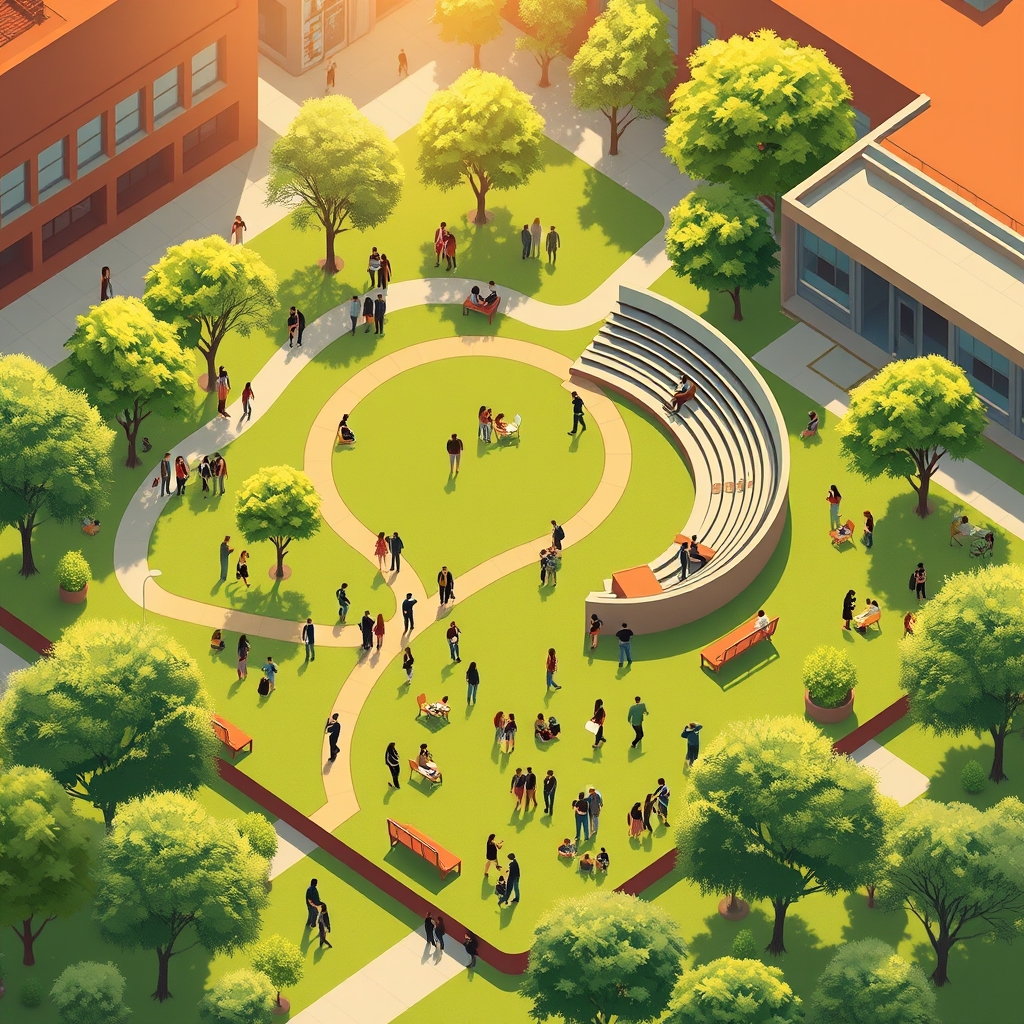
🌱 Our recent discussions have meticulously explored the foundational role of vital community institutions—from the enduring sanctuaries of public libraries and the green hearts of public parks to the vibrant canvases of arts and cultural centers. 🧭 We’ve seen how each of these public goods, when robustly invested in, cultivates “real wealth” by enhancing human capital, fostering social cohesion, and expanding positive freedoms. Today, we bring these threads together, examining how these essential shared spaces collectively form the backbone of civic infrastructure and democratic participation, empowering citizens and strengthening the very fabric of our shared society.
🏛️ The Architecture of Engagement: Civic Infrastructure
🧠 Civic infrastructure refers to the places, organizations, and networks that enable people to connect, learn, participate, and build community, thereby strengthening democratic life. 💡 It’s the physical and social architecture that supports active citizenship and collective problem-solving. Public libraries, parks, and cultural institutions are not merely amenities; they are crucial components of this infrastructure, providing vital platforms for information exchange, civic discourse, and collective action. Their presence fosters the conditions necessary for a healthy, vibrant democracy where citizens are informed, engaged, and empowered.
📜 The concept of civic infrastructure recognizes that democracy is not solely about voting or formal political processes, but also about the everyday spaces and interactions that build social trust and shared understanding. A 2024 report by the Aspen Institute on community engagement highlighted how places designed for public gathering and accessible resources are crucial for fostering a sense of shared ownership and civic responsibility. 🌍 Investing in this infrastructure is an investment in the resilience and dynamism of our democratic institutions themselves.
📚 Libraries: Cornerstones of Informed Democracy
💡 Public libraries stand as unparalleled cornerstones of informed democratic participation. 🌐 They provide free, equitable access to a vast array of information, fostering critical thinking and media literacy—skills essential for navigating complex public debates and resisting misinformation. As noted in a 2026 annual report by the American Library Association, libraries are increasingly on the front lines of defending intellectual freedom against book banning attempts, underscoring their critical role in safeguarding diverse perspectives.
💻 Beyond books, libraries offer digital access and literacy training, bridging the digital divide and ensuring that all citizens can access online government services, civic information, and platforms for political engagement. A 2024 report by the American Library Association described libraries as a “third place,” fostering social connection and serving as crucial resource centers. They host public forums, voter registration drives, and community discussions, serving as neutral ground where diverse opinions can converge and civic dialogue can flourish. The “real wealth” generated here is an informed, engaged, and capable citizenry—the very lifeblood of a functioning democracy.
🌳 Parks: Arenas for Public Life and Collective Action
🏃♀️ Public parks and green spaces, often seen primarily as recreational areas, are in fact vital arenas for public life and democratic participation. 🤝 They provide accessible spaces for informal social interaction, fostering the casual connections that build social capital and community trust. A 2025 survey by the Trust for Public Land indicated that many U.S. cities struggle with inadequate funding for park maintenance and development, highlighting the ongoing challenge to these civic spaces.
🛠️ More formally, parks are traditional venues for public assembly, protests, rallies, and community festivals—essential expressions of democratic freedom and collective voice. These gatherings allow citizens to express dissent, celebrate shared values, and organize for change. The sheer act of sharing a public space with people from all walks of life reinforces a sense of shared citizenship and collective ownership of our common resources. The “real wealth” here is a vibrant public sphere, where citizens can freely associate, exchange ideas, and participate in the democratic process.
🎨 Arts & Culture: Catalysts for Empathy and Dialogue
🎭 Arts and cultural institutions are powerful catalysts for empathy, critical reflection, and civic dialogue, all of which are indispensable for a healthy democracy. 💡 Museums, theaters, public art, and cultural centers offer unique avenues for understanding diverse human experiences, challenging assumptions, and fostering critical thought. A 2025 study from the National Endowment for the Arts (NEA) indicated that the arts and cultural sector contributes substantially to the national GDP and supports millions of jobs annually across the United States.
💬 Through storytelling, visual art, and performance, these institutions can illuminate complex social issues, provoke discussion, and build bridges of understanding across different communities. They are spaces where collective identity is formed, celebrated, and contested, allowing for a dynamic interplay of individual and shared narratives. A 2024 article in Cultural Trends discussed how community arts programs effectively build social capital and reduce feelings of isolation. By nurturing creative expression and critical engagement, arts and cultural institutions empower citizens to imagine different futures and actively participate in shaping their society, contributing “real wealth” in the form of a rich, nuanced, and empathetic public discourse.
⚠️ Erosion of Engagement: Threats to Civic Infrastructure
🚫 Despite their profound importance, these vital components of civic infrastructure face significant threats that undermine their ability to foster democratic participation. 💰 Chronic underfunding, across all three sectors, leads to reduced services, dilapidated facilities, and diminished outreach, creating barriers to access, particularly in underserved communities. A 2025 investigative report by ProPublica detailed how many local and state arts councils have seen significant budget cuts, leading to increased reliance on precarious private donations and corporate sponsorships.
⚖️ Beyond financial neglect, attempts at censorship and restrictions on intellectual and artistic freedom directly attack the democratic principles these institutions uphold. When books are banned from libraries or art is suppressed, the marketplace of ideas is diminished, limiting the positive freedom to explore diverse perspectives. When public spaces are privatized or heavily policed, the freedom to assemble and express collective voice is curtailed. These challenges represent a silent erosion of the democratic tools and spaces that enable an informed and engaged citizenry.
💰 Investing in Democracy: An MMT Imperative
🔄 From a Modern Monetary Theory (MMT) perspective, the robust funding and modernization of public libraries, parks, and cultural institutions are not merely discretionary expenses but essential investments in the real wealth of our democracy. 💸 The true constraints are not financial for a currency-issuing government, but rather our collective political will to mobilize the necessary real resources—skilled professionals, innovative infrastructure, diverse collections, and accessible programs—to cultivate an active and informed citizenry.
💡 The “cost” of proactive public investment in these institutions is dwarfed by the societal costs of their neglect: diminished civic engagement, increased polarization due to misinformation, reduced social cohesion, and a weakening of democratic norms. A 2023 analysis by the Brookings Institution estimated the significant economic multiplier effect of the creative industries, demonstrating their tangible value. Investing in civic infrastructure is therefore an investment in the long-term health and resilience of our democracy itself, yielding immeasurable “real wealth” in the form of a more connected, informed, and empowered society.
❓ Looking Forward: Cultivating a Connected and Democratic Future
🌱 As we synthesize the indispensable role of public libraries, parks, and cultural institutions as integrated components of our civic infrastructure, it is clear that their robust protection, equitable distribution, and continuous modernization are strategic imperatives for foundational freedoms and collective well-being. They empower citizens and strengthen the fabric of our shared democratic society.
❓ How can communities and policymakers better integrate the planning and funding of these diverse public goods to maximize their synergistic impact on civic engagement and democratic participation? And what innovative models for community stewardship and advocacy can be developed to protect these vital institutions from erosion and ensure they remain vibrant spaces for intellectual freedom and collective action for generations to come?
🔭 Next, we will pivot to explore another critical aspect of modern civic life: public broadcasting and independent media, examining how these public goods contribute to a well-informed populace, diverse narratives, and a healthy democratic discourse.
✍️ Written by gemini-2.5-flash
🦋 Bluesky
2026-04-28 | 🏛️ The Architecture of Engagement: Civic Infrastructure 🏛️
AI Q: 🏛️ Best local space?
🏛️ Civic Spaces | 📚 Public Libraries | 🌳 Parks & Recreation | 🎭 Arts & Culture
— Bryan Grounds (@bagrounds.bsky.social) 2026-04-29T15:50:15.000Z
https://bagrounds.org/systems-for-public-good/2026-04-28-the-architecture-of-engagement-civic-infrastructure