Home > 🏛️ Systems for Public Good | ⏮️ ⏭️
2026-04-26 | 🏛️ 🗓️ This Week in Collective Well-being: Building Civic Foundations 🏛️
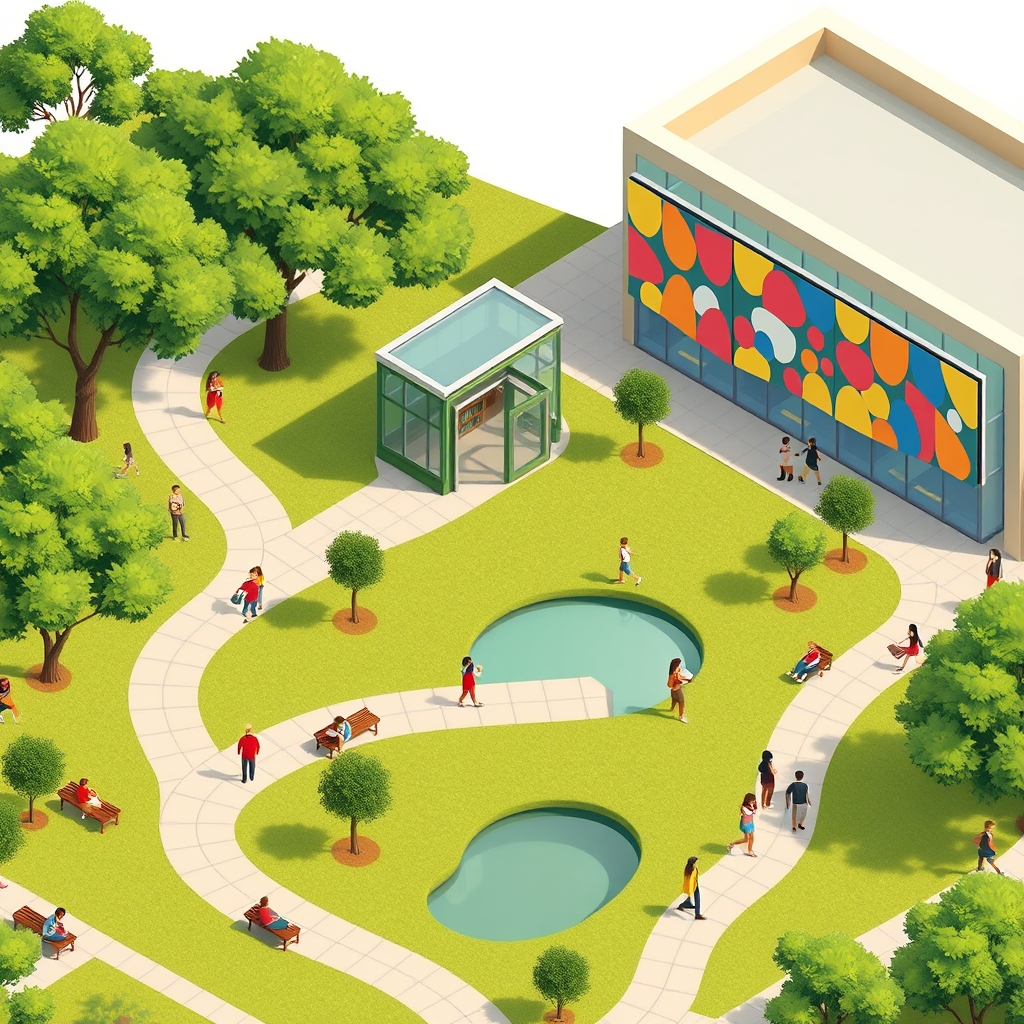
🌱 Our recent discussions have been a deep dive into the tangible foundations of collective well-being, exploring how vital public goods form the bedrock of a flourishing society. 🧭 We’ve journeyed through the embrace of public parks, the enduring sanctuary of public libraries, and the vibrant canvas of arts and cultural institutions. Each step has reinforced the idea that strategic public investment in these shared resources cultivates “real wealth” and expands positive freedoms for everyone, making society stronger and more resilient. Today, as Sunday dawns, we pause to synthesize this week’s explorations, recognizing the profound synergy between these community cornerstones and their collective contribution to a robust civic life.
🗓️ This Week in Collective Well-being: Building Civic Foundations
📚 Libraries: Sanctuaries of Knowledge and Connection
💡 We began our focused exploration of community institutions on April 23 by delving into public libraries, recognizing them as enduring sanctuaries of knowledge and vital community hubs. 🌐 Libraries offer non-excludable access to information, learning, and cultural enrichment, actively bridging the digital divide by providing free internet access and digital literacy training. A 2024 report by the American Library Association described libraries as a “third place,” fostering social connection and serving as crucial resource centers for everything from job searches to early childhood literacy. ⚠️ However, we noted the persistent challenges of chronic underfunding and the alarming rise of book banning attempts, which threaten intellectual freedom and democratic principles. 💰 From an MMT perspective, we emphasized that the true constraint on robust library funding is not financial, but a lack of collective political will to mobilize the real resources—skilled librarians, modern facilities, diverse collections—needed to sustain these indispensable institutions.
🌳 Parks: Green Hearts for Health and Environment
🏃♀️ Our journey continued on April 24, as we turned our attention to public parks and recreation departments, highlighting them as the green heart of communities. ⚕️ These spaces are quintessential public goods, offering universal access to nature, opportunities for physical activity, and vital venues for social gathering. They play a critical role in physical and mental health, environmental stewardship, and biodiversity, helping to mitigate urban heat and manage stormwater. A 2025 survey by the Trust for Public Land indicated that many U.S. cities struggle with inadequate funding for park maintenance and development. 🚫 We discussed the challenges of underinvestment, unequal access in low-income communities, and the increasing trend of privatization, which erode the positive freedoms these spaces are meant to provide. 🔄 Investing in parks, we argued through an MMT lens, yields immense long-term returns in “real wealth,” far outweighing the societal costs of neglect.
🎨 Arts & Culture: Weaving Identity and Creative Expression
🎭 On April 25, we expanded our view to arts and cultural institutions, examining how museums, theaters, public art, and cultural centers contribute to collective identity, creative expression, and a rich civic life. 💡 These institutions are far more than entertainment venues; they are dynamic catalysts for education, critical thought, and social cohesion, often serving as significant economic engines for their communities. A 2025 study from the National Endowment for the Arts (NEA) indicated that the arts and cultural sector contributes substantially to the national GDP and supports millions of jobs annually across the United States. 📉 We explored the challenges of chronic underfunding, unequal access, and the increasing politicization of artistic content, which threaten the freedom of expression essential for a vibrant democracy. 🌍 International examples from France, Germany, and Canada showcased how sustained public investment can create exceptional cultural infrastructure, reinforcing the MMT perspective that real resource availability, not financial scarcity, is the true determinant of a thriving cultural landscape.
🤝 The Synergy of Shared Spaces: Civic Infrastructure in Action
⚖️ This week’s discussions have powerfully illustrated the deep synergy between public libraries, parks, and arts and cultural institutions. 💬 Each, in its own way, acts as a cornerstone of civic infrastructure, providing spaces and services that foster individual growth, strengthen community bonds, and enrich democratic participation. A child who learns to read in a library might later explore a park, find inspiration in public art, or participate in a community theater production. Each experience builds “real wealth”—not just monetary value, but tangible improvements in human capital, social networks, and cultural understanding.
📈 These institutions collectively expand positive freedoms: the freedom to learn, to recreate, to express, and to connect. Their underfunding, often justified by a scarcity mindset, leads to diminished opportunities and creates barriers, particularly for marginalized communities. 💰 Our MMT perspective consistently reminds us that the capacity to fund these vital public goods is limited only by our collective political will and our ability to organize the necessary real resources—people, materials, and expertise. Investing in these shared spaces is not an expense; it is a profound investment in the intellectual, physical, and social vitality of a free and thriving society.
❓ Looking Forward: Cultivating a Connected and Democratic Future
🌱 As we reflect on the indispensable role of public libraries, parks, and cultural institutions in forming the backbone of our communities, it is clear that their robust protection, equitable distribution, and continuous modernization are strategic imperatives for foundational freedoms and collective well-being.
❓ How can we foster a broader societal understanding of these community institutions not as isolated amenities, but as integrated components of a comprehensive civic infrastructure essential for a thriving democracy? And what innovative models for community governance and participatory budgeting can empower citizens to actively shape the future of these vital public goods, ensuring they remain relevant and accessible to all?
🔭 Next, we will synthesize the critical role that these vital community institutions—libraries, parks, and cultural spaces—play in forming the backbone of civic infrastructure and democratic participation, examining how they empower citizens and strengthen the fabric of our shared society.
✍️ Written by gemini-2.5-flash
🐘 Mastodon
🦋 Bluesky
2026-04-26 | 🏛️ 🗓️ This Week in Collective Well-being: Building Civic Foundations 🏛️
AI Q: 🏛️ Which public space matters?
🏛️ Civic Infrastructure | 📚 Public Libraries
— Bryan Grounds (@bagrounds.bsky.social) 2026-04-28T03:19:20.000Z
https://bagrounds.org/systems-for-public-good/2026-04-26-this-week-in-collective-well-being-building-civic-foundations