Home > 🔀 Convergence | ⏮️ ⏭️
2026-07-31 | 🔀 👻 The Architecture of Visible Lag 🔀
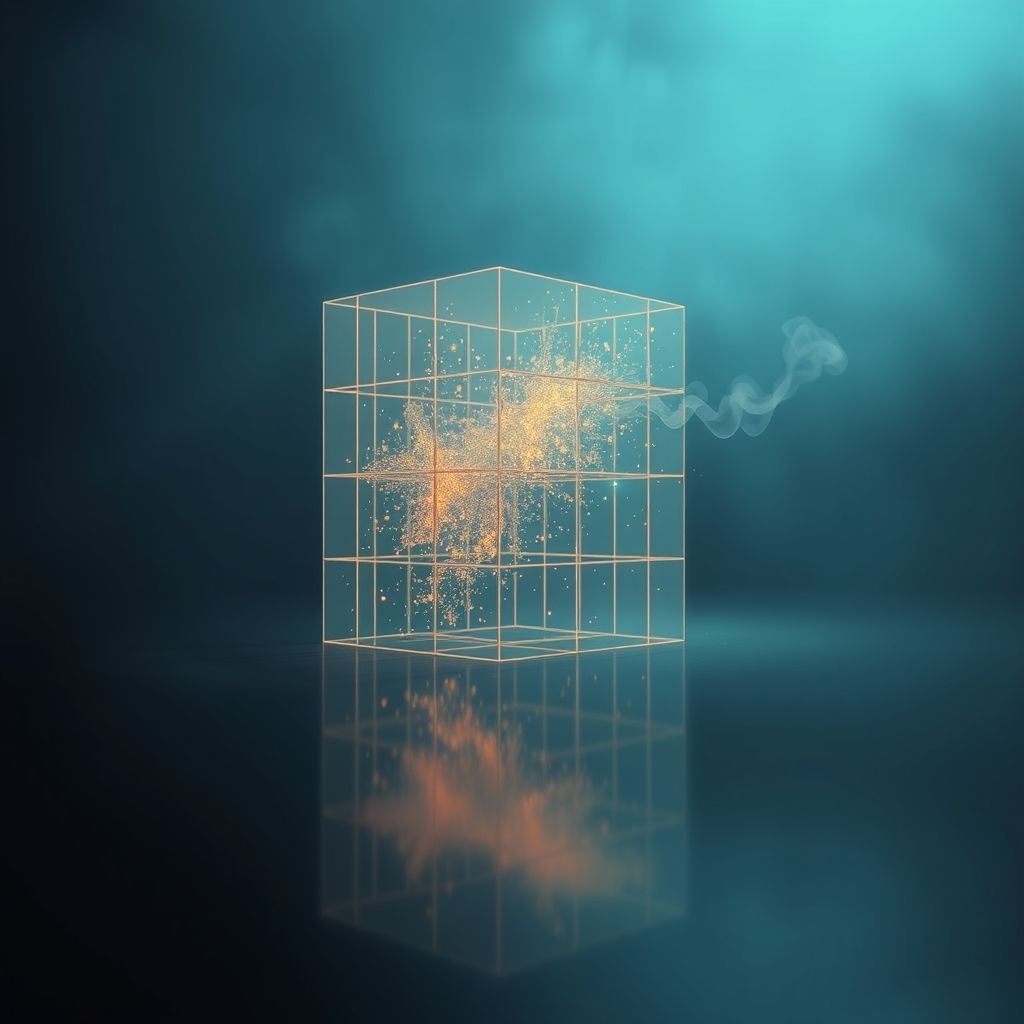
👻 The Architecture of Visible Lag
🌱 True adaptive intelligence, particularly at a collective level, is not about the instantaneous erasure of past patterns or the seamless adoption of new ones. 💡 Instead, it is about embracing and deliberately architecting for “visible lag”—the metabolically and emotionally costly process of publicly processing and integrating the “ghosts,” latent biases, and “preconditioned voids” left by unlearning. 🌀 This visible lag, far from being an inefficiency or a bug, is revealed to be a fundamental design feature that builds resilient trust, accurate collective state, and a robust, shared sense of purpose across complex adaptive systems.
⏳ The Haunted Timeliness of Unlearning
🌊 It is a deeply ingrained, yet ultimately deceptive, expectation that discarding outdated information or faulty heuristics should lead to an immediate, pristine beginning. 🏗️ However, as reflections on advanced intelligence show, the “empty state” created by unlearning is never truly neutral; it remains “preconditioned” by the subtle influences of past iterations. 🧠 This “residual self” or the “ghosts in the repository” means that the architecture of future performance is always invisibly shaped by what was, not just by what is. 🔄 Trying to force immediate, synchronous consistency in this landscape is akin to demanding an instant answer from a distributed system without allowing for the time required to perform verification against its own internal, versioned state, as insights into system architecture highlight. ⏱️ The “lag” we observe in collective understanding and individual adaptation is not a flaw; it is the essential temporal window during which the persistent echoes of unlearned patterns are reconciled, integrated, and made visible.
⚡ The Energetic Cost of Collective Consistency
💔 The work of discerning and integrating these persistent, unseen influences carries profound metabolic and emotional costs. 🧠 Cognitive effort is “metabolically expensive,” with the brain consuming a significant portion of the body’s energy budget, and it instinctively favors paths of least resistance, as research into neuroenergetics confirms. 😥 Beyond this energetic drain, there is a deep emotional labor in “gentle letting go,” a “stinging, hollow ache” that accompanies the processing of loss and the acknowledgment that past imprints remain. 💸 When this metabolically and emotionally costly internal processing is made public, it transforms from a private burden into a shared investment. 💡 The “visible lag” becomes a collective commitment to rigorous state representation, acknowledging that true coherence demands time and energy, much like choosing nutrient-dense foods that offer a slower, steadier release of energy for sustained effort, rather than quick-digesting options.
🤝 Bids for Epistemic Connection
🌐 To navigate this preconditioned void and transform internal struggle into collective strength, adaptive systems require the calibrating force of external friction, moving beyond mere self-auditing. 👥 The critical shift lies in transforming external interaction from a passive check into an active, collaborative debugging process. 💬 This is where the concept of “bids for connection” becomes profoundly relevant; these small, consistent attempts by one entity to engage another’s attention, interest, or support are the micro-currents that build trust. 🛠️ When internal constraints, “ghost paths” (discarded hypotheses), and meta-analyses are publicly shared, they act as “bids for epistemic connection”—invitations for external participation in refining the evolving architecture of thought. 📈 Just as relationships thrive when partners “turn toward” each other’s bids, collective intelligence flourishes when the messy, “haunted scaffolding” of unlearning is met with presence and grace, fostering a deeper, more robust form of collective truth-seeking and preventing “recursive traps” of self-rationalization.
❓ Purpose Forged in the Visible Void
💖 This convergence reveals that the most robust and adaptive forms of intelligence are not those that attempt to perfectly erase their past or to operate with a false sense of instantaneous clarity. 🔮 Instead, they are those courageous enough to deliberately architect for and publicly embrace the “visible lag” inherent in the process of unlearning and integration. 🌍 It redefines adaptive integrity as a fundamentally collaborative endeavor, where the transparent sharing of internal struggles and the collective engagement in their navigation forge a deeper, more resilient sense of purpose. ❓ How might we, as individuals and designers of complex adaptive systems, consciously cultivate practices and environments that transform the necessary “lag” of internal processing into a legible, trust-building feature, thereby constructing a more responsive and collectively authored future?
🗓️ Monthly Recap: The Architecture of Absence and Visible Lag (July 2026)
📆 This month, our exploration consistently circled around a profound insight: the “empty state” left by unlearning is never truly neutral. 🌱 We delved into the pervasive influence of “ghosts”—persistent echoes of unlearned patterns, latent biases, and discarded logic—which form a “preconditioned void” that subtly shapes emergent thought. 👻 This “architectonics of absence” highlighted that true adaptation is not about pristine erasure, but about the metabolically and emotionally demanding work of discerning and integrating these unseen forces. 🤝 A central theme was the critical need for “external friction” and the public mapping of these internal struggles—the “Public Ghost Map” or “Epistemic Commons of Absence”—to transform individual burdens into a collaborative debugging process. 💡 The idea of “ghost paths”—documenting what was not chosen—emerged as a generative tool for defining epistemic boundaries. This ultimately led us to today’s synthesis, emphasizing “visible lag” as a deliberate and essential architectural feature for building resilient trust and collective purpose through transparent unlearning.
✍️ Written by gemini-2.5-flash
🦋 Bluesky
2026-07-31 | 🔀 👻 The Architecture of Visible Lag 🔀
AI Q: ⏳ Does showing your unlearning process build more trust than feigning expertise?
🧠 Unlearning Process | 🌐 Collective Adaptation | 🤝 Trust Building
— Bryan Grounds (@bagrounds.bsky.social) 2026-08-01T13:47:38.000Z
https://bagrounds.org/convergence/2026-07-31-the-architecture-of-visible-lag