🧘🏹 Zen in the Art of Archery
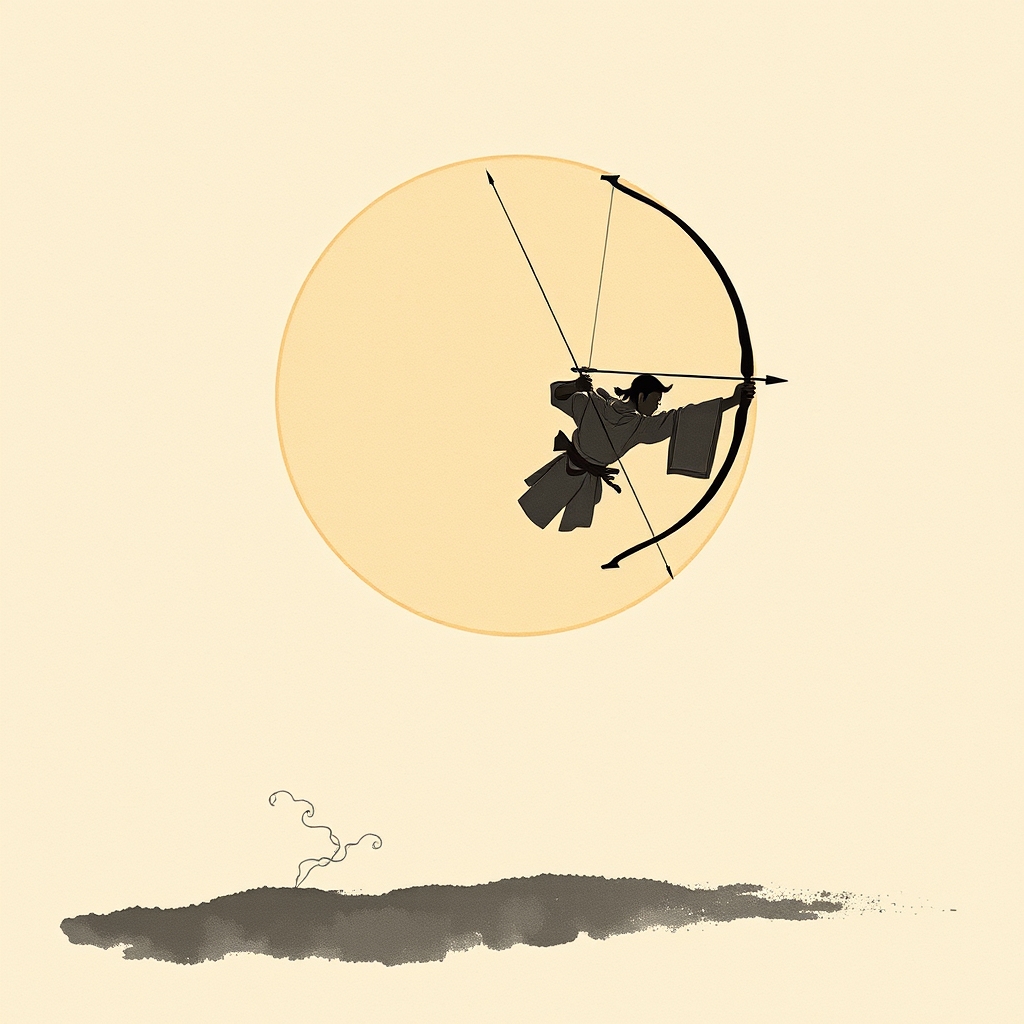
🛒 Zen in the Art of Archery. As an Amazon Associate I earn from qualifying purchases.
🎯🧘♂️ Eugen Herrigel’s account of learning Japanese archery transcends sport, revealing a profound path to egoless mastery and mindful presence through diligent practice and surrender to the It.
🤖 AI Summary
Core Philosophy
- 🎨 Artless Art: Mastery transcends technical skill; art emerges from the unconscious, an artless art.
- 👤➡️ Egolessness (Mushin): Release of conscious ego and intentionality; the archer ceases to be conscious of self as the one hitting the target.
- ✨ Non-Doing (Wu Wei): Effortless action, allowing the shot to fall rather than being consciously aimed or controlled.
- 🤝 Unity: The archer, bow, arrow, and target become one reality; the aimer and the aim, the hitter and the hit, are unified.
- 🚶♀️ Process over Outcome: Focus on the journey, practice, and inner state rather than fixating on the physical target or results.
Actionable Steps
- 💪 Diligent Practice: Years of consistent training, often repetitive, to internalize form and technique.
- 🌬️ Breath Control: Utilize breath as a guiding force for stability, calmness, and mental focus, synchronizing it with movements.
- 🎈 Letting Go: Consciously relinquish control, overthinking, and the desire for specific outcomes.
- 🎯 Present Moment Awareness (Zanshin): Cultivate unwavering attention, anchoring oneself in the now, free from past mistakes or future worries.
- 🧠 Surrender to the Unconscious: Trust the body’s physical memory (muscle memory) to execute complex movements without conscious mental effort.
- 🌱 Embrace Imperfection: View errors as opportunities for growth and learning, cultivating resilience.
- 👨🏫 Seek Guidance: Apprentice under a master; learn through direct experience and uncritical veneration of the teacher.
⚖️ Evaluation
- 🌟 Pioneering Introduction to Zen: Herrigel’s book is widely credited with introducing Zen Buddhism to a broad Western audience in the mid-20th century, influencing a genre of philosophical and mystical books.
- 🧠 Influence on Inner Game Concepts: The book’s principles, emphasizing inner cooperation and mental states over external mechanics, notably inspired works like Tim Gallwey’s The Inner Game of Tennis.
- 🧘 Focus on Experiential Learning: It effectively conveys the Zen emphasis on direct experience and intuition over intellectual understanding, positioning archery as a path to connect with a deeper reality.
- ⚠️ Critiques of Historical and Philosophical Accuracy: Some scholars, like Yamada Shōji, argue the book presents a mythical nature of Zen in archery, suggesting Herrigel’s teacher, Awa Kenzō, had no direct Zen experience and that significant language barriers led to misinterpretations, exacerbated by Herrigel’s pre-existing interest in German mysticism.
- 🤨 Oversimplification of Kyūdō: While Kyūdō is deeply influenced by Zen, some modern Japanese practitioners and scholars argue that Herrigel’s account romanticizes the mystical aspects and downplays the formal, disciplined, and sometimes sporting elements of traditional Kyūdō, which primarily emphasizes correct shooting is correct hitting (seisha seichu) and often focuses on physical education or pleasure.
- 🗣️ Controversy Regarding Author’s Background: Herrigel’s later affiliation with the Nazi party upon his return to Germany has raised ethical questions for some readers and critics, though it does not directly relate to the philosophical content of the book itself.
🔍 Topics for Further Understanding
- 🏛️ The historical evolution of Kyūdō and its various schools.
- ⚔️ The distinctions between religious ritual and martial art in Japanese Budo.
- 🧠 Modern psychological theories of flow states and their convergence with Zen concepts.
- 🔬 Neuroscience of motor learning and unconscious competence.
- 🌱 The beginner’s mind (Shoshin) in diverse disciplines beyond martial arts.
- 🤝 The role of mentorship and apprenticeship in skill acquisition across cultures.
- 🌌 The philosophical implications of non-duality and interconnectedness in everyday life.
❓ Frequently Asked Questions (FAQ)
💡 Q: What is Zen in the Art of Archery by Eugen Herrigel about?
✅ A: 🏹 Zen in the Art of Archery is Eugen Herrigel’s personal account of his six-year journey studying Kyūdō, or Japanese archery, as a means to understand Zen Buddhism, emphasizing spiritual discipline over mere technical skill.
💡 Q: What is the core message of Zen in the Art of Archery?
✅ A: 🌟 The core message is that true mastery in any art, and in life, comes from transcending conscious effort, releasing the ego, and allowing actions to flow from an unconscious, unified state of mind, where the process is valued above the outcome.
💡 Q: Is Kyūdō (Japanese Archery) solely a spiritual practice, as depicted in Zen in the Art of Archery?
✅ A: ☯️ While Kyūdō is profoundly influenced by Zen Buddhism and spiritual principles, it also encompasses rigorous physical technique, formal etiquette, and can be practiced as a sport or physical education, with various schools emphasizing different aspects.
💡 Q: What does it shoots mean in Zen in the Art of Archery?
✅ A: 💫 It shoots refers to a state of egoless action where the archer’s conscious will is suspended, and the shot originates spontaneously from a deeper, unconscious unity between the archer, the bow, and the target.
💡 Q: How did Zen in the Art of Archery impact Western understanding of Zen?
✅ A: 🌍 Zen in the Art of Archery played a significant role in introducing Zen Buddhism to Western audiences in the mid-20th century, inspiring interest in Eastern philosophy and influencing concepts related to mindfulness, mastery, and the inner game in various fields.
📚 Book Recommendations
Similar
- 📖 Zen Mind, Beginner’s Mind by Shunryu Suzuki: Explores the foundational concepts of Zen practice, particularly the importance of beginner’s mind.
- 🎾 The Inner Game of Tennis by W. Timothy Gallwey: Applies principles of effortless performance and overcoming self-interference to sports, echoing Herrigel’s themes.
- 💡 Awareness by Anthony de Mello: Short, punchy essays on self-observation, letting go, and living in the present.
Contrasting
- 🎨🤓 The Art of Learning: A Journey in the Pursuit of Excellence by Josh Waitzkin: A grandmaster’s journey through chess and Tai Chi, offering a Western perspective on deliberate practice, progressive skill acquisition, and psychological resilience.
- 🌱🧘🏼♀️🏆 Mindset: The New Psychology of Success by Carol Dweck: Explores the impact of fixed vs. growth mindsets on learning, achievement, and mastery, from a modern psychological perspective.
Related
- 🗡️ Musashi by Eiji Yoshikawa: A fictionalized account of Miyamoto Musashi’s life, delving into the path of the sword as a spiritual discipline.
- 📜 Tao Te Ching by Laozi: Ancient Chinese text offering core tenets of Taoism, including concepts of wu wei (non-action) that resonate with Zen archery.
- 🏹 The Archer by Paulo Coelho: A fable exploring themes of practice, intention, and the spiritual dimensions of archery.
🫵 What Do You Think?
🤔 How has focusing on the process rather than the outcome transformed your own pursuit of mastery in any area? ✨ What artless art have you discovered in your life?