❤️🧠 Unconditional Parenting: Moving from Rewards and Punishments to Love and Reason
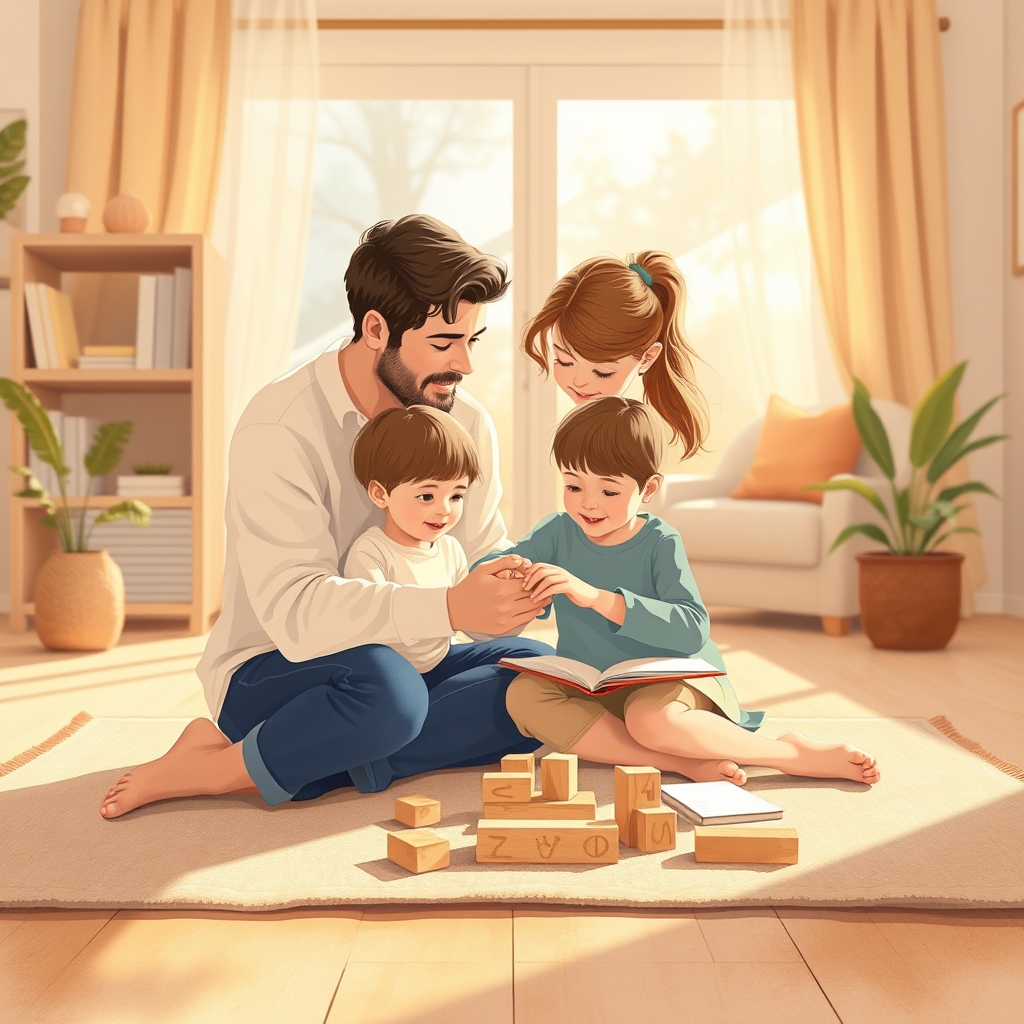
🤔❤️ Move beyond traditional rewards and punishments to foster resilient, intrinsically motivated, and compassionate children through genuine love, respect, and understanding.
🤖 AI Summary
🍎 Core Philosophy
- ❤️ Unconditional Love: Children need love and acceptance regardless of behavior or performance. Love is a gift, not earned.
- 🤝 Relationship First: Prioritize the parent-child relationship over short-term compliance. Foster connection, not control.
- 🎯 Intrinsic Motivation: Rewards (including praise) and punishments undermine natural motivation and self-esteem.
- ⏳ Long-term Goals: Focus on raising empathetic, independent, critical thinkers, not just obedient children.
- 👧 Child’s Perspective: Understand underlying emotions and needs behind behavior. Empathy is foundational.
🪜 Actionable Steps
- ❌ Reject Conditional Parenting: Eliminate rewards (praise, bribes, tangible items) and punishments (time-outs, threats, physical discipline).
- 🌱 Cultivate Autonomy: Allow choices, foster independence, involve children in problem-solving and decision-making.
- 👂 Practice Empathy: Listen actively, validate feelings, strive to understand the child’s perspective.
- 🤝 Work With Not Do To: Engage children through dialogue and understanding to address behavior.
- 🌟 Model Values: Demonstrate desired behaviors and values; apologize when appropriate.
- 👍 Genuine Encouragement: Offer specific, non-judgmental feedback on effort and growth, rather than generic praise.
- 🛑 Set Boundaries Collaboratively: Explain reasons, involve children, and work together to prevent difficult behavior.
⚖️ Evaluation
- 🚫 Critique of Traditional Discipline: Kohn effectively synthesizes research demonstrating that punishments are often ineffectual long-term, lead to resentment, teach children to avoid detection, and damage relationships. Rewards, including praise, can undermine intrinsic motivation, shift focus to external validation, and reduce genuine interest in tasks.
- 🔬 Research on Intrinsic Motivation: Kohn’s arguments align with research suggesting that external rewards can diminish an individual’s inherent enthusiasm for a task (overjustification effect), particularly when the activity is already of interest and the reward is offered beforehand. However, some studies indicate that rewards can increase motivation and performance when tied to a clear success standard, even if the task has low initial interest.
- 🗣️ Contrasting Views on Praise: While Kohn criticizes praise as a form of control, some perspectives suggest that specific praise focusing on effort and the process can cultivate a growth mindset and build self-efficacy, rather than undermining intrinsic motivation. The type and delivery of praise matter.
- 👪 Authoritative Parenting Debate: Kohn challenges aspects of authoritative parenting, arguing that even this seemingly balanced approach can still rely on extrinsic motivators and firm control that might undermine a child’s autonomy and intrinsic worth. Traditional models of parenting are often designed to control children, whereas Kohn’s approach focuses on meeting children’s needs and working with them.
- 😩 Implementation Challenges: Critics and readers acknowledge that implementing unconditional parenting is significantly more demanding than traditional methods, requiring substantial patience, self-reflection, and a conscious shift in ingrained beliefs. The book is sometimes criticized for not offering enough specific scripts for every situation, leaving parents to interpret principles.
- 📈 Long-term Outcomes: Research suggests that children who experience unconditional love have better mental health, emotional regulation, and stronger relationships throughout life. This aligns with Kohn’s emphasis on fostering healthy, responsible, and compassionate individuals.
🔍 Topics for Further Understanding
- 🧠 The neuroscience of child development and attachment theory’s role in shaping parent-child bonds.
- 🌍 Integrating unconditional parenting principles within diverse cultural contexts and family structures.
- 🧘 Strategies for parents to manage their own emotional triggers and deeply ingrained conditional parenting habits.
- 🏢 The application of self-determination theory (Deci & Ryan) to education and workplace environments, beyond parenting.
- 🛠️ Detailed practical frameworks, like Collaborative and Proactive Solutions (CPS), for problem-solving with children without resorting to traditional discipline.
- 📱 The impact of technology and digital media on child autonomy and intrinsic motivation.
- 💸 Exploring the long-term societal and economic benefits of raising intrinsically motivated and emotionally resilient individuals.
❓ Frequently Asked Questions (FAQ)
💡 Q: What is the main argument of Unconditional Parenting: Moving from Rewards and Punishments to Love and Reason?
✅ A: Unconditional Parenting: Moving from Rewards and Punishments to Love and Reason argues that conventional parenting methods relying on rewards and punishments are detrimental to children’s intrinsic motivation, self-esteem, and relationship with their parents, advocating instead for an approach based on unconditional love, respect, and understanding of children’s needs.
💡 Q: Why does Unconditional Parenting: Moving from Rewards and Punishments to Love and Reason discourage praise?
✅ A: Unconditional Parenting: Moving from Rewards and Punishments to Love and Reason suggests that praise, like other rewards, can undermine a child’s intrinsic motivation by making their actions contingent on external validation, rather than fostering an internal desire to learn or behave compassionately. It implies love and acceptance are conditional on behavior.
💡 Q: How does Unconditional Parenting: Moving from Rewards and Punishments to Love and Reason address misbehavior without punishment?
✅ A: Unconditional Parenting: Moving from Rewards and Punishments to Love and Reason advocates for addressing misbehavior by understanding the underlying reasons and unmet needs, working with the child to solve problems, showing empathy, and focusing on long-term moral development rather than short-term compliance.
💡 Q: Is Unconditional Parenting: Moving from Rewards and Punishments to Love and Reason a permissive parenting style?
✅ A: No, Unconditional Parenting: Moving from Rewards and Punishments to Love and Reason is not permissive. It challenges the false dichotomy between strictness and permissiveness, instead proposing a working with approach that involves clear boundaries and guidance, but delivered with respect and a focus on the child’s perspective and autonomy, rather than control.
💡 Q: What are the long-term benefits of following the principles in Unconditional Parenting: Moving from Rewards and Punishments to Love and Reason?
✅ A: According to Unconditional Parenting: Moving from Rewards and Punishments to Love and Reason, the long-term benefits include stronger parent-child relationships, enhanced emotional well-being, greater moral development and empathy, intrinsic motivation, and children growing into confident, responsible, and compassionate individuals.
📚 Book Recommendations
Similar
- 📕 Punished by Rewards by Alfie Kohn
- 🕳️🧠👶🏽 The Whole-Brain Child: 12 Revolutionary Strategies to Nurture Your Child’s Developing Mind by Daniel J. Siegel and Tina Payne Bryson
- 🚫🎭🧠 No-Drama Discipline: The Whole-Brain Way to Calm the Chaos and Nurture Your Child’s Developing Mind by Daniel J. Siegel and Tina Payne Bryson
- 👍 Positive Discipline by Jane Nelsen
- 🧑🤝🧑 Raising Human Beings by Ross Greene
Contrasting
- 🥺 The Highly Sensitive Child by Elaine N. Aron (Focuses on temperament rather than parenting style, though can inform approach)
- 🐅 Battle Hymn of the Tiger Mother by Amy Chua (Advocates for a highly authoritarian, control-oriented parenting style)
- ⚖️ Parenting with Love and Logic by Foster Cline and Jim Fay (Uses consequences and choices as key disciplinary tools)
Related
- 🏎️⛽ Drive: The Surprising Truth About What Motivates Us by Daniel H. Pink (Explores intrinsic motivation in broader contexts)
- 🌱🧘🏼♀️🏆 Mindset: The New Psychology of Success by Carol S. Dweck (Focuses on growth vs. fixed mindsets, relevant to praise)
- 🕊️🤝 Nonviolent Communication: A Language of Life by Marshall B. Rosenberg (Offers tools for empathetic communication)
🫵 What Do You Think?
🤔 Does modern society overemphasize short-term compliance in children? How might a widespread shift to unconditional parenting impact future generations, and what challenges do you foresee in its adoption?