🪖🎨 The War of Art: Break Through the Blocks and Win Your Inner Creative Battles
🤖 AI Summary
TL;DR 🎯
“The War of Art” is a guide to overcoming “Resistance,” the internal force that prevents creative individuals from doing their work, by treating creative pursuits as a professional endeavor rather than a hobby.
Surprising Perspective 🤯
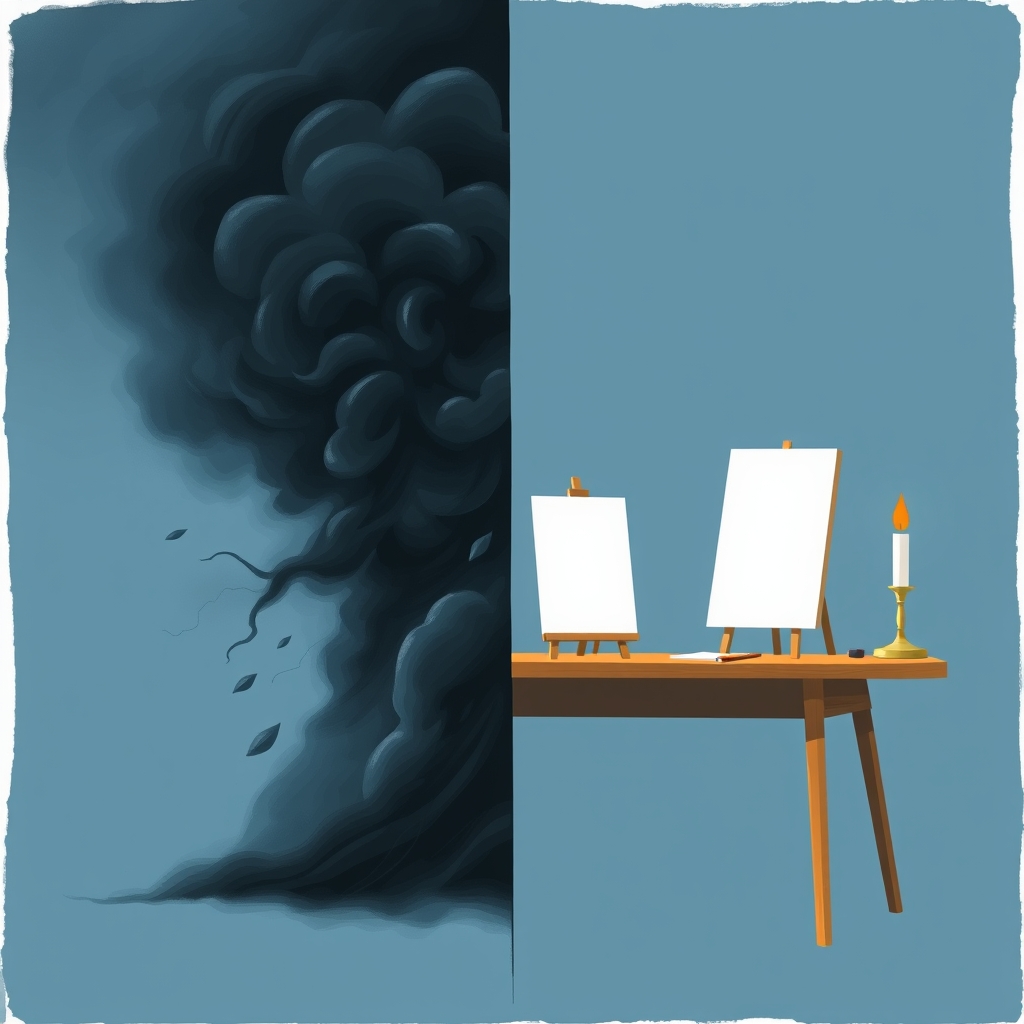
Pressfield reframes the creative process as a battle against a tangible enemy, “Resistance,” personifying procrastination, self-doubt, and distraction. This militaristic approach, emphasizing discipline and professionalism, offers a stark contrast to the romanticized notion of creativity as a spontaneous, effortless muse-driven activity. It highlights that creative work is not about waiting for inspiration, but about showing up and doing the work, consistently, regardless of mood or circumstance.
Deep Dive: Topics, Methods, and Research 📚
- Resistance: The Enemy Within 👹
- Pressfield defines “Resistance” as the universal force that opposes creative work. It manifests as procrastination, self-doubt, rationalization, and any activity that distracts from the task at hand.
- Resistance is strongest when the work is most important.
- Resistance is impersonal; it targets everyone equally.
- Turning Pro: The Professional Mindset 💼
- The core thesis is to treat creative work as a professional, not an amateur.
- Professionals show up every day, regardless of feeling inspired.
- Professionals are committed to their craft and seek mastery.
- Professionals accept payment for their work.
- Professionals are patient and play for the long game.
- Overcoming Resistance: Practical Strategies 🛠️
- Show up every day: Establish a consistent work schedule and stick to it. 📅
- Eliminate distractions: Create a dedicated workspace and minimize interruptions. 📵
- Embrace fear: Recognize that fear is a sign that you’re on the right track. 😨
- Seek feedback: Don’t be afraid to share your work and receive constructive criticism. 🗣️
- Focus on the work, not the outcome: The process is more important than the result. ⚙️
- Understand the difference between territory and hierarchy. Territory is where your creative work is done, hierarchy is working for the approval of others.
- The Shadow Self and Higher Self ☯️
- Pressfield introduces the concept of the Shadow Self (driven by fear and ego) and the Higher Self (guided by purpose and truth).
- Overcoming Resistance aligns with the Higher Self.
- The Muse and Inspiration 🎶
- Inspiration comes to those who are working. It is not a prerequisite for work, but a result of it.
- The “Muse” is not a mystical entity, but a symbol of the flow state achieved through dedicated practice.
Practical Takeaways and Guidance 📝
- Establish a Daily Routine: Set a specific time each day for creative work and adhere to it rigorously. ⏰
- Create a Dedicated Workspace: Designate a space solely for creative endeavors, free from distractions. 🚪
- Minimize Distractions: Turn off notifications, disconnect from the internet (if possible), and create a focused environment. 🔇
- Start Small: Begin with manageable tasks and gradually increase the workload. 📈
- Embrace the “Boring” Work: Recognize that much of creative work involves routine and repetition. 🥱
- Focus on the Process: Enjoy the act of creation, regardless of the outcome. 🎨
- Seek Mentorship: Find someone who has achieved what you aspire to and learn from their experience. 🤝
- Don’t Wait for Inspiration: Begin working even when you don’t feel motivated. 🏃
- Understand that fear is normal: Use the feeling of fear as a compass, if you are afraid you are on the correct path. 🧭
- Treat your creative work as a job: Show up and do the work, regardless of how you feel. 💼
Critical Analysis 🧐
- Pressfield’s writing is highly motivational and engaging, drawing from his personal experiences and observations.
- The book’s strength lies in its practical advice and relatable anecdotes.
- However, it lacks scientific research or academic citations, relying primarily on the author’s personal philosophy.
- The concept of “Resistance” is a powerful metaphor, but it’s not scientifically validated.
- The author’s experience as a former Marine lends weight to his emphasis on discipline, but some may find the militaristic language off-putting.
- Authoritative reviews generally praise the book for its inspirational message and practical advice.
Book Recommendations 📚
- Best Alternate Book on the Same Topic: ”🪄 Big Magic: Creative Living Beyond Fear” by Elizabeth Gilbert. 🪄 (More about embracing creativity with a less militaristic approach)
- Best Tangentially Related Book: “Deep Work: Rules for Focused Success in a Distracted World” by Cal Newport. 🧠 (Focuses on developing the ability to concentrate deeply, a key skill for overcoming Resistance)
- Best Diametrically Opposed Book: “The Artist’s Way” by Julia Cameron. 🌈 (Emphasizes nurturing inner creativity through self-discovery and play, contrasting Pressfield’s focus on discipline)
- Best Fiction Book That Incorporates Related Ideas: 🐦🕊️ Bird by Bird: Some Instructions on Writing and Life by Anne Lamott. ✍️ (Though a writing book, it heavily incorporates the idea of doing the work, and dealing with the inner voice.)
- Best Book That Is More General: ⚛️🔄 Atomic Habits by James Clear. (Provides a broader framework for building habits, applicable to creative pursuits)
- Best Book That Is More Specific: ✍️🦴 Writing Down the Bones by Natalie Goldberg. 🦴 (Specifically focuses on the craft of writing and developing a writer’s practice)
- Best Book That Is More Rigorous: ”🌊🧘🏼♀️🧠📈 Flow: The Psychology of Optimal Experience” by Mihaly Csikszentmihalyi. 🌊 (Provides a scientific framework for understanding the flow state, which Pressfield alludes to as the “Muse”)
- Best Book That Is More Accessible: “Steal Like an Artist” by Austin Kleon. 🎨 (A visually engaging and concise guide to creative inspiration and practice)
💬 Gemini Prompt
Summarize the book: The War of Art by Steven Pressfield. Start with a TL;DR - a single statement that conveys a maximum of the useful information provided in the book. Next, explain how this book may offer a new or surprising perspective. Follow this with a deep dive. Catalogue the topics, methods, and research discussed. Be sure to highlight any significant theories, theses, or mental models proposed. Emphasize practical takeaways, including detailed, specific, concrete, step-by-step advice, guidance, or techniques discussed. Provide a critical analysis of the quality of the information presented, using scientific backing, author credentials, authoritative reviews, and other markers of high quality information as justification. Make the following additional book recommendations: the best alternate book on the same topic; the best book that is tangentially related; the best book that is diametrically opposed; the best fiction book that incorporates related ideas; the best book that is more general or more specific; and the best book that is more rigorous or more accessible than this book. Format your response as markdown, starting at heading level H3, with inline links, for easy copy paste. Use meaningful emojis generously (at least one per heading, bullet point, and paragraph) to enhance readability. Do not include broken links or links to commercial sites.
🦋 Bluesky
🪖🎨 The War of Art: Break Through the Blocks and Win Your Inner Creative Battles
AI Q: 🎨 How do you force yourself to work when the inspiration simply refuses to show up?
👹 Resistance | 💼 Professionalism | 🛠️ Creative Practice | 🧘 Inner Battles
— Bryan Grounds (@bagrounds.bsky.social) 2026-03-17T06:23:57.565Z
https://bagrounds.org/books/the-war-of-art