🔺⚡🔄🌍 The Triangle of Power: Rebalancing the New World Order
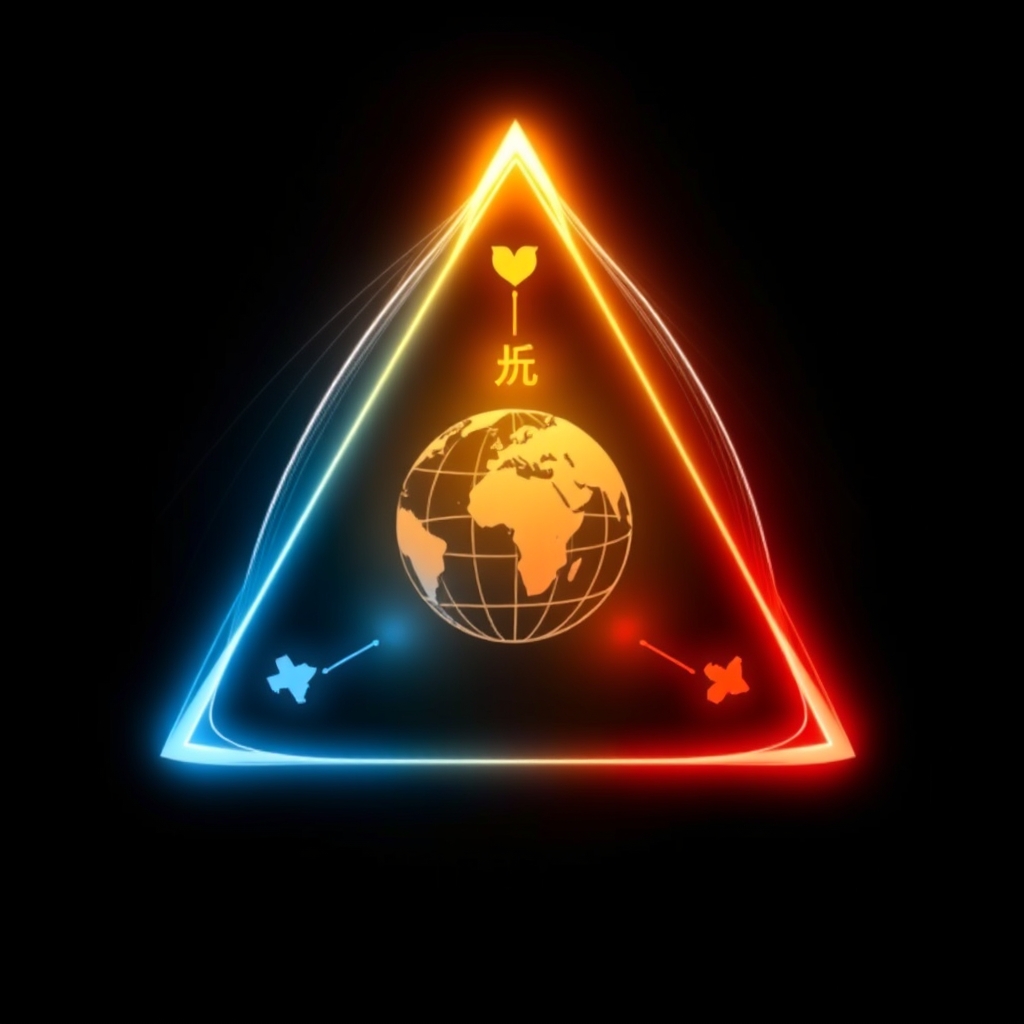
🌍⚖️🤝 The liberal world order is unraveling into multipolar disorder, with Finnish President Alexander Stubb proposing values-based realism for the Global West to engage the rising Global East and decisive Global South, aiming to revitalize multilateralism and prevent fragmentation.
🤖 AI Summary
📖 Core Thesis
- 📜 Post-WWII liberal international order: Unraveling, shifting from multilateral cooperation to multipolar rivalry.
- 🕰️ Current moment: Hinge point akin to 1918, 1945, 1989; next few years define century’s international order dynamics.
🔺 The Triangle of Power
- 🌐 New International System: Driven by three major forces.
- 🗽 Global West: Economically dominant (~15% population, >50% global GDP), bound by shared values/institutions, but internally divided by populism, inequality, distrust.
- 🐉 Global East: China-led, supported by Russia and autocracies; state-centered, transactional, assertive; practices zero-sum power politics.
- 🌍 Global South: Decisive arbiter of future order; power based on demographic trends, economic development, natural resources. Holds the power to tip the new world order towards cooperation or fragmentation.
🔑 Key Concepts
- 🧭 Values-Based Realism: Stubb’s distinctive approach.
- ⚖️ Middle ground between naïve idealism and cynical realpolitik.
- 📜 Universal values (freedom, fundamental rights, international rules) considering global diversity, culture, history.
- 🛠️ Instrument: Temporary, adaptive, situational.
- 🤝 Multilateralism vs. Multipolarity:
- 🔗 Multilateralism: Rules-based cooperation, anchored in institutions, shared norms; produces order.
- 💥 Multipolarity: Oligopoly of power, shifting deals, transactional alliances; leans toward disorder and conflict; marginalizes smaller states.
- ⏳ Interregnum: Current phase of uncertainty; patchwork cooperation, weaponized interdependence, blurring of peace/war.
📣 Call to Action
- 💪 For like-minded powers: Act now to reform institutions, revitalize multilateralism.
- 🗣️ For the West: Deliver values-based realism and dignified foreign policy; learn to listen to avoid losing global influence.
- 🏛️ Institutional reform: Needs to reflect 2026 demography, economy, power, not 1945.
- 🌟 Leadership: Lead by example, not exhortation.
⚖️ Evaluation
- ➕ Strengths:
- 📚 A serious, well-informed, and thoroughly readable book for a critical moment.
- 🧭 Provides a valuable compass in a world moving from order to disorder.
- 🗺️ Offers a blueprint for policymakers to avoid conflict, navigate competition, and operationalize selective cooperation.
- 👨🎓 Author’s background as Finnish President, Foreign Minister, Prime Minister, and Finance Minister, with a Ph.D. in international relations, offers a unique blend of academic and political experience.
- 🌏 Emphasizes the crucial role of the Global South in shaping the future world order.
- 💡 Highlights the need for institutional reform to reflect current power realities.
- ➖ Limitations/Critiques:
- ❓ Values-based realism is described more as an ethos than a concrete strategy.
- 🚧 Institutional reform is easier to affirm than to execute in practice.
- ⚠️ The triangle concept may risk oversimplifying regional complexities.
- 🤔 May underestimate the profound depth of structural resentment, particularly where economic insecurity, identity politics, and disinformation intersect.
- 📉 Some scholars argue the Global West is no longer a coherent geopolitical entity, partly due to internal divisions and figures like Donald Trump.
- 🇪🇺 Optimism about the transatlantic relationship and NATO’s resilience has been questioned in light of recent geopolitical events, such as disputes over Greenland and tariffs on NATO allies.
🔍 Topics for Further Understanding
- 🔬 The precise mechanisms and diplomatic strategies for reforming multilateral institutions (e.g., UN Security Council reform, WTO).
- 📊 Detailed economic analyses of the interdependencies between the Global West, East, and South, beyond resource extraction.
- 🗺️ Case studies of successful values-based realism implementation in various geopolitical contexts.
- 👻 The impact of non-state actors, transnational corporations, and digital platforms on the Triangle of Power dynamics.
- 🤝 Specific policy proposals for the West to learn to listen and rebuild trust with the Global South.
- 💻 The role of technological sovereignty and digital governance in future power dynamics.
- 🧠 The psychology of populism and democratic backsliding within the Global West, and strategies to counter it.
❓ Frequently Asked Questions (FAQ)
💡 Q: What is The Triangle of Power: Rebalancing the New World Order about?
✅ A: The Triangle of Power: Rebalancing the New World Order argues that the post-World War II liberal international order is dissolving, giving way to a new system shaped by the Global West, Global East, and the increasingly influential Global South. It proposes values-based realism as a strategy for navigating this complex, multipolar environment.
💡 Q: Who is the author of The Triangle of Power: Rebalancing the New World Order?
✅ A: The author of The Triangle of Power: Rebalancing the New World Order is Alexander Stubb, the thirteenth President of the Republic of Finland. He has also previously served as Finland’s Prime Minister, Finance Minister, Foreign Minister, and Trade and Europe Minister.
💡 Q: What are the three points of power identified in The Triangle of Power?
✅ A: In The Triangle of Power: Rebalancing the New World Order, Alexander Stubb identifies three major forces shaping the new international system: the Global West, the Global East, and the Global South.
💡 Q: What is values-based realism as described in The Triangle of Power?
✅ A: Values-based realism, a core concept in The Triangle of Power: Rebalancing the New World Order, is described as a middle ground between naïve idealism and cynical realpolitik. It involves upholding universal values like freedom, fundamental rights, and international rules while acknowledging and respecting global diversity, culture, and history.
💡 Q: Why is the Global South important in the new world order, according to The Triangle of Power?
✅ A: According to The Triangle of Power: Rebalancing the New World Order, the Global South will be the decisive arbiter of the future international order. Its growing influence, driven by demographic trends, economic development, and natural resources, gives it the power to determine whether the future leans towards cooperation or fragmentation.
📚 Book Recommendations
📖 Similar
- 🌍 World Order by Henry Kissinger
- 🇺🇸 The Post-American World by Fareed Zakaria
- 👑 The Return of Great Powers by Jim Sciutto
🆚 Contrasting
- 💪 The Age of the Strongman by Gideon Rachman
- 📉 The Shock Doctrine by Naomi Klein
🔗 Related
- 🚦 Chokepoints by Edward Fishman
- ⚔️ The New Rules of War by Sean McFate
- 🌐 Cyber War by Richard A. Clarke and Robert Knake
- 📈 The Rise and Fall of the Great Powers by Paul Kennedy
🫵 What Do You Think?
🤔 Given the shifting global dynamics described in The Triangle of Power, which region or alliance do you believe will exert the most influence on shaping the next international order, and why?
🦋 Bluesky
🔺⚡🔄🌍 The Triangle of Power: Rebalancing the New World Order
AI Q: 🌍 Which region will define the next global order?
🌍 Global Politics | 🧭 Geopolitical Strategy | ⚖️ International Relations | 🤖 AI Insights
— Bryan Grounds (@bagrounds.bsky.social) 2026-03-19T00:22:37.560Z
https://bagrounds.org/books/the-triangle-of-power-rebalancing-the-new-world-order