🔥🌎⚔️ The New Climate War: The Fight to Take Back Our Planet
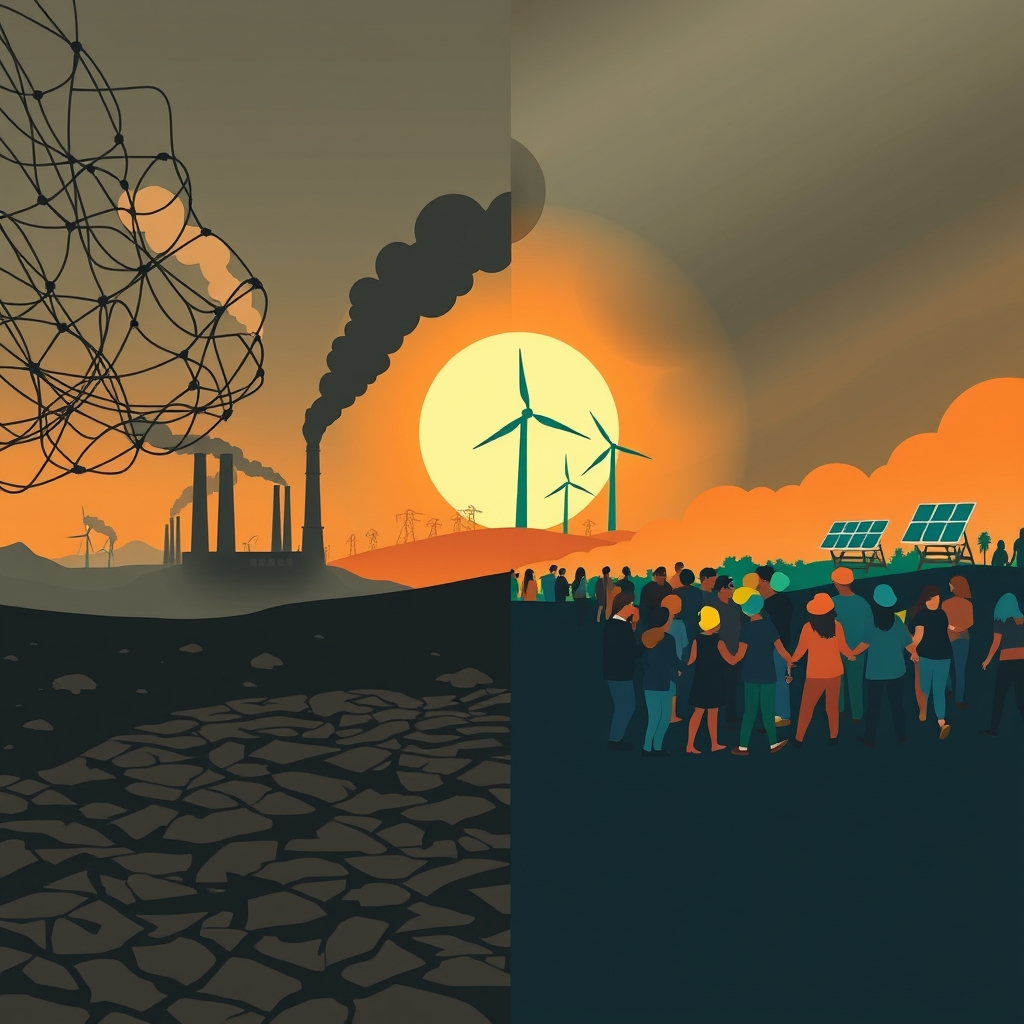
🌎✊📈 fossil fuel interests use sophisticated tactics like deflection, division, and doomism to obstruct meaningful climate action. A clean energy revolution is achievable through systemic change and collective political will.
🤖 AI Summary
🤔 Core Philosophy
- 🌍 Climate crisis: Human-caused, unprecedented, urgent. Not too late to avert catastrophe.
- 👥 Inactivists: Fossil fuel industry and allies; shifted from outright denial to new tactics.
- ⚔️ New Climate War tactics:
- 👉 Deflection: Shift blame to individuals, promoting personal carbon footprint over systemic issues.
- 💔 Division: Sow discord within climate advocacy, pitting groups against each other.
- 😵💫 Distraction: Promote false solutions (e.g., natural gas, unproven carbon capture) or focus on adaptation over mitigation.
- 💀 Doomism: Foster a sense of hopelessness and inevitability, leading to inaction.
- 💪 Agency: Emphasizes that collective action and political will are paramount.
✅ Actionable Steps
- 👀 Recognize tactics: Identify and counter deflection, division, distraction, and doomism.
- ⚙️ Prioritize systemic change: Focus on policies and regulations over solely individual lifestyle choices.
- 📢 Advocate for policy: Support carbon pricing, renewable energy incentives, and fossil fuel phase-outs.
- 🚫 Reject false solutions: Be wary of natural gas as a bridge fuel, unproven carbon capture, and geoengineering as primary solutions.
- 🛡️ Combat doomism: Maintain cautious optimism; emphasize that solutions are technologically and economically feasible.
- 🤝 Unite advocates: Foster collaboration across diverse climate groups.
- 📚 Educate: Inform the public about climate science and inactivist tactics.
- ✊ Support youth activism: Recognize their moral authority and drive for change.
⚖️ Evaluation
- ⚔️ Critique of Inactivist Tactics: Mann effectively details how the fossil fuel industry has evolved its strategies from outright denial to more subtle forms of obstruction, including deflection, division, distraction, and doomism. This analysis is widely supported by various reviews.
- 🧍↔️⚙️ Individual vs. Systemic Action: The book strongly argues that while individual actions are beneficial, they are insufficient to address the climate crisis without systemic change, a point largely echoed by environmental experts who emphasize that systemic transformation is crucial. However, some sources also highlight that individual actions can inspire collective movements and contribute to mental health and a sense of agency.
- 🙅 Rejection of False Solutions: Mann dismisses certain responses like natural gas as a bridge fuel, unproven carbon capture, and geo-engineering as inadequate or empty promises.
- 🏭 Carbon Capture (CCUS): While Mann is critical, the role of carbon capture remains a contentious debate. Some analyses, including the IPCC and IEA, suggest CCUS can play a critical but limited role in decarbonizing hard-to-abate industrial sectors, though its current deployment is far below targets due to high costs and other challenges. Critics often point out its potential to perpetuate fossil fuel use, its high costs, and a mixed record of success, sometimes leading to increased air pollution or being used for enhanced oil recovery.
- 🛡️ Combating Doomism: A central theme is Mann’s strong pushback against doomism, arguing that it disarms activists and leads to inaction, similar to outright denial. This perspective is widely supported by climate scientists and strategists who believe that a sense of agency and optimism is crucial for effective climate action.
- 📈 Optimism and Achievability: Mann maintains a cautiously optimistic outlook, asserting that a clean energy revolution and climate stabilization are achievable with current technology and require primarily political will and policy changes. This stands in contrast to the defeatist narratives he critiques.
- 🪖 Military Framing: Some reviewers note Mann’s use of military framing (e.g., climate war, battle plan), which, while common in climate discourse, can be seen as a combative militancy that may be a destructive form of advocacy and lead to a Manichean lens of good vs. evil. This framing might oversimplify complex political and economic considerations.
🔍 Topics for Further Understanding
- 💸 Detailed analysis of global energy transition financing and equitable distribution of clean energy technologies in developing nations.
- 🧠 The psychological impacts of climate change (eco-anxiety, climate grief) and strategies for building resilience.
- 🌿 The role of indigenous knowledge and traditional ecological practices in climate mitigation and adaptation.
- 🌎 A deeper dive into the geopolitical implications of renewable energy adoption and potential new resource conflicts.
- 🧪 The science and ethics of advanced geoengineering techniques beyond carbon capture.
- 🤝 The intersection of climate justice, social equity, and environmental policy.
- 📊 The efficacy and public perception of different carbon pricing mechanisms (e.g., carbon tax vs. cap-and-trade).
❓ Frequently Asked Questions (FAQ)
💡 Q: What is the main argument of The New Climate War: The Fight to Take Back Our Planet?
✅ A: The New Climate War: The Fight to Take Back Our Planet argues that the fossil fuel industry and its allies have shifted from outright climate denial to more subtle tactics—deflection, division, distraction, and doomism—to delay meaningful climate action, and that overcoming these requires collective, systemic change.
💡 Q: Does The New Climate War: The Fight to Take Back Our Planet advocate for individual actions to combat climate change?
✅ A: The New Climate War: The Fight to Take Back Our Planet acknowledges individual actions are beneficial but stresses they are insufficient without concurrent systemic changes and policy action to decarbonize the economy.
💡 Q: What does Michael Mann mean by doomism in The New Climate War: The Fight to Take Back Our Planet?
✅ A: In The New Climate War: The Fight to Take Back Our Planet, doomism refers to the tactic of portraying catastrophic climate change as inevitable and unavoidable, thereby fostering a sense of hopelessness that discourages action and serves the interests of those who benefit from inaction.
💡 Q: What are some false solutions criticized in The New Climate War: The Fight to Take Back Our Planet?
✅ A: The New Climate War: The Fight to Take Back Our Planet criticizes false solutions such as natural gas as a bridge fuel, unproven carbon capture technologies, and some forms of geo-engineering, viewing them as distractions that enable continued fossil fuel reliance.
💡 Q: Is The New Climate War: The Fight to Take Back Our Planet optimistic or pessimistic about climate action?
✅ A: The New Climate War: The Fight to Take Back Our Planet is cautiously optimistic, arguing that a clean energy revolution is technologically and economically feasible, but requires overcoming political obstacles and deliberate obstruction tactics.
📚 Book Recommendations
➕ Similar
- 🏒 The Hockey Stick and the Climate Wars by Michael E. Mann: Mann’s earlier work detailing his personal experiences fighting climate change denial.
- ⏳ Losing Earth: A Recent History by Nathaniel Rich: A narrative account of the decade when climate change became clear, but action faltered.
- 💰🤥 Merchants of Doubt by Naomi Oreskes and Erik M. Conway: Exposes how a handful of scientists obscured the truth on issues from tobacco smoke to global warming.
➖ Contrasting
- 🌍🔥💡 How to Avoid a Climate Disaster: The Solutions We Have and the Breakthroughs We Need by Bill Gates: Focuses on technological innovation and market-based solutions, often more optimistic about carbon capture.
- 🚨 Apocalypse Never: Why Environmental Alarmism Hurts Us All by Michael Shellenberger: Argues against climate alarmism and advocates for nuclear power and adaptation.
♻️ Related
- 🍩🌍 Doughnut Economics: Seven Ways to Think Like a 21st-Century Economist by Kate Raworth: Explores a new economic model for sustainable development.
- 🧘 Active Hope: How to Face the Mess We’re in Without Going Crazy by Joanna Macy and Chris Johnstone: Offers psychological tools for engaging with environmental crises.
- 🔥 The Uninhabitable Earth: Life After Warming by David Wallace-Wells: A stark exploration of the potential impacts of climate change, often cited for its doomist tendencies.
🫵 What Do You Think?
🤔 Which of Mann’s new climate war tactics do you find most pervasive in current discourse, and why? What actions, beyond lifestyle changes, are most effective in driving systemic change?