🌍🔥💡 How to Avoid a Climate Disaster: The Solutions We Have and the Breakthroughs We Need
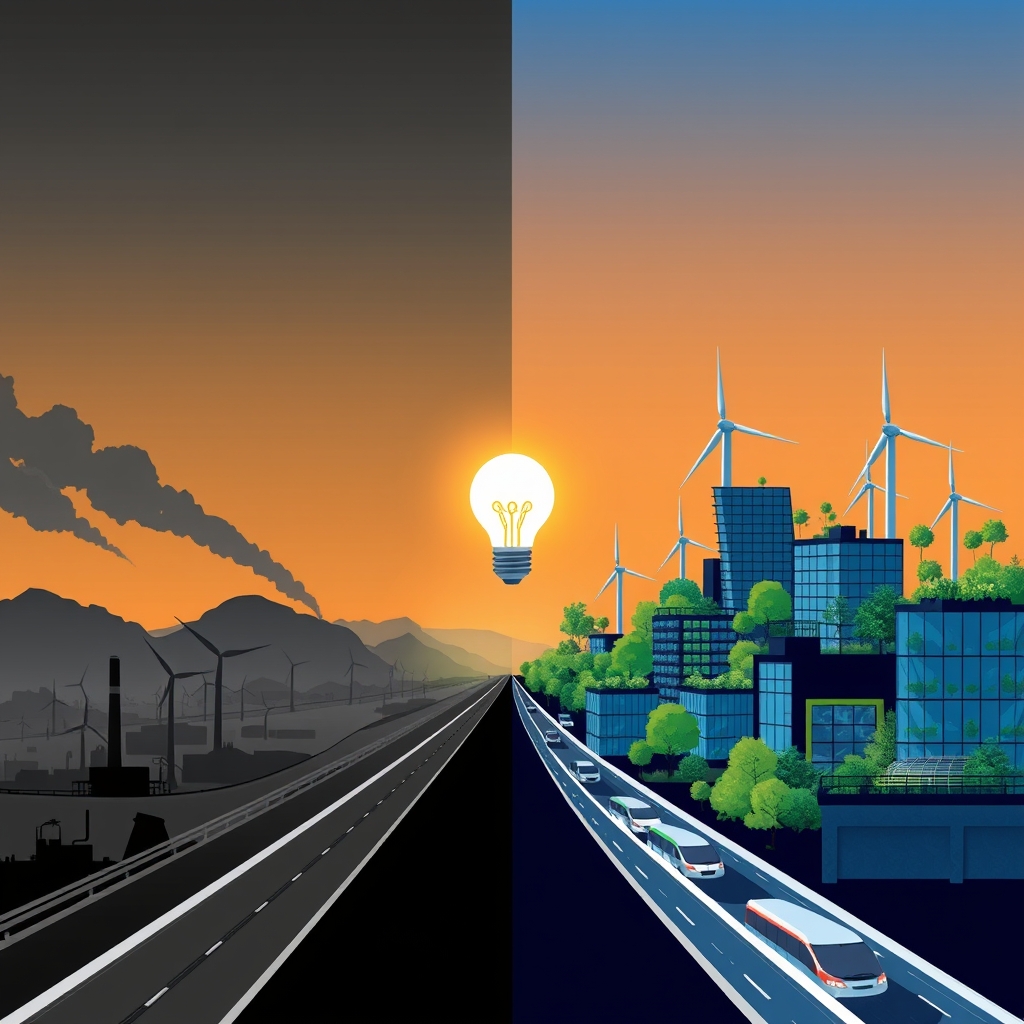
🌍💡💰 A technology-focused roadmap to achieving net-zero greenhouse gas emissions by 2050, emphasizing innovation, policy, and market forces to reduce Green Premiums across five key sectors.
🤖 AI Summary
🧠 Core Philosophy: Achieving Net-Zero Emissions
- 🎯 Goal: Reach net-zero greenhouse gas emissions globally by 2050.
- 🤔 Rationale: Reducing emissions alone is insufficient; accumulated GHGs continue warming.
- 🗺️ Strategy: Combine existing solutions with significant technological breakthroughs.
🏭 Key Sectors for Decarbonization
- ⚡ Electricity (27% of emissions): Develop clean generation (solar, wind, nuclear, geothermal) and improve storage/grid infrastructure.
- ⚙️ Manufacturing (31% of emissions): Electrify industrial processes, innovate in materials like steel and cement (high Green Premiums), and utilize carbon capture.
- 🚜 Agriculture (19% of emissions): Reduce emissions from livestock (e.g., methane), improve crop yields sustainably, and develop alternative proteins.
- 🚗 Transportation (16% of emissions): Shift to electric vehicles, develop advanced biofuels, and invest in clean aviation/shipping fuels.
- 🏠 Heating and Cooling (7% of emissions): Electrify heating/cooling systems (e.g., heat pumps) and enhance building energy efficiency.
💸 The Green Premium
- 📝 Definition: The additional cost of choosing a clean technology over a carbon-emitting alternative.
- 🌟 Importance: Reducing Green Premiums makes clean solutions economically competitive and accelerates adoption.
- 🛠️ Mechanisms for Reduction: Government policies (R&D funding, incentives, carbon pricing) and private sector innovation/investment.
🌱 Role of Innovation and Policy
- 🚀 Technological Innovation: Essential for areas where solutions are expensive or don’t yet exist.
- 🏛️ Government Action: Crucial for funding R&D, creating markets, and implementing policies like carbon taxes.
- 💰 Private Sector Investment: Drives development and deployment of new technologies, especially via initiatives like Breakthrough Energy.
🙋 Individual Contribution
- 🛍️ Consumer Choices: Opt for green products and energy plans.
- 📢 Advocacy: Demand climate action from leaders.
- 🏢 Workplace Impact: Promote green policies and practices.
⚖️ Evaluation
- 💪 Strengths in Framing: Bill Gates clearly articulates the urgency of reaching net-zero emissions by 2050, explaining that merely reducing emissions is insufficient due to existing atmospheric CO2. His Green Premium concept provides a practical framework for evaluating the economic challenge of climate solutions.
- 🔬 Technological Focus: The book excels in its detailed exploration of technological innovations needed across various sectors (electricity, manufacturing, agriculture, transport, buildings). Gates leverages his background and investments in initiatives like Breakthrough Energy to highlight promising clean energy technologies.
- 🌍 Inclusion of Developing Nations: The author acknowledges the cruel injustice where poorer countries, least responsible for climate change, will suffer most, emphasizing the need for affordable clean energy for their development.
- ⚠️ Critiques on Scope and Emphasis: Some reviews suggest the book is heavily techno-optimistic, potentially underemphasizing the political, economic, and social barriers to implementation. Critics argue it could have further explored the role of behavioral change and energy efficiency, or the historical responsibility of industries.
- 📜 Policy Detail: While acknowledging government’s vital role, some readers desired deeper engagement with the complexities of policy-making, international cooperation, and overcoming entrenched industry interests.
- 🧪 Carbon Capture and Storage: Gates discusses carbon capture, which is seen as essential for achieving net zero, especially in hard-to-decarbonize sectors. However, the energy intensity and cost of direct air capture remain significant challenges.
🔍 Topics for Further Understanding
- ⚖️ The intersection of climate justice and equitable access to clean energy technologies for the Global South.
- 🌳 Comprehensive analysis of nature-based solutions and their potential scale in carbon sequestration.
- ⚡ Detailed policy mechanisms for accelerating grid modernization and inter-regional clean energy transmission.
- ♻️ The role of circular economy principles in reducing manufacturing emissions beyond direct electrification and carbon capture.
- 🧱 Advanced materials science breakthroughs for ultra-low-carbon construction, beyond current cement and steel innovations.
- 🧠 The psychological and societal barriers to large-scale behavioral changes needed for climate action.
- 🌐 Global governance models and international treaties specifically designed to rapidly deploy climate technologies and finance.
❓ Frequently Asked Questions (FAQ)
💡 Q: What is the primary goal of How to Avoid a Climate Disaster: The Solutions We Have and the Breakthroughs We Need?
✅ A: How to Avoid a Climate Disaster aims to outline a comprehensive strategy for the world to reach net-zero greenhouse gas emissions by 2050, leveraging technological innovation and policy action.
💡 Q: What are Green Premiums as described in How to Avoid a Climate Disaster?
✅ A: In How to Avoid a Climate Disaster, Green Premiums refer to the additional cost of choosing a clean, zero-emission technology or product over its fossil-fuel-based or high-emission counterpart.
💡 Q: Which sectors does How to Avoid a Climate Disaster identify as key to decarbonization?
✅ A: How to Avoid a Climate Disaster identifies five key sectors: how we plug in (electricity), how we make things (manufacturing), how we grow things (agriculture), how we get around (transportation), and how we keep warm and cool (heating and cooling).
💡 Q: Does How to Avoid a Climate Disaster suggest individual actions to combat climate change?
✅ A: Yes, How to Avoid a Climate Disaster suggests individual actions such as making green consumer choices, advocating for climate-friendly policies, and promoting sustainable practices in one’s workplace.
💡 Q: What is Breakthrough Energy, mentioned in How to Avoid a Climate Disaster?
✅ A: Breakthrough Energy is an initiative founded by Bill Gates, comprising a network of investors and programs dedicated to accelerating innovation in clean energy and other technologies to achieve net-zero emissions.
📚 Book Recommendations
🔗 Similar
- 📖 Drawdown by Paul Hawken
- 🔥🌎⚔️ The New Climate War: The Fight to Take Back Our Planet by Michael E. Mann
- 📖 Speed & Scale by John Doerr
⚖️ Contrasting
- 📖 Losing Earth by Nathaniel Rich
- 📖 The Uninhabitable Earth by David Wallace-Wells
- 📖 This Changes Everything by Naomi Klein
⛓️ Related
- 🍩🌍⚖️ Doughnut Economics: Seven Ways to Think Like a 21st-Century Economist by Kate Raworth
- 🤔🌍📈✅ Factfulness: Ten Reasons We’re Wrong About the World - and Why Things Are Better Than You Think by Hans Rosling
- 💀🌍📉⏳ The Sixth Extinction: An Unnatural History by Elizabeth Kolbert
🫵 What Do You Think?
❓ Which of the five emission sectors identified by Bill Gates presents the greatest challenge for achieving net-zero?