🧬🎭👁️ The Case Against Reality: Why Evolution Hid the Truth from Our Eyes
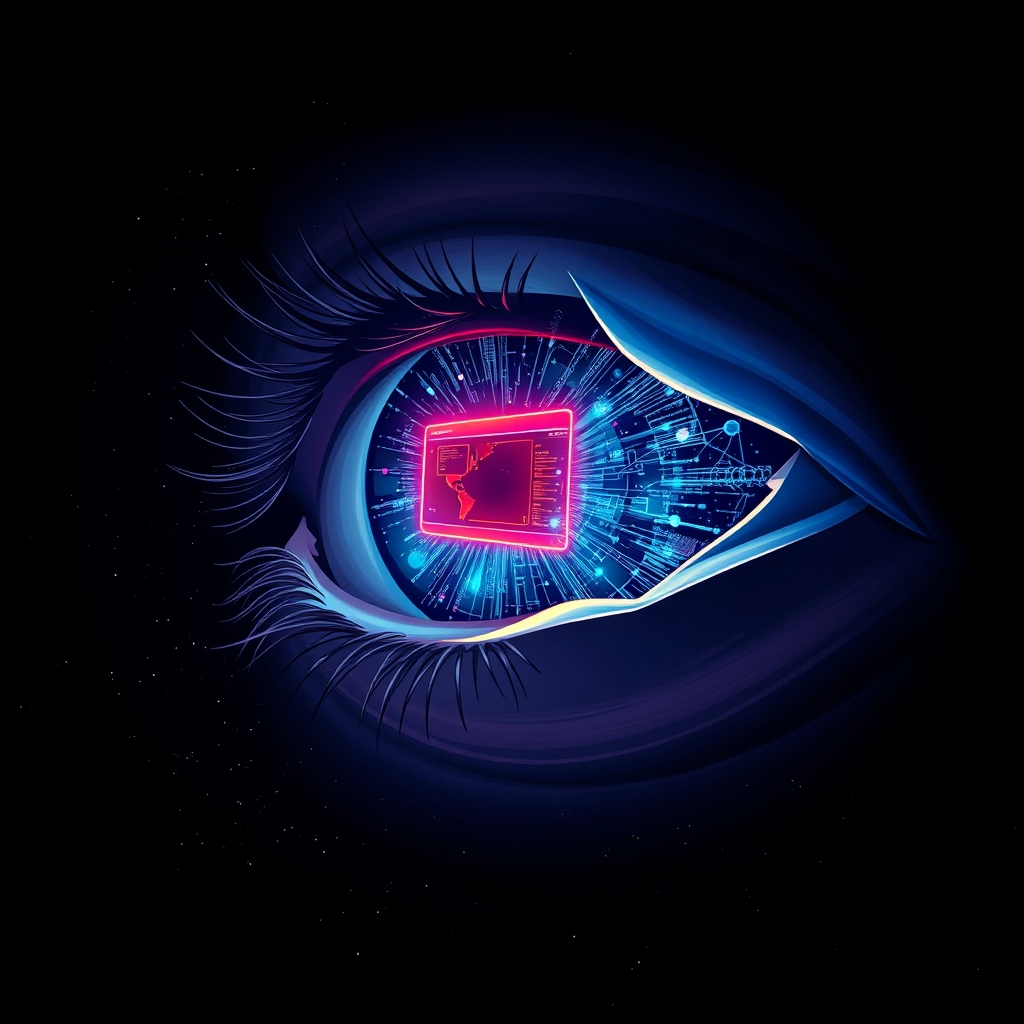
🧬🎮 Natural selection shapes our perceptions not to reveal objective truth, but to serve as a species-specific user interface for survival and reproduction.
🤖 AI Summary
🧠 Core Philosophy: Interface Theory of Perception (ITP) & Conscious Realism
- 🖥️ Perception as Interface: Our senses provide a simplified, species-specific user interface, not a veridical window into objective reality.
- 🏆 Fitness Beats Truth (FBT): Evolutionary game theory demonstrates that organisms perceiving only fitness payoffs (survival and reproduction cues) consistently outcompete those perceiving objective truth.
- 💡 Icons of Reality: Physical objects, space, and time are icons within this interface, akin to a computer desktop, hiding immense underlying complexity.
- ✨ Conscious Agents as Fundamental: Objective reality consists of a network of conscious agents and their experiences, not inanimate matter. Consciousness is primary.
🚀 Actionable Implications
- ❓ Question Perception: Acknowledge that our perceived reality is a construct, tailored for survival, not absolute truth.
- 🔬 Rethink Scientific Realism: Challenge the assumption that scientific models perfectly describe an external, independent reality.
- 🧘♀️ Explore Consciousness: Investigate consciousness as the fundamental element of the universe, rather than an emergent property of matter.
- 🧩 Debug Perception: View personal and societal disagreements about what really happened as clashes between individual adaptive interfaces.
⚖️ Evaluation
- 📉 Oversimplified Models: Critics argue Hoffman’s computer models are toy worlds that oversimplify real-world complexity, where some degree of veridical perception is crucial for survival.
- 🧠 Information Compression vs. Delusion: Neuroscientists suggest brains compress information for efficiency rather than actively lying about reality; e.g., perceiving a snake as danger is an efficient, useful representation of something real.
- 🧪 Unverifiable/Unfalsifiable: The Interface Theory of Perception is considered by some to be largely unverifiable and unfalsifiable, potentially limiting its scientific standing.
- 🔄 Philosophical Critique of Reality Exchange: Hoffman is criticized for merely trading one form of reality (physical objects) for another (conscious agents), rather than making a more radical case against reality itself, and for not adequately addressing how science makes predictions without asserting real existence.
- ⚔️ Self-Defeating Argument: Some arguments against Hoffman’s position contend that his evolutionary debunking argument for ITP is self-defeating, especially when based on an impoverished understanding of agent-world informational connections.
- 📢 Exaggerated Claims: While acknowledging that senses don’t provide perfect representations, some scholars view Hoffman’s claim that we see none of the truth as overstated and that partial truth would also be evolutionarily advantageous.
- 🧘 Resonance with Ancient Philosophies: Hoffman’s conscious realism aligns with ancient non-dual philosophies, echoing concepts like Plato’s Allegory of the Cave and the Hindu concept of Maya.
🔍 Topics for Further Understanding
- 🤯 The Hard Problem of Consciousness: Why consciousness arises from physical matter.
- ⚛️ Quantum Physics and the Observer Effect: How quantum mechanics might relate to consciousness and observation.
- 🌌 Panpsychism: The philosophical view that consciousness is a fundamental property of matter.
- 👁️ Phenomenology: The study of subjective experience and consciousness.
- 🔮 Predictive Processing: The theory that the brain constantly generates and updates predictions about sensory input.
- 🤝 Extended Mind Hypothesis: The idea that the mind extends beyond the brain to include aspects of the external environment and tools.
- 🕹️ Simulation Theory: The hypothesis that our reality could be an artificial simulation.
❓ Frequently Asked Questions (FAQ)
💡 Q: What is the main argument of The Case Against Reality: Why Evolution Hid the Truth from Our Eyes?
✅ A: The Case Against Reality argues that our perceptions are not accurate representations of objective reality but rather a user interface designed by natural selection to guide adaptive behavior for survival and reproduction, not to reveal truth.
💡 Q: What is Donald Hoffman’s Interface Theory of Perception (ITP)?
✅ A: Donald Hoffman’s Interface Theory of Perception posits that our sensory experiences are like desktop icons, simplifying the complex underlying reality into useful, species-specific representations that prioritize fitness over veridicality.
💡 Q: What is Conscious Realism as proposed in The Case Against Reality?
✅ A: Conscious Realism is Donald Hoffman’s theory that objective reality is fundamentally composed of conscious agents and their experiences, with what we perceive as physical reality emerging from networks of these interacting conscious agents.
💡 Q: Does The Case Against Reality claim that objective reality does not exist?
✅ A: No, The Case Against Reality does not deny the existence of an objective reality. Instead, it argues that our perceptions do not reflect that reality directly, but serve as an adaptive interface, hiding the true nature of whatever objective reality may be.
💡 Q: How does evolution relate to our perception of reality in The Case Against Reality?
✅ A: The book suggests that evolution has shaped our senses to prioritize fitness beats truth (FBT), meaning that perceptions enhancing survival and reproduction are favored, even if they distort or hide objective truth.
📚 Book Recommendations
📖 Similar Books
- 🌀 I Am a Strange Loop by Douglas R. Hofstadter explores consciousness and the mind through self-referential strange loops and paradoxes, challenging traditional notions of self and identity.
- 🧠 Consciousness and the Social Brain by Michael S.A. Graziano examines the relationship between consciousness and attention, proposing consciousness as a model the brain constructs of attention.
- ✨ 👤🧠 Being You: A New Science of Consciousness presents a contemporary scientific perspective on the nature of consciousness.
- ⚖️ The Master and His Emissary by Iain McGilchrist investigates how the brain’s hemispheres shape our perception of reality, critiquing the dominance of the left hemisphere’s analytical view.
🆚 Contrasting Books
- 🎯 The Scout Mindset by Julia Galef advocates for a scout mindset focused on seeking truth and updating beliefs based on evidence, contrasting with the soldier mindset of defending existing beliefs.
- 🚶♀️ The Phenomenology of Perception by Maurice Merleau-Ponty is a foundational text in phenomenology, exploring how our lived bodily experience shapes our perception of the world, offering a different philosophical approach to reality and consciousness.
🔗 Related Books
- ⏳ From Eternity to Here: The Quest for the Ultimate Theory of Time by Sean Carroll delves into the physics of time, entropy, and cosmology, discussing whether spacetime is fundamental.
- 🍄 🧠🍄 How to Change Your Mind: What the New Science of Psychedelics Teaches Us About Consciousness, Dying, Addiction, Depression, and Transcendence by Michael Pollan explores the science and history of psychedelics and their potential impact on consciousness and perception.
- 🛠️ Intuition Pumps and Other Tools for Thinking by Daniel C. Dennett offers conceptual strategies and mental tools for critical thinking across complex topics like consciousness and evolution.
🫵 What Do You Think?
💬 If our perceptions are merely an evolutionary user interface, how might this understanding change the way we interact with technology or interpret current events? Do you find the idea of conscious agents as the fundamental building blocks of reality liberating or disquieting? Share your thoughts below!