🇺🇸💥🏛️ Overthrow: America’s Century of Regime Change from Hawaii to Iraq
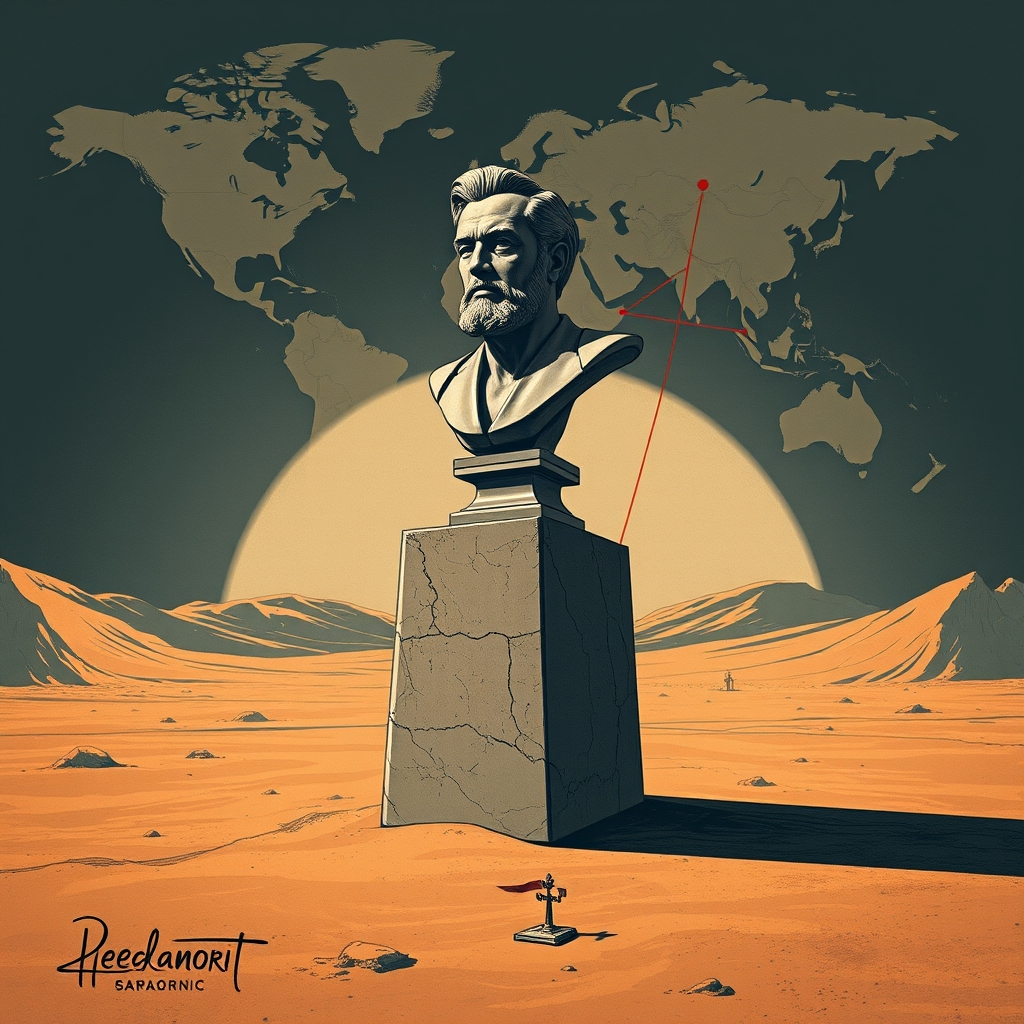
🌍💥📜 Stephen Kinzer’s Overthrow details America’s century-long pattern of orchestrating regime changes globally, from Hawaii to Iraq, revealing a consistent, often detrimental, foreign policy strategy.
🤖 AI Summary
🎯 Core Thesis
- 🇺🇸 US foreign policy: Characterized by a recurring pattern of covert and overt interventions.
- 🛠️ Regime change as a tool: Historically employed to remove uncooperative leaders.
- 💰 Motivations: Often economic, ideological, or strategic, masked as promoting democracy or national security.
- 📉 Long-term consequences: Destabilization, anti-American sentiment, unintended blowback.
⏳ Historical Trajectory
- 🕰️ Early interventions: Hawaii (1893), Cuba (1898), Nicaragua (early 20th century).
- 🧊 Cold War era: Iran (1953), Guatemala (1954), Chile (1973).
- 🗓️ Post-Cold War: Afghanistan (2001), Iraq (2003).
- 🔄 Consistent methodology: Propaganda, support for opposition, economic pressure, military force.
🎓 Recurring Lessons
- 👀 Short-sighted gains: Often followed by prolonged instability.
- 🧩 Underestimated local complexities: Leading to unforeseen outcomes.
- 🔁 Cycle of intervention: Perpetuates perceived need for further involvement.
⚖️ Evaluation
- 📝 Kinzer’s narrative effectively highlights the historical continuity of US regime change operations across different eras and administrations.
- 👍 The book is praised for its accessible writing and its ability to connect disparate historical events into a coherent, overarching argument about American foreign policy.
- 🔍 Critics acknowledge the extensive research but some suggest that Kinzer occasionally simplifies complex geopolitical situations, potentially overstating direct causality in some instances.
- 🛡️ While Kinzer focuses on the negative consequences, some historical analyses emphasize the perceived security interests or ideological justifications that drove these interventions from the perspective of US policymakers at the time.
- ⭐ The work is considered a significant contribution to the popular understanding of US imperial tendencies and the origins of anti-American sentiment abroad.
🔍 Topics for Further Understanding
- 🕵️ The role of intelligence agencies (CIA) in post-WWII regime change operations.
- 📉 Economic sanctions and their effectiveness as a tool of foreign policy.
- 🏛️ The evolution of international law concerning sovereignty and intervention.
- 🗳️ The domestic political and economic forces influencing US foreign policy decisions.
- 🌍 The long-term impact of regime change on democratic development in target nations.
- 💥 The concept of blowback and its manifestation in current global affairs.
❓ Frequently Asked Questions (FAQ)
💡 Q: What is the main argument of Overthrow: America’s Century of Regime Change from Hawaii to Iraq?
✅ A: Overthrow: America’s Century of Regime Change from Hawaii to Iraq argues that the United States has a consistent, century-long history of overthrowing foreign governments, driven by a mix of economic, ideological, and strategic motives, often leading to detrimental long-term consequences.
💡 Q: Who is the author of Overthrow: America’s Century of Regime Change from Hawaii to Iraq?
✅ A: The author of Overthrow: America’s Century of Regime Change from Hawaii to Iraq is Stephen Kinzer, an American journalist and author known for his foreign policy analysis and historical works.
💡 Q: What historical events does Overthrow: America’s Century of Regime Change from Hawaii to Iraq cover?
✅ A: Overthrow: America’s Century of Regime Change from Hawaii to Iraq covers numerous historical interventions, including the overthrow of the Hawaiian monarchy, interventions in Cuba and Nicaragua, and later operations in Iran, Guatemala, Chile, Afghanistan, and Iraq, among others.
💡 Q: Why did the US engage in these regime changes, according to Overthrow: America’s Century of Regime Change from Hawaii to Iraq?
✅ A: According to Overthrow: America’s Century of Regime Change from Hawaii to Iraq, the US engaged in these regime changes to protect economic interests, promote specific political ideologies, or secure perceived strategic advantages, often by replacing leaders deemed hostile to American influence.
📚 Book Recommendations
🤝 Similar
- 📖 All the Shah’s Men by Stephen Kinzer
- 🕵️📜 Legacy of Ashes: The History of the CIA by Tim Weiner
- 📖 Killing Hope: US Military and CIA Interventions Since World War II by William Blum
🆚 Contrasting
- 📖 The Grand Chessboard by Zbigniew Brzezinski
- 📖 America’s Mission: The US and the Global Fight for Democracy by Tony Smith
🔗 Related
- 📖 Confessions of an Economic Hit Man by John Perkins
- 📖 The Shock Doctrine by Naomi Klein
🫵 What Do You Think?
🤔 Which of Kinzer’s analyzed interventions had the most profound, lasting impact on the US’s global standing? What historical what-if scenario regarding a avoided regime change is most compelling?