🧱⚔️🚶♀️ Border Wars: Inside Trump’s Assault on Immigration
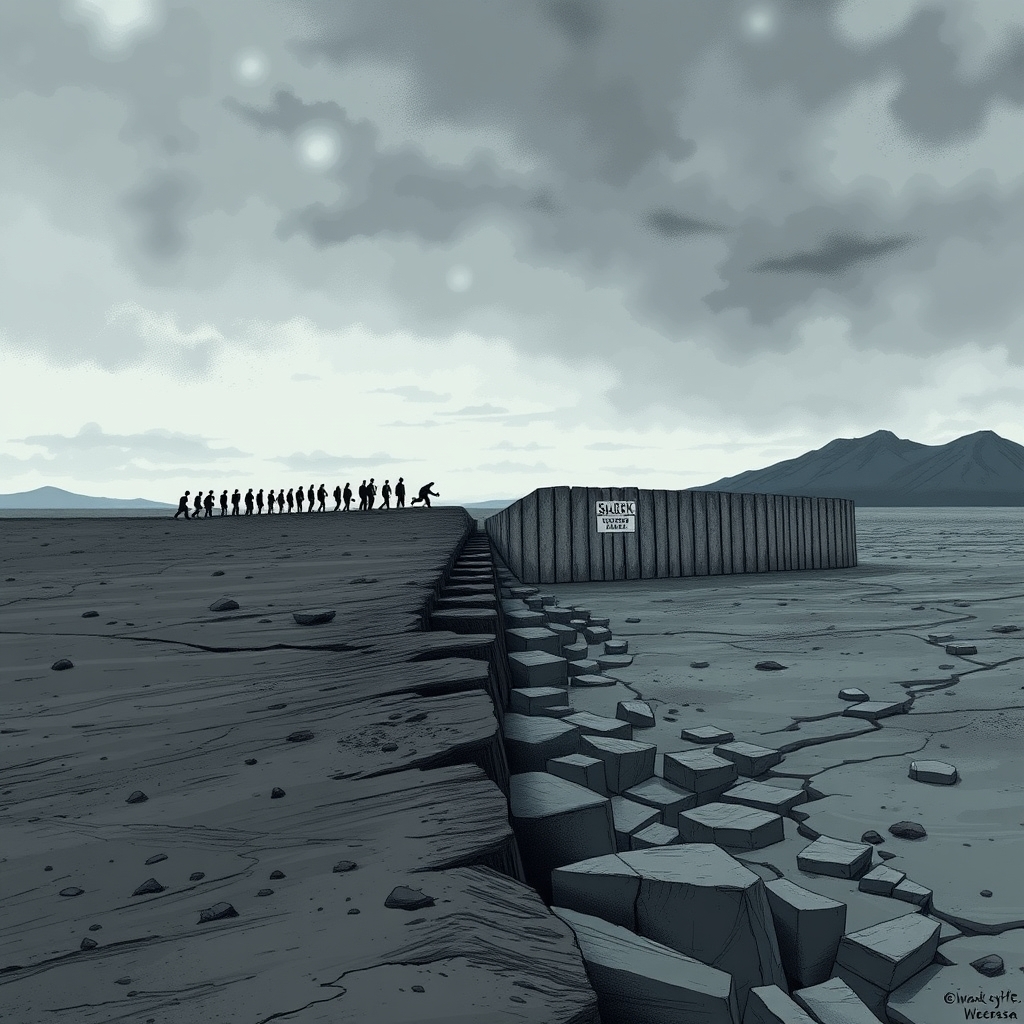
🚧👨👩👧👦💔 Chronicles the tumultuous, often chaotic, and highly polarized efforts by the Trump administration to drastically reshape U.S. immigration policy, revealing inner White House conflicts and the driving forces behind policies like family separations and asylum restrictions.
🤖 AI Summary
💡 Core Philosophy: Trump’s Immigration Agenda
- 🚫 Zero-Sum View: Immigration as a detriment to America.
- 🚨 National Crisis Framing: Elevated immigration to a national crisis, fueled by fear-mongering (the caravan).
- ⚔️ Political Utility: Used immigration to attack opponents, distract from negative news.
- 👑 Executive Branch Power: Immigration policy predominantly driven by presidential proclamations, executive orders, departmental guidance.
🔑 Key Policies & Actions
- 🧱 Border Wall: Central obsession, conceived almost accidentally, became an operational, legislative, and legal quagmire.
- 🛑 Asylum Restrictions: Blocked asylum-seekers and refugees, severely diminished humanitarian protections.
- 🚫 Closed Southern Border to asylum seekers.
- 🇲🇽 Reinstated Remain in Mexico policy.
- 📱 Suspended CBP One mobile application for appointments.
- 👨👩👧👦💔 Family Separations: Intentional policy, driven by anti-immigration officials.
- ✈️ Mass Deportations: Expanded efforts, increased ICE arrests, though overall deportations in first term remained below Obama levels.
- ⚡ Sought expansion of expedited removal nationwide.
- 🚧 Legal Immigration Barriers: Imposed travel bans, curtailed entry for specific nationalities, created procedural and arbitrary barriers.
- ⚖️ DACA & TPS: Attempted to strip discretionary protections from DACA recipients and Temporary Protected Status holders, largely stymied in court.
- ❓ Citizenship Question: Attempted to add a citizenship question to the U.S. census.
- 🛡️ Targeting Sanctuary Jurisdictions: Used punitive measures and threats against sanctuary cities/states.
- 👶 Birthright Citizenship Challenge: Attempted to revoke citizenship for some U.S.-born children of immigrants via executive order, challenging the 14th Amendment.
⚙️ Operational Dynamics
- 👤 Stephen Miller’s Influence: Key player in shaping and implementing anti-immigration policies, convened a secret policy group.
- 🌪️ Chaos & Disorganization: White House decision-making marked by gut instinct, disorganization, paranoia, and feuding staff.
- 🤔 Amoral Approach: Trump’s choices characterized as more amoral than driven by hatred, focused on numbers making him look bad.
⚖️ Evaluation
- 📖 Comprehensive Account: The book offers a detailed, fact-based account of the Trump administration’s immigration policies and the internal White House machinations. It provides an inside account of this defining issue of Trump’s presidency.
- ✅ Well-Sourced Reporting: Praised for well-sourced reporting and exquisitely reported details, offering never-before-told stories.
- 🎯 Focus on Key Players: Identifies key figures like Stephen Miller and others behind Trump’s anti-immigration agenda.
- 🧠 Reveals Presidential Motivations: The book suggests Trump’s motivations were often driven by a desire to avoid looking bad due to rising border numbers, rather than purely ideological hatred. He often grasped for the solution that looked toughest.
- ⛓️ Impact on Immigration System: Highlights how the administration dismantled and reconstructed many elements of the U.S. immigration system, leading to diminished humanitarian protections and a more closed-off U.S.-Mexico border.
- 📰 Critical Reception: Reviewers note the book reveals the shattering horror of the moment and the mercurial unreliability and instability of the president. It is considered essential reading for understanding the beating heart of the Trump administration.
- 📊 Public Opinion Context: While the book details policy changes, public opinion surveys indicate mixed views on Trump’s immigration policies, with opposition to suspending asylum applications and family detention, but support for increased border military presence.
- 💰 Economic Impact: Stringent anti-immigration policies, such as those discussed in the book, could lead to significant negative economic effects, including long-term GDP loss. Immigration has historically contributed substantially to U.S. economic growth and fiscal revenues.
- 📚 Broader Legal Context: Other analyses, like Banned: Immigration Enforcement in the Time of Trump by Shoba Sivaprasad Wadhia, provide a legal framework for understanding how immigration enforcement structures cut across administrations and increased under Trump. The President and Immigration Law by Adam B. Cox and Cristina M. Rodríguez offers a broader historical perspective on the President’s increasing control over immigration law.
🔍 Topics for Further Understanding
- 📈 The long-term demographic and economic consequences of restrictive immigration policies.
- 📡 The role of media narratives and disinformation in shaping public perception of immigration.
- 🌍 Comparative analysis of immigration policies across different conservative administrations globally.
- 💔 The psychological and social impacts of family separation and detention on migrant communities.
- 🤖 Technological advancements in border surveillance and their ethical implications.
- 📜 The evolution of international refugee law in response to contemporary migration crises.
- 🏛️ The influence of think tanks and non-governmental organizations on immigration policy formulation.
❓ Frequently Asked Questions (FAQ)
💡 Q: What is Border Wars: Inside Trump’s Assault on Immigration about?
✅ A: Border Wars: Inside Trump’s Assault on Immigration by Julie Hirschfeld Davis and Michael D. Shear offers an inside look at the Trump administration’s efforts to fundamentally change U.S. immigration policy, detailing the internal conflicts, key figures, and the implementation of controversial measures such as family separations and asylum restrictions.
💡 Q: Who are the authors of Border Wars: Inside Trump’s Assault on Immigration?
✅ A: The book Border Wars: Inside Trump’s Assault on Immigration was written by Julie Hirschfeld Davis and Michael D. Shear, both White House correspondents for The New York Times who extensively covered the Trump administration.
💡 Q: What was Donald Trump’s primary motivation regarding immigration, according to Border Wars: Inside Trump’s Assault on Immigration?
✅ A: According to Border Wars: Inside Trump’s Assault on Immigration, while often perceived as driven by hatred, Trump’s primary motivation was frequently to avoid appearing weak or ineffective due to rising border numbers, making his approach more amoral than purely ideological. He often opted for the toughest solutions available.
💡 Q: Did Border Wars: Inside Trump’s Assault on Immigration reveal any particularly controversial proposals?
✅ A: Yes, Border Wars: Inside Trump’s Assault on Immigration revealed Donald Trump’s desire for a border moat filled with alligators, a detail that garnered national media attention.
💡 Q: How did Border Wars: Inside Trump’s Assault on Immigration characterize the White House’s approach to immigration policy?
✅ A: Border Wars: Inside Trump’s Assault on Immigration characterized the White House’s immigration policy decision-making as driven by gut instinct, disorganization, paranoia, and a constantly feuding staff.
📚 Book Recommendations
🤝 Similar
- 📖 American Dirt by Jeanine Cummins (Fictional account highlighting the human struggle of migration).
- 🏞️ The Line Becomes a River: Dispatches from a Border Zone by Francisco Cantú (Memoir of a Border Patrol agent).
- 🧒 Tell Me How It Ends: An Essay in 40 Questions by Valeria Luiselli (Exploration of the asylum process through the eyes of children).
⚖️ Contrasting
- 👨⚖️ The President and Immigration Law by Adam B. Cox and Cristina M. Rodríguez (Academic analysis of presidential power in immigration).
- 🌐 Exodus: How Migration is Changing Our World by Paul Collier (Economic perspective on migration’s benefits and costs).
- 🌍 Open Borders: The Science and Ethics of Immigration by Bryan Caplan (Argument for the economic benefits of open borders).
🔗 Related
- 🧑🏿⛓️🙈 The New Jim Crow: Mass Incarceration in the Age of Colorblindness by Michelle Alexander (Examines systemic racial injustice).
- 💰🤫 Dark Money: The Hidden History of the Billionaires Behind the Rise of the Radical Right by Jane Mayer (Investigates political influence).
- 🏚️💰 Evicted: Poverty and Profit in the American City by Matthew Desmond (Sociological study of poverty and housing insecurity).
🫵 What Do You Think?
🤔 Given the insights into the Trump administration’s immigration strategy, which policy do you believe had the most significant long-term impact on the U.S. and why? How might a future administration effectively address the complexities of immigration while balancing security and humanitarian concerns?
🦋 Bluesky
🧱⚔️🚶♀️ Border Wars: Inside Trump's Assault on Immigration
AI Q: ⚖️ Can immigration policy balance security and human rights?
🇺🇸 Political Polarization | 🚧 Border Security | 👨👩👧👦 Family Separation | ⚖️ Immigration Law
— Bryan Grounds (@bagrounds.bsky.social) 2026-03-15T08:11:00.887Z
https://bagrounds.org/books/border-wars-inside-trumps-assault-on-immigration