⚔️💰 War Is a Racket
🛒 War Is a Racket. As an Amazon Associate I earn from qualifying purchases.
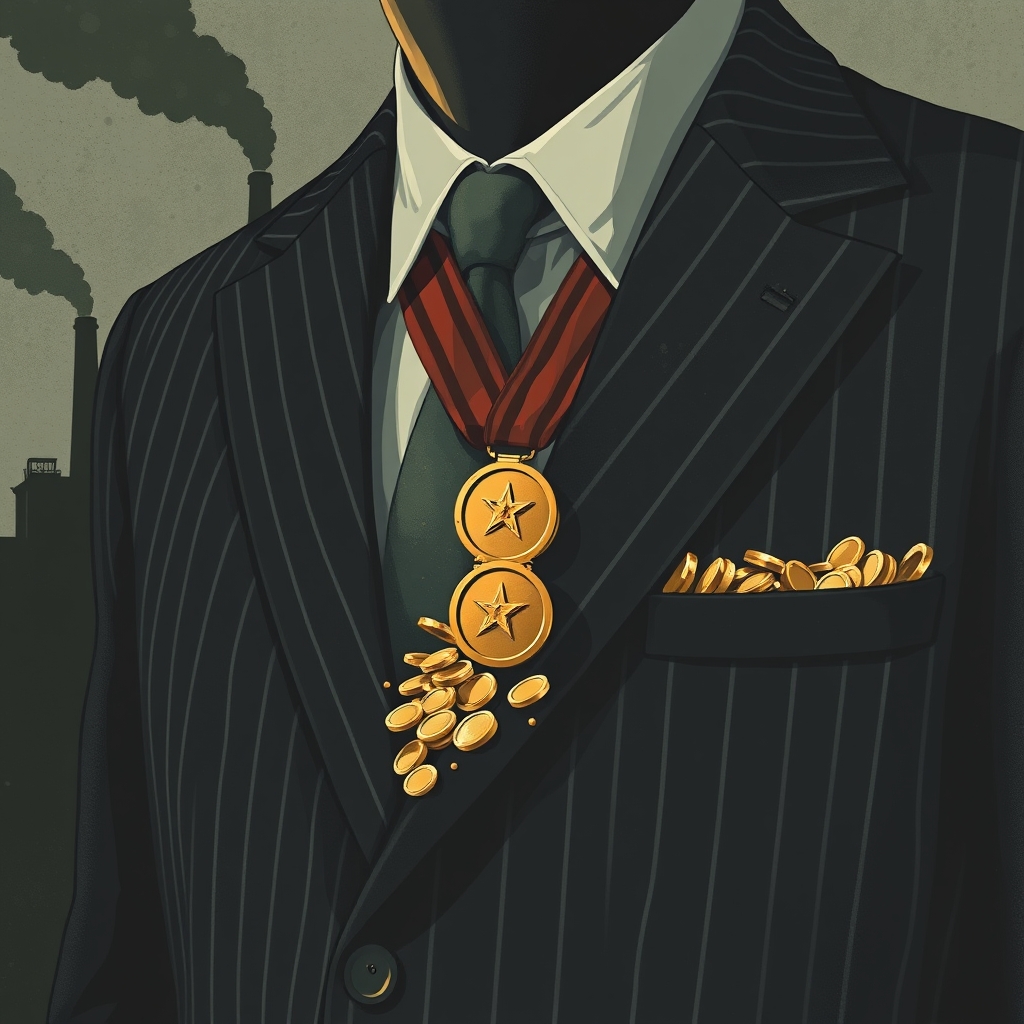
💸💔🌍 War is a profit-driven enterprise benefiting a powerful few at immense cost to the many, cloaked in patriotism.
🤖 AI Summary
🤔 Core Philosophy
- 💰 War is a Racket: A system primarily for financial gain, not national defense.
- 🤑 Beneficiaries: Wealthy industrialists, bankers, and arms manufacturers profit significantly.
- 😥 Costs: Borne by soldiers, their families, and the general public through lives, injuries, and taxation.
- 🎭 Deception: Public is misled by propaganda and appeals to patriotism.
🛠️ Actionable Steps (Butler’s Recommendations)
- 🚫 Take the Profit Out: Conscript capital, industry, and labor before conscripting manpower.
- 🤝 Limit wartime wages/salaries of executives, bankers, arms manufacturers to match soldiers’ pay.
- 🗳️ Democratic War Decision: A limited national referendum should determine if war is to be fought.
- 💂 Only those eligible to serve on the front lines should vote.
- 🛡️ Defensive Military Only: Limit military (e.g., Navy within 200 miles, Army to territorial limits) to ensure self-defense, not aggression.
⚖️ Evaluation
- 🧐 War is a Racket, published in 1935, argues that wars primarily serve the financial interests of a small elite rather than genuine national defense. This perspective emerged during the Merchants of Death debates of the 1930s, which investigated alleged conspiracies by arms manufacturers and bankers to push for U.S. intervention in World War I.
- 📈 Butler’s observations on war profiteering are supported by historical evidence, with significant profits reported by industries during conflicts like the American Revolutionary War, the Civil War, and World War I. For instance, DuPont’s net earnings dramatically increased during WWI.
- 🏭 The book’s critique resonates with the later concept of the military-industrial complex, a term popularized by President Dwight D. Eisenhower in 1961. Eisenhower warned against the unwarranted influence of this network of governmental and private industrial entities on public policy and defense spending, noting its profit motives.
- 🗣️ Critics argue that the intertwining of military and industrial interests continues to influence defense spending and foreign policy, raising concerns about transparency, competition, and the potential for a feedback loop of corruption and wasteful spending.
- 💪 While Butler’s account is a powerful, firsthand exposé from a decorated military general, it is presented as a strong argument rather than a dispassionate academic analysis. However, the underlying phenomena he describes – war profiteering and the economic drivers of conflict – are well-documented historical and ongoing concerns.
🔍 Topics for Further Understanding
- 📜 The historical evolution and contemporary state of the Military-Industrial Complex.
- 🏛️ The role of lobbying and political contributions by defense contractors in shaping foreign policy.
- 💰 Economic theories of conflict and the financial incentives for war.
- 📝 Case studies of modern war profiteering and privatization of military services.
- 💔 The psychological and social costs of perpetual warfare on society and veterans.
- 🕊️ Alternative foreign policy frameworks focused on diplomacy and non-intervention.
- 🛰️ The impact of technological advancements on the economics of war.
❓ Frequently Asked Questions (FAQ)
💡 Q: What is War is a Racket about?
✅ A: War is a Racket is a seminal 1935 exposé by Major General Smedley D. Butler, asserting that war is fundamentally a profit-driven enterprise orchestrated for the benefit of a select few at the expense of soldiers and the general public.
💡 Q: Who was Smedley D. Butler?
✅ A: Smedley D. Butler was a highly decorated Major General in the U.S. Marine Corps, a two-time Medal of Honor recipient, who, after retiring, became an outspoken critic of American foreign policy and military interventions, believing they were driven by U.S. business interests.
💡 Q: What are the main arguments presented in War is a Racket?
✅ A: War is a Racket argues that war is the oldest, most profitable, and most vicious racket, where a small inside group makes huge fortunes from human suffering, while the masses pay with their lives and taxes. It details how industrialists and financiers benefit from conflicts, often subsidized by public funds.
💡 Q: Is War is a Racket still relevant today?
✅ A: Despite being written in 1935, War is a Racket is widely considered highly relevant today by many, as its critiques of war profiteering, the influence of business interests on foreign policy, and the human cost of conflict continue to resonate with contemporary discussions about the military-industrial complex and the economics of war.
💡 Q: What does Smedley Butler propose to smash this racket?
✅ A: Butler proposes three main steps to dismantle the war racket: conscripting capital, industry, and labor (to remove profit incentives), allowing only those who would fight to vote on war, and limiting military forces strictly to defensive operations within national borders.
💡 Q: What is the military-industrial complex and how does it relate to War is a Racket?
✅ A: The military-industrial complex refers to the intricate network of governmental and private industrial entities that benefit from military spending and exert influence over policy, a term popularized by President Eisenhower. While Butler wrote War is a Racket before the term was coined, his book extensively describes the phenomena and relationships that form the core of what would later be understood as the military-industrial complex.
📚 Book Recommendations
✨ Similar
- 📖 The Economic Causes of War by John Leslie Garner and Achille Loria
- 📖 The Economics of War by Imad Moosa
- 📖 Gangsters of Capitalism: Smedley Butler, the Marines, and the Making and Breaking of America’s Empire by Jonathan M. Katz
⚔️ Contrasting
- 📚 On War by Carl von Clausewitz
- 🎨⚔️ The Art of War by Sun Tzu
🔗 Related
- 📜 Dulles: A Biography of Eleanor, Allen, and John Foster Dulles and Their Family’s Rise to American Power by Stephen Kinzer
- 🕵️ Confessions of an Economic Hit Man by John Perkins
- 🇺🇸 A People’s History of the United States by Howard Zinn
- ✊ Civil Disobedience by Henry David Thoreau
- 💡 The Moral Equivalent of War by William James
🫵 What Do You Think?
🤔 How can societies reconcile national security needs with the dangers of war profiteering? Share your thoughts below!