🤖📝😇 The Utopia of Rules: On Technology, Stupidity, and the Secret Joys of Bureaucracy
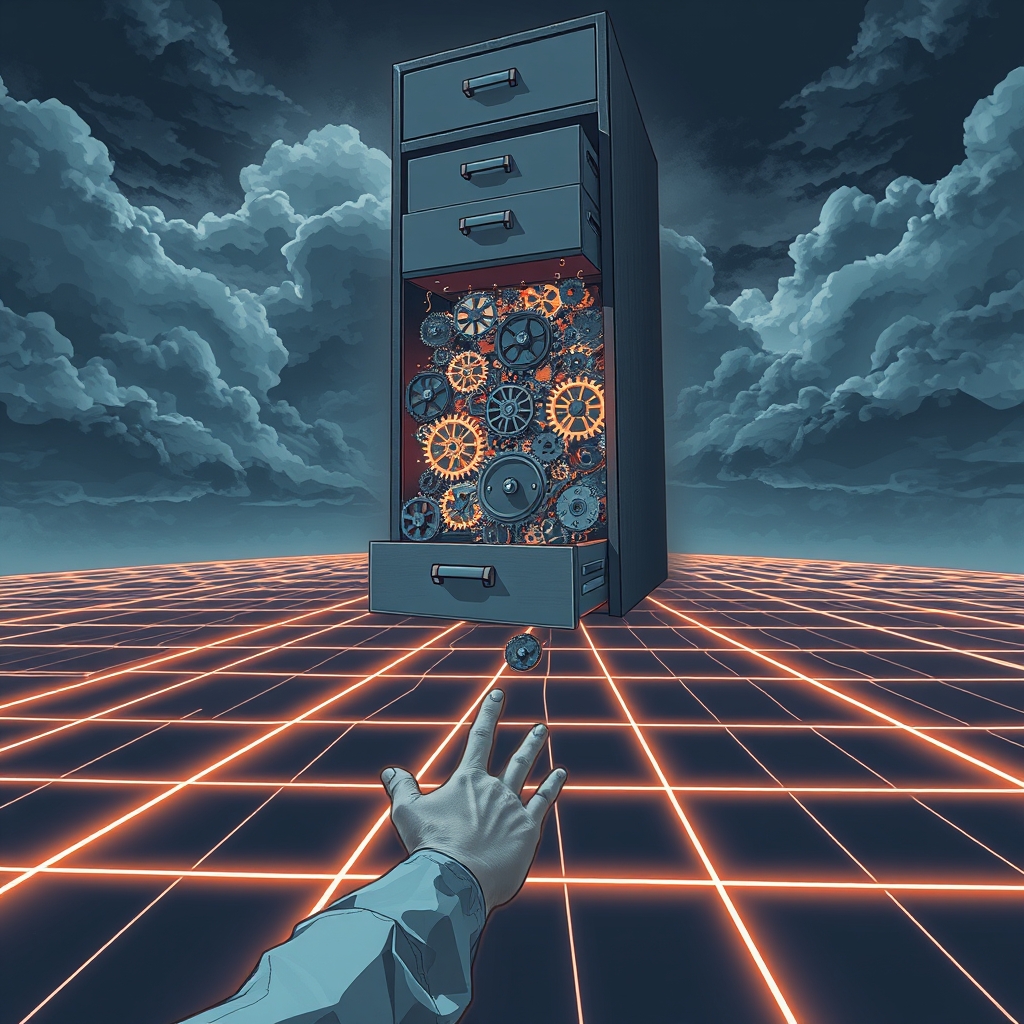
🤯 Pervasive bureaucracy, backed by implicit violence, subtly stifles our collective imagination and technological progress, even as we secretly crave its predictable, rule-bound comforts 🤯 paperwork! 📈
🤖 AI Summary
🤔 Core Philosophy
- 🏢 Bureaucracy as Structural Violence: Modern bureaucracies, public or private, fundamentally rely on the implicit threat of physical coercion for enforcement, not just abstract rules.
- ⚖️ Iron Law of Liberalism: Efforts to reduce bureaucracy or introduce market reforms often inadvertently increase regulations and paperwork.
- 🧠 Stifled Imagination & Stupidity: Bureaucratic systems create dead zones of the imagination by prioritizing rigid rules over human creativity and improvisation, leading to systemic structural stupidity.
- ⚙️ Technological Stagnation: Post-1970s, investment shifted from poetic technologies (advancing human freedom/possibilities) to bureaucratic technologies (social control, administrative processes), explaining the lack of anticipated futuristic innovations like flying cars.
- 🤫 Secret Joys: Despite frustrations, bureaucracy offers a perverse comfort and a utopia of rules – a predictable, unambiguous framework akin to games – that humans may subconsciously desire to escape chaotic reality.
🤝 Actionable Insights
- 🤔 Challenge Default Assumptions: Question the perceived inevitability and rationality of existing bureaucratic structures.
- 👁️ Recognize Implicit Coercion: Be aware of the underlying threat of violence that underpins all bureaucratic systems.
- 🎨 Reclaim Creative Agency: Actively seek and foster environments that prioritize improvisation, experimentation, and imaginative solutions over rigid rule-following.
- 🧐 Analyze Market Solutions: Scrutinize deregulation and market-driven reforms for their actual impact on bureaucratic proliferation.
- 🚀 Promote Poetic Technologies: Advocate for research and development that aims for truly transformative and liberating innovations, rather than just optimizing existing systems of control.
⚖️ Evaluation
- 🌍 Broad Scope and Interdisciplinary Approach: Graeber effectively integrates social theory, anthropology, economics, and popular culture to analyze bureaucracy’s pervasive influence.
- 🚫 Critique of Neoliberalism: The book offers a compelling argument that neoliberal reforms, ostensibly aimed at reducing state intervention, have inadvertently expanded bureaucracy by merging public and private power.
- 💥 Emphasis on Structural Violence: Graeber’s assertion that bureaucracy is ultimately founded on the threat of physical violence provides a provocative and often overlooked dimension to the discussion, moving beyond traditional Foucaultian interpretations.
- 💡 Insightful on Technological Stagnation: The argument that innovation has shifted from poetic (world-changing) to bureaucratic (social control, administrative) technologies resonates with observed trends in scientific and technological development since the 1970s.
- ❓ Lack of Concrete Solutions: While adept at diagnosing the problems of bureaucracy, The Utopia of Rules is less explicit in offering systematic, practical solutions, leaning into the complexity of the issues.
- ⚠️ Potential for Oversimplification: Some critics suggest Graeber’s arguments, particularly regarding the private sector, can at times oversimplify the nuances of corporate bureaucracy and its motivations.
- 🏛️ Comparison to Classical Sociological Theory: Graeber’s work stands in contrast to Max Weber’s ideal-type bureaucracy, which emphasized efficiency, fairness, and legal authority, by highlighting bureaucracy’s coercive and imagination-stifling aspects.
🔍 Topics for Further Understanding
- 🧠 The psychology of compliance and rule-following in complex systems.
- 📊 The role of audit culture and metrics in exacerbating bureaucratic inefficiencies.
- 🌐 Decentralized autonomous organizations (DAOs) and their potential to mitigate traditional bureaucratic structures.
- 🤖 The impact of artificial intelligence and automation on the future of bureaucratic labor.
- 🗺️ Cross-cultural comparisons of bureaucratic forms and their societal impacts beyond Western contexts.
- 📜 The historical evolution of paperwork as a mechanism of power and control.
- 🍎 Educational systems as sites of bureaucratic structural stupidity and their effects on learning.
❓ Frequently Asked Questions (FAQ)
💡 Q: What is the main argument of The Utopia of Rules: On Technology, Stupidity, and the Secret Joys of Bureaucracy?
✅ A: The Utopia of Rules argues that modern life is characterized by total bureaucratization, where public and private rules, backed by the implicit threat of violence, stifle human creativity, technological progress, and independent thought, while offering a paradoxical sense of order and security.
💡 Q: How does David Graeber connect bureaucracy with technology?
✅ A: David Graeber posits that since the 1970s, technological investment has shifted from poetic technologies that expand human possibilities (e.g., space travel, flying cars) to bureaucratic technologies focused on labor discipline, social control, and administrative processes, leading to a perceived stagnation in radical innovation.
💡 Q: What does Graeber mean by structural stupidity in The Utopia of Rules?
✅ A: Structural stupidity refers to how bureaucratic systems, by prioritizing rigid adherence to rules and hierarchical power, often prevent individuals from using their imagination or understanding complex situations, leading to absurd and frustrating outcomes. 💥 This often occurs in situations founded on structural violence where those in power don’t need to understand those below them.
💡 Q: Does The Utopia of Rules offer solutions to bureaucracy?
✅ A: The Utopia of Rules primarily offers a critical analysis and diagnosis of bureaucracy’s pervasive issues, rather than proposing a neatly packaged set of solutions. 🌍 Graeber’s work encourages readers to fundamentally rethink the institutions that govern us and imagine alternative, freer worlds.
💡 Q: Why does Graeber suggest there are secret joys in bureaucracy?
✅ A: Graeber argues that despite our frustrations, there can be a secret joy in bureaucracy because it provides a clear, rule-bound framework—much like a game—that offers predictability and an illusion of control, serving as an escape from the ambiguities and chaotic nature of real-life social interactions.
📚 Book Recommendations
📖 Similar
- 💩💼 Bullshit Jobs: A Theory by David Graeber: Explores the phenomenon of pointless employment, deeply related to bureaucratic expansion.
- 🏛️💰 Debt: The First 5,000 Years by David Graeber: Examines the moral and historical underpinnings of debt, linking it to systems of power and control.
- 🌅🧑🤝🧑 The Dawn of Everything: A New History of Humanity by David Graeber and David Wengrow: Critiques conventional narratives of human progress, often touching on early forms of social organization and hierarchy.
⚔️ Contrasting
- ✝️ The Protestant Ethic and the Spirit of Capitalism by Max Weber: Classic sociological work on bureaucracy as a rational, efficient, and necessary form of organization.
- 🧑💼 Street-Level Bureaucracy: Dilemmas of the Individual in Public Services by Michael Lipsky: Focuses on how public service workers navigate and interpret rules, highlighting their agency within bureaucratic constraints.
- 💻 Recoding America: Why Government Is Failing in the Digital Age and How to Fix It by Jennifer Pahlka: Offers a more pragmatic, solution-oriented perspective on improving government technology and efficiency.
➕ Related
- 📖🏛️📉 Seeing Like a State: How Certain Schemes to Improve the Human Condition Have Failed by James C. Scott: Explores how state-imposed order and rational planning often lead to disastrous outcomes.
- 📺💀 Amusing Ourselves to Death: Public Discourse in the Age of Show Business by Neil Postman: Critiques the impact of media on public discourse and rationality.
- 😔 Capitalist Realism: Is There No Alternative? by Mark Fisher: Analyzes the pervasive sense that capitalism is the only viable political and economic system, making it difficult to even imagine alternatives.
🫵 What Do You Think?
🤔 Which aspects of bureaucracy do you find most frustrating and which secret joys do you secretly derive from rule-bound systems? 🗣️ Share your thoughts below!