⚔️🤫 The Twilight War: The Secret History of America’s Thirty-Year Conflict with Iran
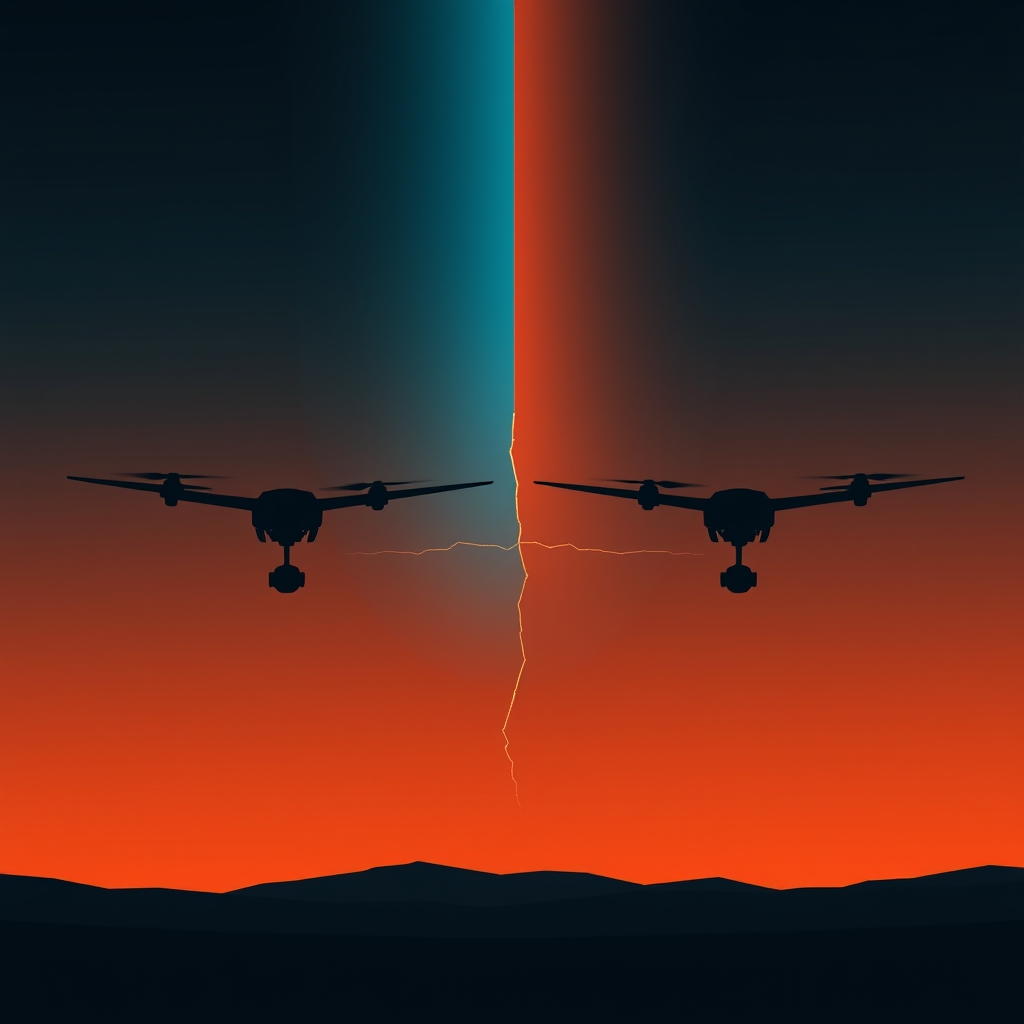
⚔️🇮🇷🇺🇸 Reveal the enduring, unacknowledged shadow war between the US and Iran since 1979, characterized by covert operations, proxy conflicts, and numerous missed opportunities for de-escalation, exposing deep-seated mistrust and conflicting strategic objectives that continue to define the volatile relationship.
🤖 AI Summary
💥 Core Conflict Dynamics
- 🤫 Undeclared War: US and Iran engaged in secret conflict since 1979.
- 🤝🚫 Persistent Distrust: Deep animosity and conflicting goals.
- 🤯 Muddled US Policy: Internal divisions, policy drift across administrations.
- ❌ Iranian Rejection: Tehran rejects any Pax Americana in the Middle East.
- ♟️ Proxy Warfare: Iran’s use of proxy groups to counter US influence and attack targets.
- ⏳ Missed Opportunities: Repeated failures for rapprochement when one side was ready and the other was not.
📜 Key Historical Elements
- 🗓️ 1979 Revolution Onward: Focuses on post-Shah U.S.-Iranian relations.
- 🕵️ Espionage & Covert Action: Parallel campaigns by both nations.
- 💣 Military Confrontations: Direct and indirect military actions.
- 💸 Iran-Contra Affair: Secret arms-for-hostages deal, funding Nicaraguan Contras, circumventing Congress (Reagan Administration).
- ⚛️ Iran’s Nuclear Program: A central and escalating point of contention.
- 💪 IRGC Role: Islamic Revolutionary Guard Corps’ growth as guardian of the revolution, instrument of foreign policy, and economic power.
🔮 Consequences & Future Implications
- 🌍🔥 Regional Instability: Conflict undermines Middle East security and peace.
- 🚨 Come As You Are War: Potential for rapid, unconstrained conflict.
- 🤔 Enduring Problem: The Iran problem remains a constant in US foreign policy.
⚖️ Evaluation
- 🔭 Comprehensive Scope: David Crist’s The Twilight War offers a meticulously researched account of the US-Iran conflict from 1979, providing never-before-revealed insights and breaking new ground on nearly every page.
- 👨🏫 Authoritative Source: As a senior historian for the federal government and a Marine Corps Reserve colonel, Crist leveraged unparalleled access to senior officials and key documents from multiple US administrations, bolstering the book’s credibility.
- ✍️ Engaging Narrative: The book is praised for its engaging prose and lucid and thoughtful presentation, making a complex historical narrative accessible and compelling, even for extensive detail.
- 🎯 Focus on Direct Conflict: Crist explicitly begins his narrative with the 1979 Iranian Revolution, focusing on the years of direct conflict and competition, which some reviewers note means less detail on pre-revolutionary US-Iranian relations, such as the 1953 coup that heavily influenced future animosity.
- 🧠 Nuanced Policy Analysis: The book highlights the consistent internal divisions within successive US administrations regarding Iran policy, leading to muddled and contradictory approaches, a point largely supported by independent historical analyses of US foreign policy.
- ↔️ Complementary Perspectives: While Crist details the covert and military aspects, other works, such as Trita Parsi’s Treacherous Alliance: The Secret Dealings of Israel, Iran, and the United States (2007), offer a distinct but complementary perspective by tracing the shifting triangular relations among Israel, Iran, and the US, often emphasizing geopolitical shifts over ideological drivers of conflict.
- ⏰ Timely Relevance: Published in 2012, the book remains highly relevant for understanding current US-Iran tensions, particularly regarding Iran’s nuclear program and regional influence, as many core dynamics persist.
🔍 Topics for Further Understanding
- 💸 Economic impacts of sanctions on Iranian society and its potential to influence regime stability.
- 🎭 The role of non-state actors and regional power shifts in exacerbating or de-escalating the US-Iran conflict post-2012.
- 📊 Comparative analysis of US foreign policy doctrines (e.g., maximum pressure vs. diplomatic engagement) and their long-term effectiveness in shaping Iranian behavior.
- 🔄 The evolving internal political dynamics within Iran, including the interplay between hardliners, reformists, and public opinion, and their impact on foreign policy.
- 💻 Cyber warfare and its increasing prominence as a dimension of the US-Iran twilight war.
❓ Frequently Asked Questions (FAQ)
💡 Q: What is The Twilight War: The Secret History of America’s Thirty-Year Conflict with Iran about?
✅ A: The Twilight War: The Secret History of America’s Thirty-Year Conflict with Iran chronicles the hidden and ongoing conflict between the United States and Iran, spanning from the 1979 Iranian Revolution through three decades of espionage, covert military actions, and diplomatic stalemates.
💡 Q: Who is the author of The Twilight War: The Secret History of America’s Thirty-Year Conflict with Iran?
✅ A: The author of The Twilight War: The Secret History of America’s Thirty-Year Conflict with Iran is David Crist, a senior historian for the U.S. government and a colonel in the Marine Corps Reserve.
💡 Q: Does The Twilight War: The Secret History of America’s Thirty-Year Conflict with Iran cover the Iran-Contra affair?
✅ A: Yes, The Twilight War: The Secret History of America’s Thirty-Year Conflict with Iran delves into the Iran-Contra affair, a significant event during the Reagan administration involving secret arms sales to Iran in exchange for hostages and the illegal diversion of funds to Nicaraguan Contra rebels.
💡 Q: What is the significance of the Islamic Revolutionary Guard Corps (IRGC) in The Twilight War: The Secret History of America’s Thirty-Year Conflict with Iran?
✅ A: The Islamic Revolutionary Guard Corps (IRGC) is portrayed in The Twilight War: The Secret History of America’s Thirty-Year Conflict with Iran as a crucial institution established to protect the Islamic Revolution’s values, evolving into a powerful military, political, and economic entity that drives Iran’s regional and international revolutionary ambitions, often through proxy groups.
💡 Q: What are some of the key takeaways from The Twilight War: The Secret History of America’s Thirty-Year Conflict with Iran regarding US-Iran relations?
✅ A: Key takeaways from The Twilight War: The Secret History of America’s Thirty-Year Conflict with Iran include the persistent mutual distrust, recurring missed opportunities for diplomatic rapprochement, the internal divisions and inconsistencies within US foreign policy towards Iran, and Iran’s consistent rejection of US regional hegemony.
📚 Book Recommendations
➡️ Similar
- 🎲 A Single Roll of the Dice: Obama’s Diplomacy with Iran by Trita Parsi
- 🕊️ Losing an Enemy: Obama, Iran, and the Triumph of Diplomacy by Trita Parsi
- 👑 All the Shah’s Men by Stephen Kinzer
⬅️ Contrasting
- 🐍 Treacherous Alliance: The Secret Dealings of Israel, Iran, and the United States by Trita Parsi
- ⚔️ The Great War for Civilisation: The Conquest of the Middle East by Robert Fisk
🔗 Related
- 👻 Ghost Wars: The Secret History of the CIA, Afghanistan, and Bin Laden, from the Soviet Invasion to September 10, 2001 by Steve Coll
- 🏢 The Looming Tower: Al-Qaeda and the Road to 9/11 by Lawrence Wright
🫵 What Do You Think?
💭 Which specific aspect of the US-Iran twilight war do you believe has had the most profound, lasting impact on the current geopolitical landscape, and why? Share your insights below!