🧠💻 The Computational Brain
🛒 The Computational Brain. As an Amazon Associate I earn from qualifying purchases.
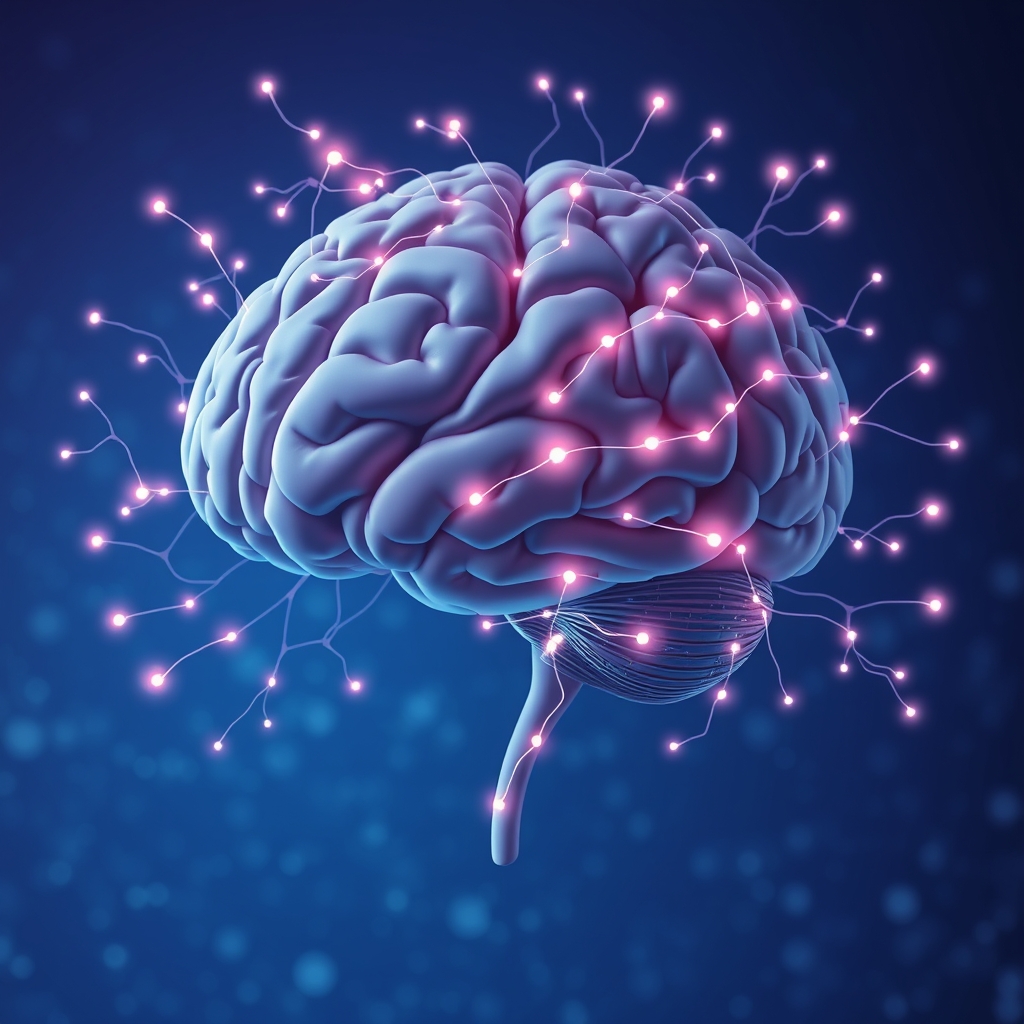
🧠 Unify neuroscience and computation. Neural networks give rise to complex mental life, thereby fundamentally shaping modern computational neuroscience.
🤖 AI Summary
Core Philosophy
- 🧠 Mind-Brain Identity: The mind is what the brain does. 🧠 Mental states are brain states.
- ⬇️ Reductionism: Understanding the brain’s detailed physiology is crucial for explaining higher-level cognitive functions.
- 💻 Computationalism: The brain functions as a computational system, processing information through neural activity.
- 🕸️ Network-Centric View: Brain function arises from the patterns of activity within large populations of interconnected neurons, moving beyond single-neuron explanations.
- 🔄 Co-evolution of Models & Experiments: Theoretical models and empirical experiments should mutually inform and advance understanding across multiple levels of biological organization.
Actionable Steps/Framework
- 🤝 Integrate Multidisciplinary Data: Combine anatomical, physiological, behavioral, and computational modeling methods.
- 🛠️ Develop Biologically Realistic Models: Create computer models constrained by neurobiological data to reveal how neural networks subserve perception and behavior.
- 🎯 Focus on Key Domains: Investigate visual perception, learning and memory, and sensorimotor integration as foundational areas for computational understanding.
- ⚖️ Abstract & Realistic Models: Utilize both abstract and neurobiologically detailed models, recognizing the value of each for different levels of inquiry.
- 🧑🤝🧑 Interdisciplinary Collaboration: Foster cooperative projects between neurobiologists, computer scientists, and philosophers to tackle complex brain functions.
⚖️ Evaluation
- 🏆 Pioneering Integration: The Computational Brain was one of the first books to unify computational concepts and behavioral data within a neurobiological framework, influencing a generation of researchers.
- 🔄 Shifting Paradigm: The book successfully moved the conceptual framework for brain function from single-neuron explanations to those based on large populations of neurons, demonstrating how artificial neural network patterns resembled recorded neural activity.
- 🗣️ Accessibility: Written for a broad audience of neuroscientists, computer scientists, cognitive scientists, and philosophers, it provides an accessible overview of neuroscience and computational theory.
- ⬇️ Reductionist Stance: The authors advocate for a mental reductionism, arguing that understanding neurons gives rise to mental life, a position shared by Patricia Churchland’s broader neurophilosophy.
- 🔎 Addressing the Black Box Problem: The book emphasizes the importance of looking inside the black box of the nervous system, warning against purely top-down computational strategies that might explore irrelevant computational space.
- 🤔 Criticisms of Computationalism: While advocating for the computational brain, the broader computational theory of mind (CTM) has faced criticism regarding its sufficiency to account for consciousness (John Searle’s Chinese Room argument) and the symbol grounding problem. 🧠 Some neuroscientists also remain skeptical that the brain can be adequately characterized solely as a computing system.
- 🌱 Biological Realism vs. Abstract Models: The book champions biologically realistic models, contrasting with earlier connectionist and AI research that was more ambitious in scope but often lacked physiological grounding.
🔍 Topics for Further Understanding
- 🤖 Deep Learning architectures inspired by neuroscience
- ⚙️ Neuromorphic computing and hardware implementations of brain-like systems
- 🧠💻 Brain-computer interfaces (BCIs) and neuroprosthetics advancements
- ✨ The role of glia cells in brain computation and plasticity
- ⚛️ Quantum consciousness theories and their compatibility with computational neuroscience
- 🔮 Predictive coding and free energy principle in brain function
- 🤖 The ethics of brain simulation and AI consciousness
- 🧬 Connectomics and the structural basis of brain computation
- 🦠 The influence of gut microbiome on brain function and computation
❓ Frequently Asked Questions (FAQ)
💡 Q: What is The Computational Brain about?
✅ A: The Computational Brain, authored by Patricia Churchland and Terrence Sejnowski, explores how the brain functions as a computational system, explaining mental phenomena through the interactions of large populations of neurons and integrating computational models with neurobiological data.
💡 Q: Who are the authors of The Computational Brain?
✅ A: The authors of The Computational Brain are Patricia S. Churchland, a prominent neurophilosopher known for her work on eliminative materialism, and Terrence J. Sejnowski, a pioneer in computational neuroscience and neural networks.
💡 Q: What is computational neuroscience?
✅ A: Computational neuroscience is an interdisciplinary field that uses mathematics, computer science, and theoretical analysis to understand the principles governing the nervous system’s development, structure, physiology, and cognitive abilities, often employing computational simulations.
💡 Q: When was The Computational Brain first published?
✅ A: The Computational Brain was first published in 1992 by The MIT Press. 🗓️ An anniversary edition was later published in 2016.
💡 Q: How does The Computational Brain relate to artificial intelligence?
✅ A: The Computational Brain provides foundational ideas for understanding how biological neural networks compute, which has historically inspired and continues to inform artificial neural networks and deep learning in AI, especially through the work of co-author Terrence Sejnowski.
📚 Book Recommendations
Similar
- 🧠 Neurophilosophy: Toward a Unified Science of the Mind-Brain by Patricia S. Churchland
- 🧒 Brain-Mind: A Study of Young Children by Patricia S. Churchland
- 🧠 Consciousness and the Brain: Deciphering How the Brain Codes Our Thoughts by Stanislas Dehaene
Contrasting
- 🤔 The Emperor’s New Mind: Concerning Computers, Minds, and the Laws of Physics by Roger Penrose
- 🧠 Descartes’ Error: Emotion, Reason, and the Human Brain by Antonio Damasio
- 🧠 Being There: Putting Brain, Body, and World Together Again by Andy Clark
Related
- 🧠 Principles of Neural Science by Eric R. Kandel, James H. Schwartz, Thomas M. Jessell, Steven A. Siegelbaum, A. J. Hudspeth
- 🏄 Surfing Uncertainty: Prediction, Action, and the Embodied Mind by Andy Clark
- 🤔🐇🐢 Thinking, Fast and Slow by Daniel Kahneman
🫵 What Do You Think?
🧠 Which computational model of brain function do you find most compelling? 🤔 What aspects of consciousness can be explained by computational processes?