🌋🌊🌪️🔥 The Big Ones: How Natural Disasters Have Shaped Us (and What We Can Do About Them)
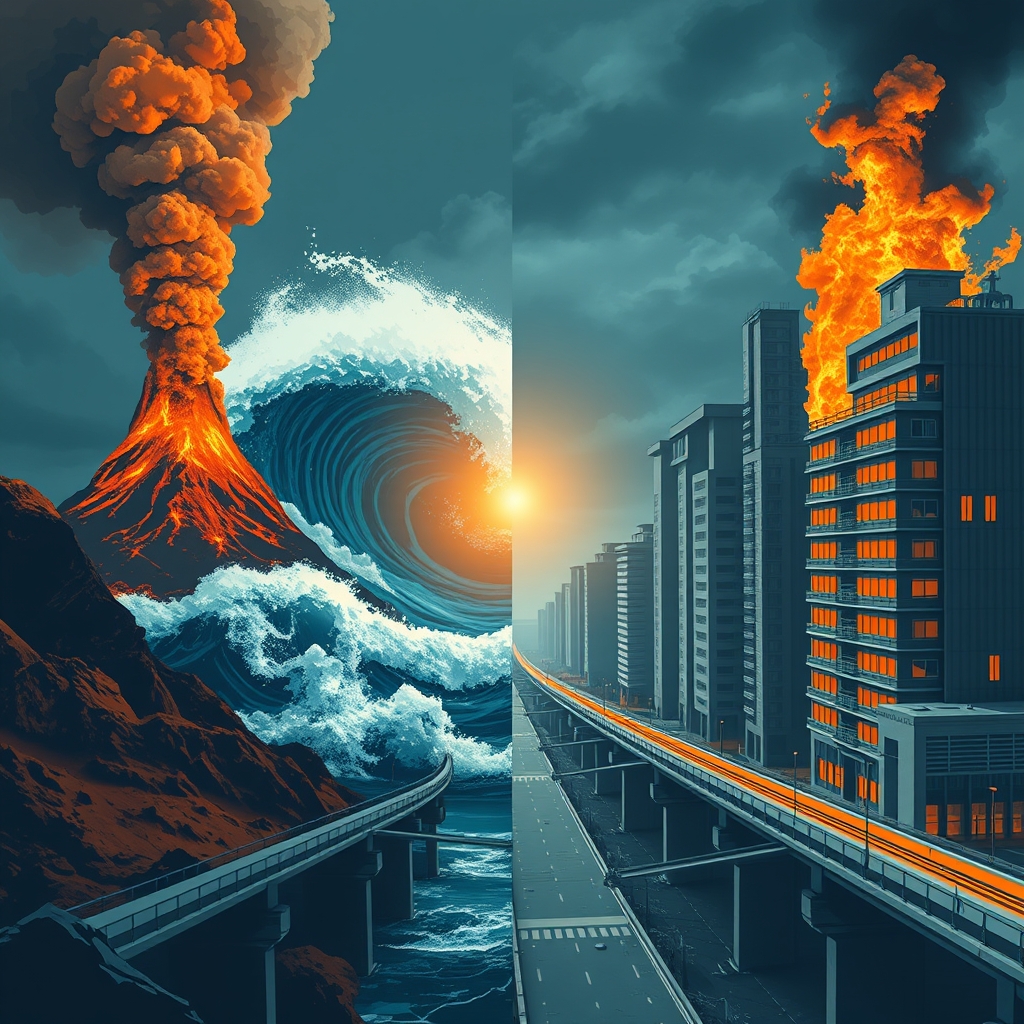
🌍🏛️🚨 Distill centuries of catastrophic events to reveal how natural hazards, though inevitable, become human catastrophes through societal choices, offering historical insights and a call to action for enhanced resilience.
🤖 AI Summary
💡 Core Philosophy
- ⚠️ Natural hazards constant, human catastrophes avoidable.
- 🏛️ Disasters shape culture, governance, and collective memory.
- 🔑 Preparedness key to mitigating future impacts.
✨ Key Insights
- 📜 Historical Impact: Volcanic eruptions (Pompeii), floods (California 1862), tsunamis (Indian Ocean 2004), hurricanes (American 2017) examined for lasting influence.
- 🏙️ Societal Shaping: Events influence architecture, leadership, and human thought.
- 🧠 Memory Failures: Collective memory often limited regarding past disasters, hindering future preparedness.
- 🌡️ Modern Challenges: Rising populations in hazardous areas and increasing global temperatures exacerbate disaster impacts.
- 💪 Call to Action: Emphasizes choices now can improve cities’ survival and recovery from future Big Ones.
⚖️ Evaluation
- 📖 Lucy Jones’s The Big Ones provides a compelling historical and sociological examination of natural disasters, emphasizing human agency in transforming hazards into catastrophes. This perspective aligns with broader disaster risk reduction (DRR) literature, which increasingly focuses on the interplay between natural events and societal vulnerabilities.
- 📚 The book effectively uses diverse case studies, from ancient Pompeii to modern hurricanes, to illustrate how disasters have shaped human societies, religions, and governments. This approach is supported by academic works like Disaster and Human History: Case Studies in Nature, Society and Catastrophe, which also explore the historical impact of various natural hazards on human civilization.
- ✅ Jones argues that while natural hazards are inevitable, human catastrophes are not, highlighting the importance of preparedness. This call to action resonates with contemporary disaster management policy, which stresses the need for scientific knowledge, sustained preparedness, and public awareness for effective risk reduction.
- 🤔 The book acknowledges how psychological factors, such as a fear of randomness, and societal issues, like racism, can influence disaster response. This is a critical point also explored in research on disaster recovery, which notes disparities in government response and support for marginalized communities.
🔍 Topics for Further Understanding
- 💰 Economic modeling of long-term disaster recovery vs. prevention investment.
- 🤖 The role of advanced AI and predictive analytics in early warning systems for diverse hazards.
- 🌐 Global governance structures and international cooperation frameworks for transboundary disaster response.
- 🌿 Indigenous knowledge and traditional ecological practices in disaster risk reduction.
- 🧠 Psychological impacts of repeated disaster exposure and community-level mental health resilience.
- ⚖️ The ethics of managed retreat versus coastal fortification in the face of irreversible environmental change.
❓ Frequently Asked Questions (FAQ)
💡 Q: What is the main argument of The Big Ones: How Natural Disasters Have Shaped Us (and What We Can Do About Them)?
✅ A: The Big Ones argues that natural hazards are an inherent part of Earth’s processes, but whether they become human catastrophes depends on societal choices and preparedness.
💡 Q: Which historical natural disasters does The Big Ones analyze?
✅ A: The Big Ones by Lucy Jones analyzes historical events such as the Pompeii volcanic eruption, the 1862 California floods, the 2004 Indian Ocean tsunami, and American hurricanes of 2017.
💡 Q: Who is the author of The Big Ones: How Natural Disasters Have Shaped Us (and What We Can Do About Them)?
✅ A: The author of The Big Ones is Dr. Lucy Jones, a renowned seismologist who previously served with the U.S. Geological Survey.
💡 Q: What is the call to action presented in The Big Ones?
✅ A: The Big Ones calls for informed choices and proactive preparation, stressing that natural hazards are inevitable, but human catastrophes are not, emphasizing the potential to improve cities’ survival and recovery.
💡 Q: How does The Big Ones connect natural disasters to human culture and governance?
✅ A: The Big Ones illustrates how natural disasters have profoundly shaped cities, architecture, political leaders, governments, and even human thought, feelings, and societal responses throughout history.
📚 Book Recommendations
🤝 Similar
- 📖 Disaster and Human History: Case Studies in Nature, Society and Catastrophe by Benjamin Reilly
- 🌎 The Uninhabitable Earth: Life After Warming by David Wallace-Wells
- 📝 Field Notes from a Catastrophe: Man, Nature, and Climate Change by Elizabeth Kolbert
↔️ Contrasting
- 🌳 Ecotopia by Ernest Callenbach (focus on utopian environmental society)
- 😊 The Progress Paradox: How Life Gets Better While People Feel Worse by Gregg Easterbrook (focus on overall human progress)
🔗 Related
- 🌀 Isaac’s Storm: A Man, a Time, and the Deadliest Hurricane in History by Erik Larson (specific disaster focus)
- 💀🌍📉⏳ The Sixth Extinction: An Unnatural History by Elizabeth Kolbert (broader environmental change)
- 📈 Learning from Disaster: Planning for Resilience by Laurie Mazur (focus on resilience strategies)
🫵 What Do You Think?
🤔 What preparedness measures should our communities prioritize above all others?