🎭🇺🇸💸🏆 The Age of Illusions: How America Squandered Its Cold War Victory
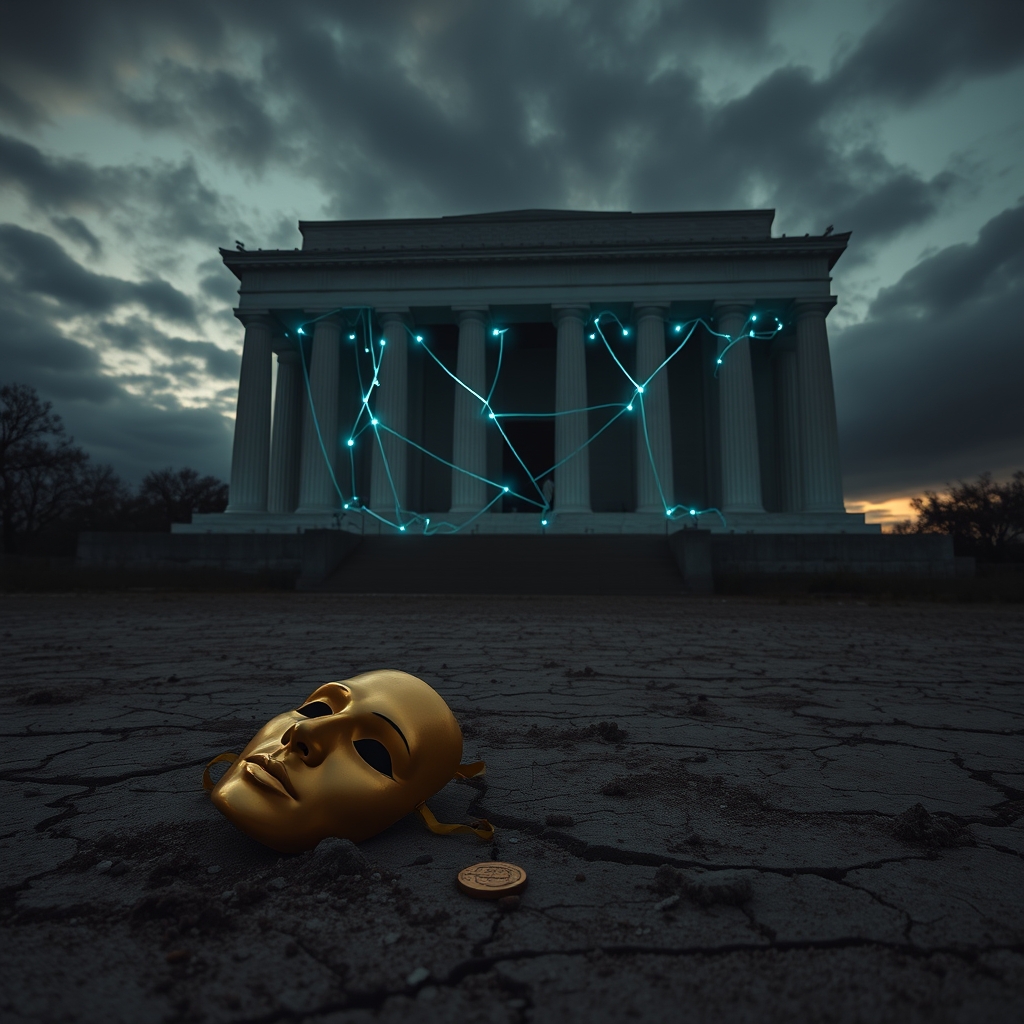
🪄🌎🪖🗽 America’s post-Cold War era, marked by triumphalism, birthed illusions of globalized neoliberalism, militarized hegemony, and unchecked freedom, ultimately leading to deep domestic divisions and the rise of figures like Donald Trump.
🤖 AI Summary
🤝 Post-Cold War Consensus & Illusions
- ✨ Victory Perception: Unipolar moment, American-style liberal democratic capitalism validated globally. History’s end.
- 💭 Illusions Fostered: Unprecedented wealth through globalization, military campaigns enforcing American values, White House delivering prosperity, peace, freedom.
- 🏛️ Architects: Washington establishment, elites.
🏗️ Four Pillars of Squandered Victory
- 💰 Globalized Neoliberalism: Unrestricted corporate capitalism, planetary wealth creation focus.
- ⚔️ Militarized Hegemony: Global leadership as empire, unchallengeable military might, full-spectrum dominance.
- 🗽 Radical Autonomy/Freedom: Maximizing individual and corporate choice, removal of constraints.
- 👑 Presidential Supremacy: Decline of legislative branch prerogatives, president as demi-god.
🌪️ Consequences & Outcomes
- 🏠 Domestic: Gaping inequality, moral confusion, angry/alienated population, polarization.
- 🌍 Foreign: Forever wars, disastrous interventions (e.g., Iraq), support for dictatorships, pariah status among allies.
- 🏁 Culmination: Election of Donald Trump as a symptom, not cause, of decline.
⚖️ Evaluation
- 📝 Andrew Bacevich provides a trenchant and objective critique of American foreign policy and domestic choices since the Cold War.
- 📚 The book highlights how a perceived victory led to hubris and a departure from pragmatic foreign policy, favoring ideological crusades and economic globalization.
- 🔗 Bacevich effectively links post-Cold War foreign policy decisions to domestic societal fragmentation and the rise of political figures embodying national disillusionment.
- 🤔 While strong in its critique of the illusions of the era, some commentators note the book is less prescriptive, offering limited explicit alternatives to the policies it condemns.
- 📉 The analysis aligns with perspectives that view the liberal international order as having inherent flaws or being destined to fail due to issues like nationalism, challenges to sovereignty, and the economic problems hyper-globalization created within liberal democracies.
- ↔️ Bacevich’s work contrasts with more optimistic assessments of the post-Cold War unipolar moment that envisioned a stable, American-led global order spreading democracy and free markets.
- 📖 The book implicitly challenges the end of history thesis, demonstrating how ideological triumphalism overlooked underlying contradictions that would resurface to reshape American and global politics.
🔍 Topics for Further Understanding
- 🧠 The precise role of think tanks and academic institutions in shaping the post-Cold War foreign policy consensus.
- 📊 Detailed economic analysis of how globalization specifically contributed to domestic inequality in the United States, beyond general assertions.
- 🗺️ Comparative case studies of other nations’ post-Cold War transitions and their approaches to global power dynamics.
- 🛡️ The evolution of military doctrine and its relationship to the concept of full-spectrum dominance and forever wars.
- 💡 Psychological and sociological studies on national identity and purpose in the absence of a clear external adversary.
- 🌐 The influence of technological advancements and the internet on political polarization and information dissemination in the post-Cold War era.
❓ Frequently Asked Questions (FAQ)
💡 Q: What is the main argument of The Age of Illusions: How America Squandered Its Cold War Victory?
✅ A: The Age of Illusions argues that America squandered its Cold War victory by pursuing misguided policies rooted in hubris and illusions—namely, globalized neoliberalism, militarized hegemony, radical individualism, and presidential overreach—leading to domestic crises and a decline in international standing.
💡 Q: Who is the author of The Age of Illusions: How America Squandered Its Cold War Victory?
✅ A: The author of The Age of Illusions: How America Squandered Its Cold War Victory is Andrew Bacevich, a retired U.S. Army officer and professor of history and international relations.
💡 Q: What are the illusions the book, The Age of Illusions, refers to?
✅ A: The illusions refer to the post-Cold War belief by the Washington establishment that America’s victory was decisive and irreversible, validating American-style liberal democratic capitalism globally, and promising unending prosperity, peace, and freedom through globalization and military dominance.
💡 Q: How does The Age of Illusions connect post-Cold War policies to the rise of Donald Trump?
✅ A: The Age of Illusions posits that Donald Trump’s election was a culmination, rather than a cause, of the decline resulting from the post-Cold War policies. These policies fostered gaping inequality, permanent war, and an alienated populace, creating conditions ripe for a figure like Trump.
💡 Q: Does The Age of Illusions offer solutions to America’s problems?
✅ A: The Age of Illusions is primarily an analytical and critical work, explaining how America reached its current state. While it outlines the problems and their historical roots, it is generally less focused on offering explicit solutions or alternative policy prescriptions.
📚 Book Recommendations
👯 Similar
- 📖 The Tragedy of American Diplomacy by William Appleman Williams (Explores historical patterns of American expansionism and its consequences).
- 📜 Washington Rules: America’s Path to Permanent War by Andrew Bacevich (Further develops themes of American militarism and foreign policy consensus).
- 🚧 The Limits of Power: The End of American Exceptionalism by Andrew Bacevich (Examines the constraints on American power and the decline of exceptionalist beliefs).
✖️ Contrasting
- 🕊️ The End of History and the Last Man by Francis Fukuyama (Argues for the triumph of liberal democracy post-Cold War).
- ♟️ The Grand Chessboard: American Primacy and Its Geostrategic Imperatives by Zbigniew Brzezinski (Advocates for continued American global dominance and strategic engagement).
- 🌟 The World America Made by Robert Kagan (Defends American leadership and its positive impact on global order).
🤝 Related
- ❌ Mission Failure: America and the World in the Post-Cold War Era by Michael Mandelbaum (Analyzes American foreign policy failures, particularly in nation-building, during the post-Cold War era).
- ⚠️ Bound to Fail: The Rise and Fall of the Liberal International Order by John Mearsheimer (Presents a realist critique arguing the liberal international order was flawed and destined to fail).
- ⏳ The Four Ages of American Foreign Policy by Michael Mandelbaum (Offers a historical framework for understanding the evolution of U.S. foreign policy through different eras of power).
🫵 What Do You Think?
🤔 Which of Bacevich’s four illusions do you believe had the most detrimental long-term impact on American society and foreign policy? How might American leadership have genuinely capitalized on its Cold War victory to foster a more stable and equitable world, rather than pursuing the path Bacevich describes?