🧽🧠 The Absorbent Mind
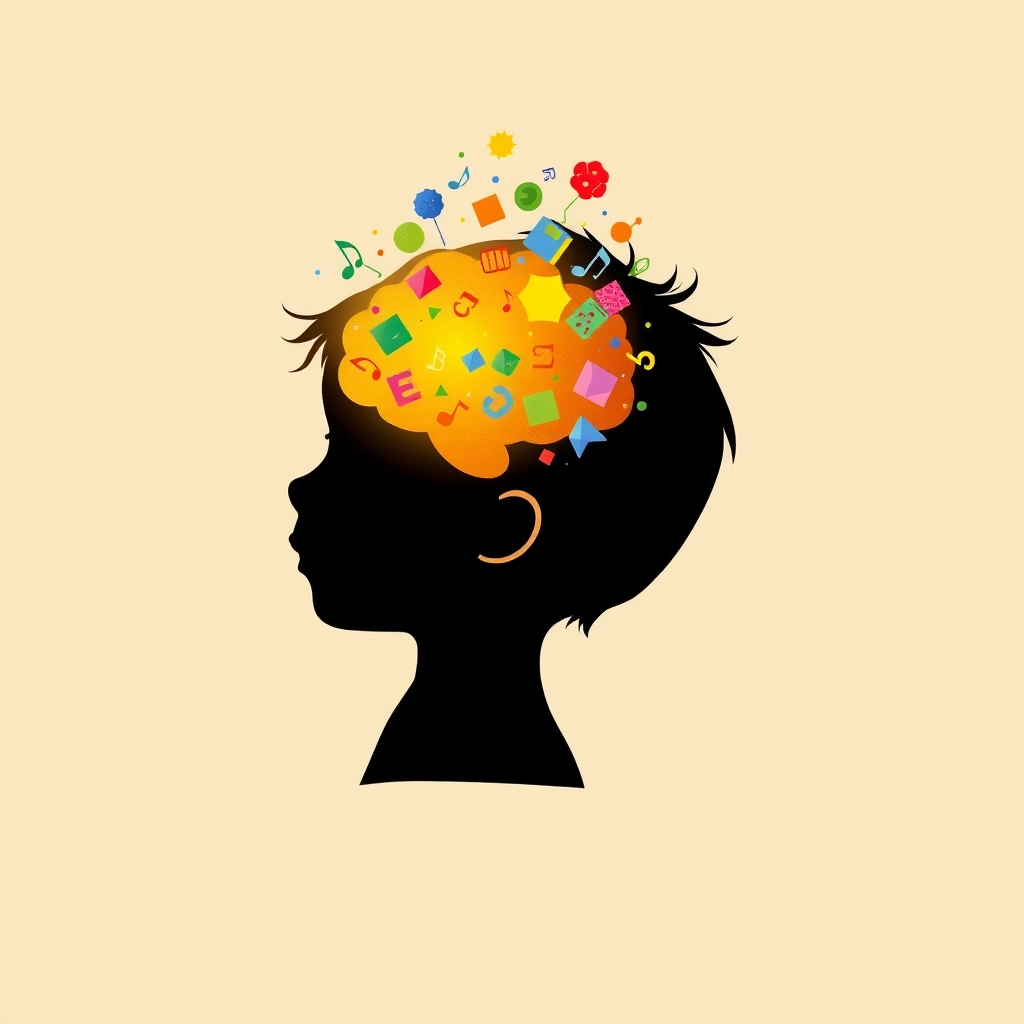
🛒 The Absorbent Mind. As an Amazon Associate I earn from qualifying purchases.
🚼 Children from birth to six years old effortlessly absorb knowledge, language, culture, and social norms from their environment, like a sponge, guided by innate sensitive periods.
🤖 AI Summary
💡 Core Concept: The Absorbent Mind
- 📝 Definition: Child’s unique mental capacity (birth to ~6 years) to unconsciously and effortlessly absorb information from the environment.
- 👶 Unconscious Phase (0-3 years): Passive absorption of language, motor coordination, emotional impressions, culture; forms foundation of personality.
- 🧠 Conscious Phase (3-6 years): Active seeking of experiences, deliberate repetition for mastery; refines absorbed skills.
🔑 Key Developmental Principles
- ⏰ Sensitive Periods: Finite windows of intense interest and capacity for specific skill acquisition (e.g., language, order, movement, sensory refinement, small objects, social behavior). Learning within these periods is effortless and joyful.
- 🏡 Prepared Environment: Carefully designed physical and social setting catering to developmental needs, encouraging independent exploration and self-directed learning.
- 🧑🏫 Role of the Adult: Observer and facilitator, not lecturer; provides guidance, respects child’s pace, removes obstacles to self-construction.
🍎 Educational Implications
- 🖐️ Hands-on Learning: Direct interaction with materials for cognitive and motor development.
- 🕊️ Freedom within Limits: Child chooses activities, pace, fostering self-discipline and autonomy within a structured environment.
- 👫 Multi-age Classrooms: Promotes social development, empathy, and leadership through peer mentorship.
⚖️ Evaluation
- 🔬 Alignment with Modern Science: Montessori principles, including sensitive periods and emphasis on independence, align with contemporary neuroscience and developmental psychology.
- 🧠 Executive Function Development: Research indicates Montessori students show strengths in self-regulation, working memory, planning, and inhibitory control, particularly with high-fidelity implementation. These skills predict positive lifelong outcomes.
- 📈 Academic Outcomes: Studies suggest Montessori education positively impacts academic achievement, with students often outperforming peers in literacy, mathematics, and problem-solving.
- 💞 Social-Emotional Development: Montessori classrooms foster better social problem-solving, a stronger sense of community, empathy, and positive peer perceptions.
- ❓ Criticisms - Lack of Structure: Detractors sometimes perceive Montessori as too unstructured or lacking curriculum. However, classrooms maintain a meticulously prepared environment with intentional freedom and a structured schedule for activities.
- 🗣️ Criticisms - Socialization: Concerns exist regarding limited group activity for social development. Yet, mixed-age classrooms encourage meaningful, spontaneous interaction, empathy, and conflict resolution through mentorship.
- 💲 Criticisms - Accessibility: The method is often criticized as being accessible only to affluent families. Many Montessori schools are working to improve inclusivity and offer financial assistance.
- 🆚 Comparison with Piaget: Both Montessori and Piaget emphasized children learning through senses and believed intelligence forms from environmental interaction. Piaget recognized free play based on Montessori’s uninterrupted work cycle ideas. However, they differed slightly on age ranges for developmental stages.
- ✔️ Overall Effectiveness: Growing research supports Montessori’s efficacy in promoting academic outcomes, executive function, and socio-emotional skills, showing modest but meaningful positive effects compared to traditional methods.
🔍 Topics for Further Understanding
- 🧠 Neuroscience of early brain development beyond Montessori’s original observations.
- 📱 Integrating Montessori principles with digital literacy and technology education for young children.
- 🌍 Cross-cultural comparisons of child-rearing practices and their impact on early development.
- 🚀 The long-term impact of Montessori education on adult creativity and innovation.
- 🏠 Applying prepared environment concepts in diverse socio-economic home settings.
- 🌳 The role of nature and outdoor environments in a child’s absorbent mind phase.
- 💖 Specific strategies for supporting children with special needs within a Montessori framework.
❓ Frequently Asked Questions (FAQ)
💡 Q: What is the primary concept of The Absorbent Mind?
✅ A: The Absorbent Mind describes a young child’s unique ability, from birth to roughly age six, to effortlessly absorb knowledge, culture, and experiences from their environment, forming their personality and intellect without conscious effort.
💡 Q: What are Sensitive Periods according to Maria Montessori?
✅ A: Sensitive Periods are specific, temporary windows of time during a child’s early years when they are intensely receptive to learning particular skills or absorbing specific aspects of their environment, such as language, order, or movement.
💡 Q: How does the prepared environment relate to The Absorbent Mind?
✅ A: A prepared environment is a carefully designed space, like a Montessori classroom, that offers diverse, hands-on learning materials and activities, enabling the child’s absorbent mind to explore independently and construct their understanding of the world.
💡 Q: Does research support the effectiveness of Montessori education principles outlined in The Absorbent Mind?
✅ A: Yes, a growing body of research supports the effectiveness of Montessori education, showing positive impacts on academic achievement, executive function skills (like self-regulation and problem-solving), and social-emotional development.
💡 Q: How do children learn language through the Absorbent Mind?
✅ A: Children in the absorbent mind phase, particularly during the sensitive period for language, effortlessly absorb language from their surroundings, internalizing vocabulary, grammar, and pronunciation naturally, without formal instruction.
📚 Book Recommendations
📖 Similar
- 👶 Montessori from the Start by Paula Polk Lillard and Lynn Lillard Jessen (Focuses on 0-3 years in a Montessori context)
- 🔎 The Discovery of the Child by Maria Montessori (Further details on the child’s nature and method)
- 🤫 The Secret of Childhood by Maria Montessori (Explores the psychological aspects of childhood)
- 🆕 Montessori: A Modern Approach by Paula Polk Lillard (Contemporary interpretation of Montessori)
⚔️ Contrasting
- 🧐 Theories of Childhood: An Introduction to Dewey, Montessori, Erikson, Piaget, and Vygotsky by Carol Garhart Mooney (Compares various developmental theories)
- ↔️ Comparing Montessori, Waldorf and Reggio Emilia by Veronica Ricci (Examines different educational philosophies)
- 🤔 What If Everybody Understood Child Development? by Rae Pica (Addresses common misconceptions in child development)
🔗 Related
- 🕳️🧠👶🏽 The Whole-Brain Child: 12 Revolutionary Strategies to Nurture Your Child’s Developing Mind by Daniel J. Siegel and Tina Payne Bryson (Neuroscience of child development)
- 💬 How to Talk So Kids Will Listen & Listen So Kids Will Talk by Adele Faber and Elaine Mazlish (Communication with children)
- ✨ Positive Discipline by Jane Nelsen (Focuses on respectful parenting and guidance)
- 🧘 Self-Reg by Stuart Shanker (Understanding and managing stress in children)
🫵 What Do You Think?
❓ What aspects of The Absorbent Mind resonate most with your own observations of children? How do you envision its principles applying to modern parenting or educational challenges?