🌱🟩⬆️ Square Foot Gardening, 4th Edition: The World’s Most Popular Growing Method to Harvest MORE Food from Less Space
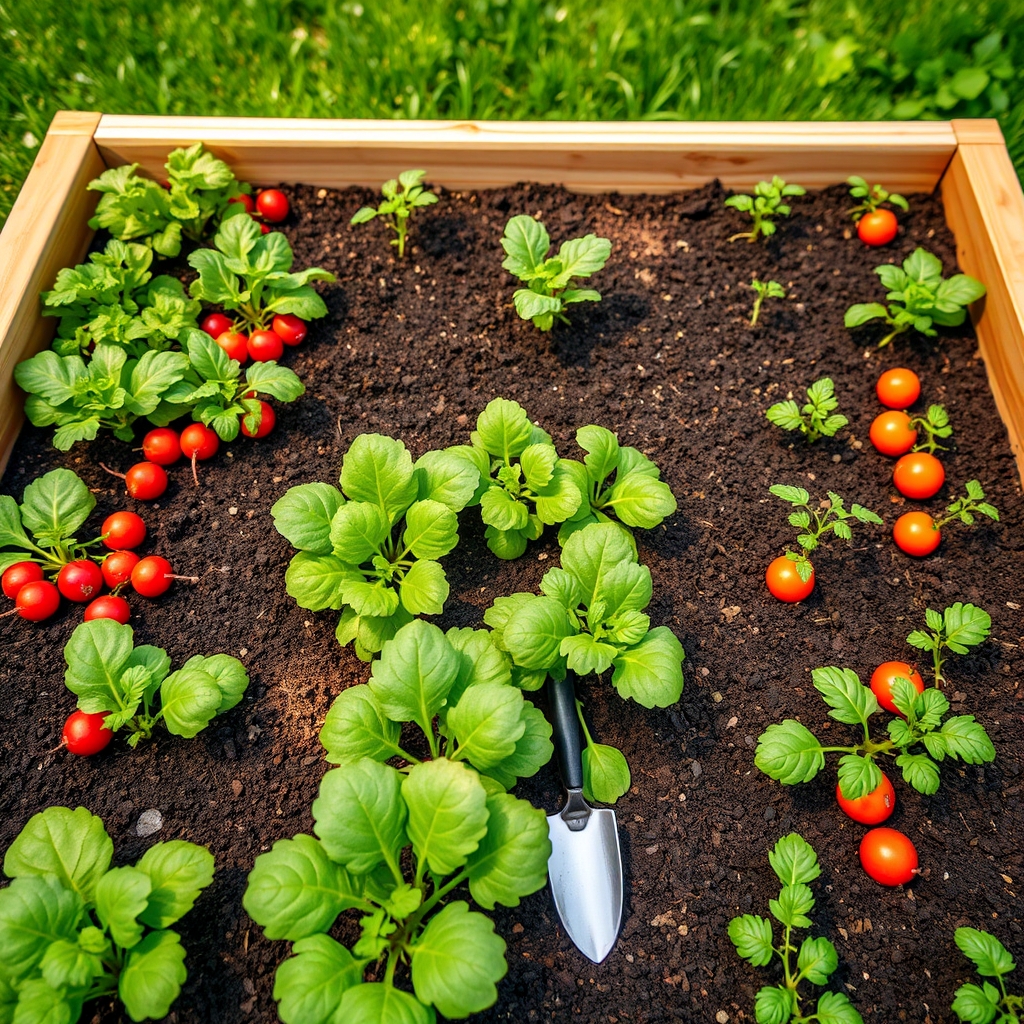
🌱🥕🗓️ Square Foot Gardening, 4th Edition offers a streamlined, no-dig method for maximizing organic vegetable yields in minimal space, making gardening accessible and efficient for everyone.
🤖 AI Summary
🧠 Core Philosophy
- ⬆️ Intensive Planting: Maximize yield in minimal space. Plant crops closer than traditional rows.
- 🛏️ Raised Beds: Foundation of the system. Improves accessibility, soil drainage, and warms soil faster.
- 🧪 Mel’s Mix™: Specific soilless growing medium. 1/3 compost (blended from multiple sources), 1/3 peat moss (or coconut coir), 1/3 vermiculite.
- 📏 Grids: Visual division of beds into 1-foot squares. Guides precise plant spacing.
- 🚫 No Digging/Tilling: Preserves soil structure, reduces work.
- 🧤 Less Weeding: Dense planting shades out weeds; fluffy soil makes removal easy.
- 💧 Water Efficiency: Targeted watering reduces waste.
- 🔄 Crop Rotation: Easy to replant squares with different crops after harvest to replenish nutrients.
🛠️ Actionable Steps
- 🏗️ Construct Bed: Build a bottomless raised bed, commonly 4x4 feet.
- 🥣 Fill with Mel’s Mix™: Combine equal parts (by volume) compost, peat moss/coconut coir, and vermiculite. Fill bed to 6-8 inches deep.
- 📐 Add Grid: Delineate 1-foot squares using lath, string, or wood strips.
- 🌱 Plant Spacing: Follow specific guidelines per square foot (e.g., 1 large plant, 4 medium, 9 small, 16 tiny). Use trellises for vining plants.
- 🚿 Watering: Water directly into squares; consider drip irrigation.
- ♻️ Replenish: Add compost to squares each time a crop is harvested and replanted.
- 🐞 Pest/Disease: Monitor actively, dense planting can increase risk without proper pruning/air circulation.
⚖️ Evaluation
- 📊 Efficiency and Yield: Square Foot Gardening (SFG) is widely lauded for maximizing yields in minimal space, using less water and labor compared to traditional row gardening. It can yield more in 20% less space with 10% of the water and 2% of the work.
- ♿ Accessibility: The raised bed aspect of SFG makes gardening more accessible for individuals with physical limitations or those who prefer not to bend and stoop.
- 🌿 Soil Quality: The use of Mel’s Mix ensures a nutrient-rich, well-draining, and loose growing medium, which is advantageous for plant growth and can bypass poor native soil. However, some critics note that creating this mix, especially procuring all ingredients, can be an initial investment.
- 🧹 Weed Control: SFG significantly reduces weeding due to dense planting that shades out weeds and the light, fluffy nature of Mel’s Mix which makes any weeds easy to remove.
- 💰 Initial Cost: A primary criticism is the higher initial setup cost for raised beds and the specialized Mel’s Mix, especially compared to in-ground traditional gardening.
- 🌍 Sustainability of Ingredients: The use of peat moss in Mel’s Mix has raised environmental concerns regarding its sustainability, leading to recommendations for alternatives like coconut coir. The 4th edition addresses this by offering alternative options to peat moss.
- ☀️ Watering Frequency: While SFG reduces overall water waste, raised beds and the free-draining Mel’s Mix can sometimes lead to quicker drying out, potentially requiring more frequent watering in hot climates.
- 📈 Plant Limitations: Some large vining plants (like certain melons or pumpkins) or tall crops (like corn) may still require significant space or robust trellising, and might not be ideal for strict 1-square-foot allocation, or may limit diversity in a small bed.
- 🪵 Durability of Structures: Raised beds, especially those made of wood, will eventually degrade and require replacement or repair over time, incurring future costs and effort.
🔍 Topics for Further Understanding
- 🤝 Advanced companion planting strategies beyond basic plant spacing.
- 🛡️ Integrated Pest Management (IPM) techniques specifically adapted for dense, small-space gardens.
- 🏡 Season extension methods (e.g., cold frames, hoop houses) in a square foot gardening context.
- 🔬 Soil food web dynamics and advanced organic fertilization within raised beds.
- 🪱 Composting techniques, including vermicomposting, to generate high-quality compost for Mel’s Mix alternatives.
- 💧 Water harvesting and efficient irrigation systems tailored for raised beds (e.g., wicking beds).
- 🌰 Seed saving practices for a diverse square foot garden.
❓ Frequently Asked Questions (FAQ)
💡 Q: What is the primary advantage of Square Foot Gardening, 4th Edition over traditional row gardening?
✅ A: Square Foot Gardening, 4th Edition allows gardeners to harvest significantly more food from less space with reduced effort, water, and weeding compared to traditional row gardening by utilizing raised beds, a specialized soil mix, and precise plant spacing with a grid system.
💡 Q: What is Mel’s Mix and what are its components?
✅ A: Mel’s Mix is the specialized, lightweight, and nutrient-rich growing medium central to Square Foot Gardening. It consists of equal parts (1/3 each by volume) of compost (ideally from multiple sources), peat moss (or sustainable alternatives like coconut coir), and coarse vermiculite.
💡 Q: Can Square Foot Gardening, 4th Edition be used by beginners?
✅ A: Yes, Square Foot Gardening, 4th Edition is specifically designed to be foolproof and accessible for brand new gardeners, simplifying the entire process from setup to harvest.
💡 Q: Are there any environmental concerns with the Square Foot Gardening method?
✅ A: Some environmental concerns exist regarding the use of peat moss, a non-renewable resource, in Mel’s Mix. The 4th Edition and related resources acknowledge this and suggest sustainable alternatives like coconut coir.
💡 Q: Does Square Foot Gardening eliminate weeds entirely?
✅ A: Square Foot Gardening significantly reduces weeds due to dense planting that shades the soil, leaving less room for weed growth, and the light, fluffy Mel’s Mix makes any weeds that do appear easy to pull. However, it does not entirely eliminate them.
📚 Book Recommendations
📖 Similar Books
- 📘 All New Square Foot Gardening, 3rd Edition is a foundational text for understanding the evolution of the method.
- 🌎 How to Grow More Vegetables (and Fruits, Nuts, Berries, Grains, and Other Crops) Than You Ever Thought Possible on Less Land Than You Can Imagine by John Jeavons explores biointensive gardening for maximum yield and sustainability.
- 📈 The Lean Farm by Ben Hartman focuses on efficiency and productivity in small-scale farming, applicable to intensive gardening.
↔️ Contrasting Books
- 🌳 🌍🌿 Gaia’s Garden: A Guide to Home-Scale Permaculture by Toby Hemenway introduces permaculture principles for home-scale gardens, focusing on ecological design and working with nature.
- 🧑🌾 The New Organic Grower by Eliot Coleman details methods for intensive organic vegetable production, often on a slightly larger scale than SFG.
- 🧘♀️ The One-Straw Revolution by Masanobu Fukuoka challenges modern agricultural assumptions with a philosophy of do-nothing farming.
🔗 Related Books
- 🎯 Kitchen Garden Revival by Nicole Johnsey Burke introduces Square Inch Gardening or Plate Planting, a related intensive planting method using circles instead of grids, and offers an alternative, more sustainable soil mix.
- 🔬 Teaming with Microbes by Jeff Lowenfels and Wayne Lewis offers a friendly yet advanced look into the soil food web, enhancing understanding of compost and soil health.
- 🏡 The Resilient Farm and Homestead by Ben Falk provides practical strategies for building resilient food systems and homesteads.
🫵 What Do You Think?
🤔 What aspects of Square Foot Gardening have you found most (or least) impactful in your own garden, and what alternative growing methods do you believe offer the most compelling advantages for the future of home food production?