🌸🐝🦋🛡️ Attracting Native Pollinators: The Xerces Society Guide, Protecting North America’s Bees and Butterflies
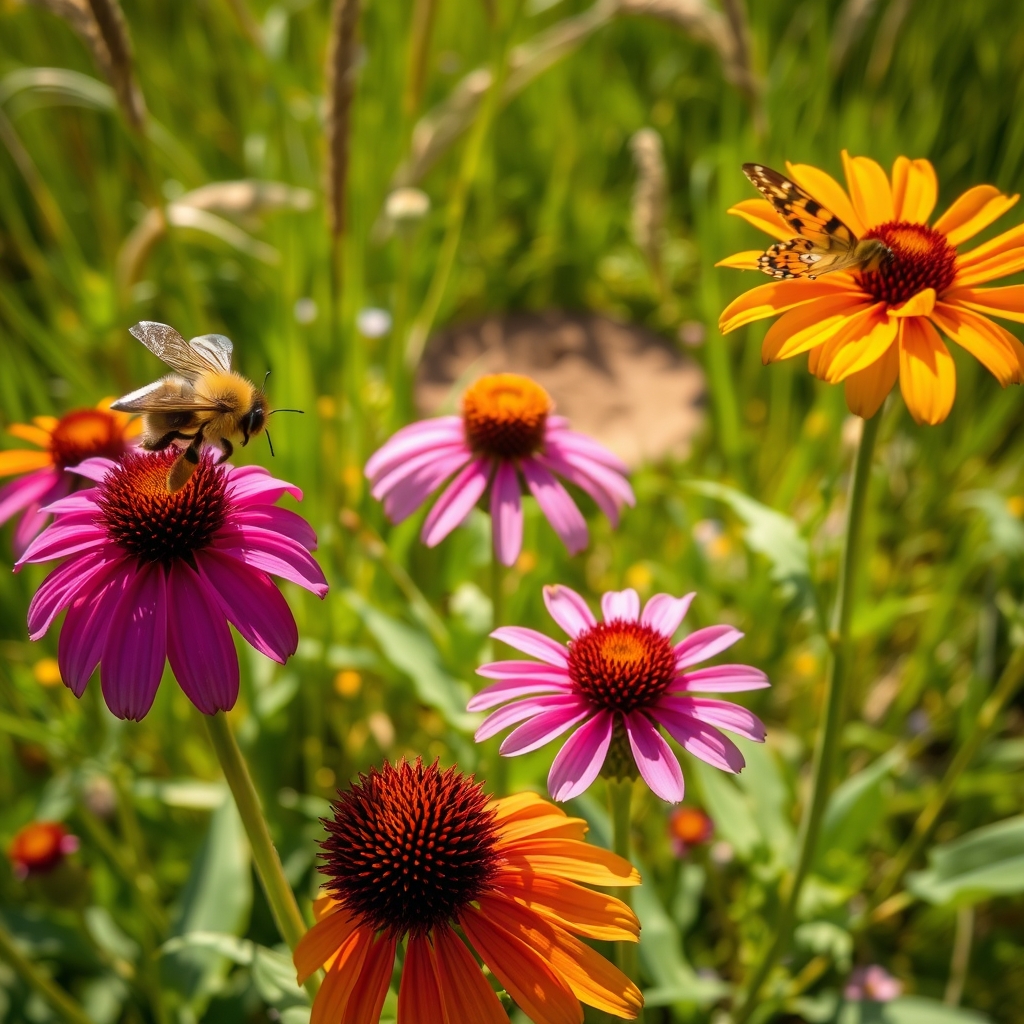
🐝🦋🌸 A comprehensive, actionable framework for cultivating pollinator-friendly habitats, emphasizing native plant choices and integrated pest management to foster biodiversity and support crucial ecosystem services.
🤖 AI Summary
💡 Core Philosophy
- 📉 Pollinator Decline: Critical threat to food supply, ecological health.
- 🌸 Native Pollinators: Essential for ecosystem function, crop pollination.
- 🏡 Habitat Restoration: Key to reversing decline, fostering resilience.
- 🛡️ Xerces Mission: Protect invertebrates through habitat conservation, pesticide reduction.
🛠️ Actionable Steps
- 🌱 Plant Selection:
- 🌼 Prioritize native plants. Adapted to local conditions, superior nectar/pollen, support specialized relationships.
- 🗓️ Continuous blooms from early spring to late fall.
- ✨ Diverse flower shapes, sizes, colors, heights.
- 🐛 Include host plants for butterfly/moth larvae.
- 🪴 Plant in clumps for greater pollinator attraction.
- 🛒 Source pollinator-safe, pesticide-free plants from nurseries.
- 🏘️ Habitat Provision:
- 🕳️ Nesting Sites:
- 🌍 Bare soil patches for ground-nesting bees (70% of native bees). Avoid heavy mulch, tilling.
- 🎋 Hollow stems, pithy stems for cavity-nesting bees.
- 🪵 Brush piles, logs, rock stacks, standing plant stems for shelter/nesting.
- 🐭 Old rodent burrows for bumblebees.
- 💧 Water Sources: Shallow dishes with pebbles, floating plants.
- ❄️ Overwintering: Leave leaf litter, plant stems.
- 🕳️ Nesting Sites:
- 🚫 Pest Management:
- ☠️ Eliminate Pesticides: Avoid insecticides, herbicides, fungicides.
- 🧤 Hand Weeding/Tools: For weed control, especially when plants are small.
- ♻️ Integrated Pest Management (IPM): Holistic approach; focus on prevention, biological/cultural/mechanical controls.
- 🌿 Embrace Wildness: Allow some flowering weeds.
- 💪 Dense Plantings: Outcompete weeds.
🏞️ Landscape Management
- 🏡 View Yard as Habitat: Embrace ecological beauty.
- 🧘♀️ Reduce Management Intensity: Allow for natural processes.
- 📍 Regional Focus: Tailor plant choices to local ecoregions.
- 🤝 Community Engagement: Education, policy involvement, citizen science.
⚖️ Evaluation
- 💪 Strength - Comprehensive Guidance: The book offers a thorough overview of native pollinators, their life cycles, habitat needs, and practical strategies for creating pollinator-friendly landscapes. This aligns with broader conservation efforts emphasizing holistic habitat approaches.
- 🌱 Strength - Emphasis on Native Plants: A core recommendation is the use of native plants, which is strongly supported by scientific research showing they provide superior nutritional value and support more specialized plant-pollinator relationships than non-native species.
- 🚫 Strength - Anti-Pesticide Stance: The Xerces Society consistently advocates for eliminating or significantly reducing pesticide use, including herbicides, which is crucial for pollinator health as pesticides are a major driver of insect decline.
- 🤔 Potential Nuance - Non-Native Plants: While emphasizing native plants, some research suggests that certain non-native pollinator-friendly plants can still benefit native bees, particularly in disturbed urban environments, though they may alter foraging patterns and network structures. The book’s strong native-only focus might overlook these supplementary roles.
- 🏙️ Relevance - Urban Pollinator Conservation: The book’s principles are highly applicable to urban and suburban settings, echoing findings that urban greenspaces and community gardens can be valuable pollinator habitats, though urban warming remains a challenge.
- 👍 Practicality - Actionable for Diverse Audiences: The guide is praised for its detailed garden plans and techniques, making it useful for a wide range of individuals from home gardeners to land managers. This practical, how-to approach is critical for successful conservation implementation.
🔍 Topics for Further Understanding
- 🌡️ Impact of climate change on pollinator migration patterns and plant phenology.
- 🌃 The role of light pollution in nocturnal pollinator decline.
- 🧬 Specific benefits and risks of genetically modified crops on native pollinator populations.
- 🔬 Advanced techniques in integrated pest management (IPM) beyond basic avoidance, including biological controls and targeted applications.
- 💰 Economic valuation of ecosystem services provided by native pollinators to non-agricultural sectors.
- 📜 Policy interventions and incentives for large-scale pollinator habitat creation on private and public lands.
- 🐝 The effects of managed honey bees on native bee populations and competition for resources.
❓ Frequently Asked Questions (FAQ)
💡 Q: What is the primary purpose of Attracting Native Pollinators: The Xerces Society Guide, Protecting North America’s Bees and Butterflies?
✅ A: Attracting Native Pollinators: The Xerces Society Guide, Protecting North America’s Bees and Butterflies serves as a comprehensive guide for individuals and land managers on how to protect and encourage native pollinators by creating suitable habitats and avoiding harmful practices.
💡 Q: Why are native plants emphasized in Attracting Native Pollinators: The Xerces Society Guide, Protecting North America’s Bees and Butterflies?
✅ A: Native plants are emphasized in Attracting Native Pollinators: The Xerces Society Guide, Protecting North America’s Bees and Butterflies because they are best adapted to local conditions, provide superior nutritional resources (nectar and pollen), and have co-evolved with native pollinators, leading to more specialized and effective ecological relationships.
💡 Q: How does Attracting Native Pollinators: The Xerces Society Guide, Protecting North America’s Bees and Butterflies address pesticide use?
✅ A: Attracting Native Pollinators: The Xerces Society Guide, Protecting North America’s Bees and Butterflies strongly advocates for eliminating or significantly reducing the use of all pesticides, including insecticides, herbicides, and fungicides, due to their detrimental effects on pollinator health and survival.
💡 Q: What kind of nesting habitats does Attracting Native Pollinators: The Xerces Society Guide, Protecting North America’s Bees and Butterflies recommend?
✅ A: Attracting Native Pollinators: The Xerces Society Guide, Protecting North America’s Bees and Butterflies recommends providing diverse nesting habitats such as undisturbed bare soil for ground-nesting bees, hollow or pithy stems for cavity-nesting bees, and brush piles, logs, and rock stacks for general shelter.
💡 Q: Can Attracting Native Pollinators: The Xerces Society Guide, Protecting North America’s Bees and Butterflies be used by urban gardeners?
✅ A: Yes, Attracting Native Pollinators: The Xerces Society Guide, Protecting North America’s Bees and Butterflies is highly applicable to urban gardeners, offering guidance on creating pollinator habitats in various landscapes, including small gardens and community spaces.
📚 Book Recommendations
📖 Similar
- 🌼 100 Plants to Feed the Bees by The Xerces Society
- 🦗 Farming with Native Beneficial Insects by The Xerces Society
- 🌸 Pollinator Friendly Gardening: Gardening for Bees, Butterflies, and Other Pollinators by Rhonda Fleming Hayes
↔️ Contrasting
- 🌾 The Triumph of Seeds: How Grains, Nuts, Kernels, Pulses, & Pips Conquered the Plant Kingdom and Shaped Human History by Thor Hanson (Focuses on seed biology and human history rather than direct conservation action.)
🔗 Related
- 🏠 Bringing Nature Home: How You Can Sustain Wildlife with Native Plants by Douglas W. Tallamy (Broader native plant ecology for wildlife)
- 🏆 The Pollinator Victory Garden by Kim Eierman (Practical guide to creating pollinator habitats, emphasizing sustainable practices)
- 🦋 Gardening for Butterflies: How to Attract and Identify Butterflies in Your Backyard by The Xerces Society (Specialized focus on butterflies)
🫵 What Do You Think?
🤔 What native plant or nesting structure have you found most effective in attracting pollinators to your space, and what surprising pollinator observation have you made since implementing pollinator-friendly practices?