🧠🧩🎯⚙️ An Approach for Systematic Decomposition of Complex LLM Tasks
🤖 🧐 AI Summary
- 🤖🦜 Large Language Models struggle with reliability on complex tasks because current decomposition methods are heuristic or manual.
- 🏗️ ACONIC introduces a systematic framework that models tasks as constraint problems to guide decomposition using formal complexity measures.
- 📏 We use properties like graph size and treewidth from induced constraint graphs to measure task difficulty.
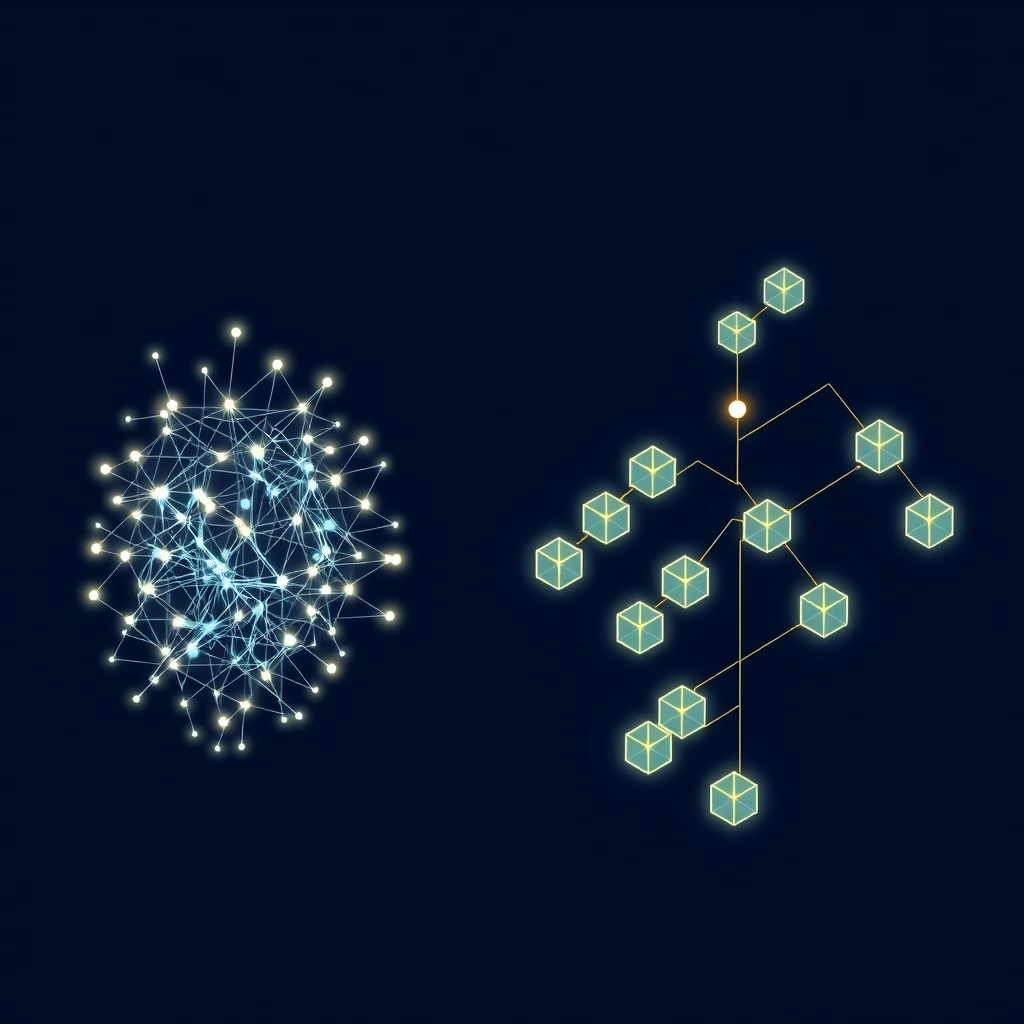
- 🧩 Our method partitions tasks into manageable subgraphs called bags, arranged in a tree structure to ensure global consistency.
- 🚀 Accuracy improves by 10 to 40 percentage points on combinatorial and database querying benchmarks like SAT-Bench and Spider.
- 🔁 The process involves an iterative loop where an agent generates partial results from local schemas until the final query is verified and merged.
- 🔍 We first reduce natural language tasks - modeled as context with constraints and a query - into a formal 3-SAT problem.
- 📐 This reduction utilizes a state-based framework to capture agent-environment interactions and models planning as a satisfiability (PaS) problem.
- 📦 Tasks are decomposed by minimizing subtask complexity under this formalization, maximizing local solvability while preserving global satisfiability.
- 🛠️ In database tasks, the agent identifies target tables to eliminate irrelevant schema parts, focusing reasoning only on active bags and boundary variables.
- 📝 Each round generates a Common Table Expression (CTE) based on local schemas and previous results until all relevant tables are resolved.
- ✅ A verification agent finally aggregates these partial results, resolving dependencies and applying filters to produce executable SQL statements.
🤔 Evaluation
⚖️ ACONIC moves beyond standard chain-of-thought methods by providing a principled mathematical basis for splitting tasks rather than relying on model intuition. 🛡️ While Amazon Science highlights that task decomposition can reduce costs by using smaller specialized models, it warns that overengineering can lead to higher latency and a loss of creative nuance from larger models. 🔍 Future exploration should focus on the trade-off between the overhead of formal constraint modeling and the performance gains in real-time applications.
❓ Frequently Asked Questions (FAQ)
🧩 Q: What makes ACONIC different from standard chain-of-thought prompting?
🤖 A: Unlike chain-of-thought which relies on the model to find its own path, ACONIC reduces the problem to a formal constraint satisfaction problem and uses graph theory to force a structured, optimal decomposition.
📈 Q: How much does systematic decomposition with ACONIC improve LLM task performance?
🤖 A: Empirical tests show accuracy gains between 9% and 40% on complex reasoning tasks compared to heuristic baselines.
🏗️ Q: What specific measures are used in ACONIC to determine task complexity?
🤖 A: The framework uses the size and treewidth of a constraint graph to define the frontier of difficulty for a given task.
📚 Book Recommendations
↔️ Similar
- 🧩⚙️ Constraint Processing by Rina Dechter. 🧠 This book provides the foundational theory on constraint satisfaction problems and graph-based decomposition methods used in ACONIC.
- 🤖 Fundamentals of Multiagent Systems by José M. Vidal. 🏗️ It explores how multiple agents can coordinate to solve complex problems through structured communication and task sharing.
🆚 Contrasting
- 🤔🐇🐢 Thinking, Fast and Slow by Daniel Kahneman. 🧠 This work describes the intuitive System 1 and logical System 2 thinking, contrasting ACONIC’s rigid logic with human heuristic shortcuts.
- ⚙️🎯 Algorithms for Optimization by Mykel J. Kochenderfer and Tim A. Wheeler. 📉 This text focuses on continuous optimization and stochastic methods rather than the discrete symbolic constraints of ACONIC.
🎨 Creatively Related
- 🤖🏗️ AI Engineering: Building Applications with Foundation Models
- 🤖💻 Vibe Coding: Building Production-Grade Software With GenAI, Chat, Agents, and Beyond
- 🕸️ Linked: The New Science of Networks by Albert-László Barabási. 🔗 This book explains the power of graph structures in the real world, mirroring how ACONIC maps reasoning tasks to networks.
- ♾️📐🎶🥨 Gödel, Escher, Bach: An Eternal Golden Braid by Douglas Hofstadter. 🧩 It dives into the nature of formal systems and self-reference, providing a philosophical backdrop for systematic logic.